


Listen to the article
Iran War Exposes Global Economy’s Reliance on Petrochemicals Beyond Fuel
The Iran conflict has revealed a critical vulnerability in the global economy that extends far beyond fuel supplies: the world’s deep dependence on petrochemicals that underpin nearly every aspect of modern life, from food production to medical equipment.
As disruptions ripple through energy markets, the conflict highlights how fossil fuels are embedded in supply chains and manufacturing processes well beyond transportation and electricity generation. While a two-week ceasefire announced recently offers hope that energy disruptions may abate, the underlying structural dependencies remain a concern for both environmentalists and energy experts.
“We cannot continue relying on fossil fuels neither for energy nor for material,” said Delphine Lévi Alvarès, global petrochemicals campaign manager at the Center for International Environmental Law. “We cannot continue relying on fossil fuels for absolutely everything around us.”
The issue of petrochemical dependence is expected to take center stage when governments gather in Santa Marta, Colombia from April 24-29 for an international conference on transitioning away from fossil fuels. Experts anticipate discussions will focus heavily on reducing demand, as this sector is becoming a major driver of future fossil fuel consumption.
Environmental advocates have long argued that as electric vehicles and renewable energy technologies threaten traditional oil and gas markets, fossil fuel companies increasingly see petrochemicals as their growth opportunity.
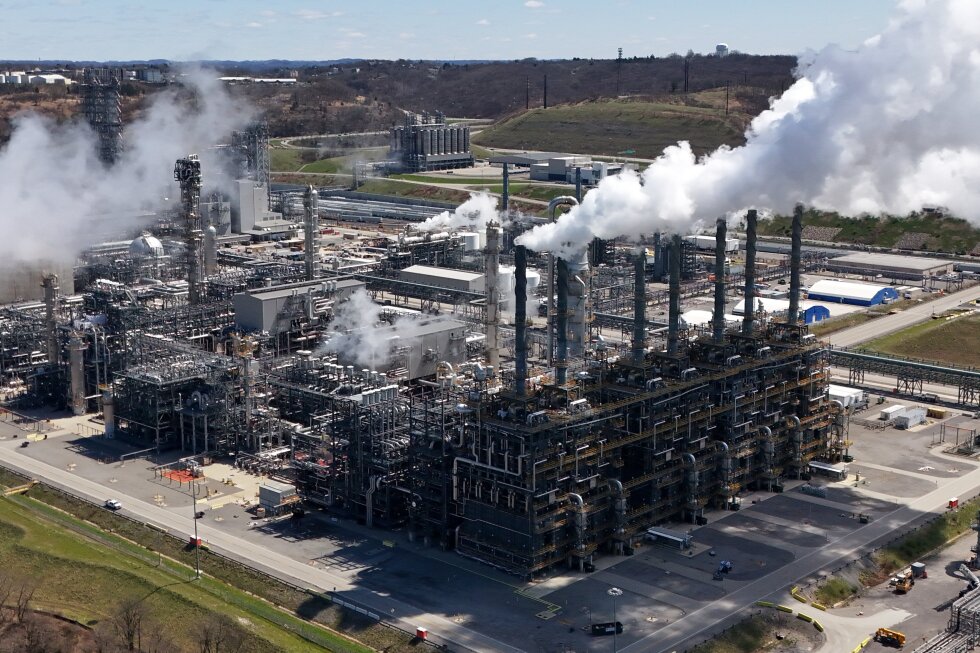
Petrochemicals—primarily derived from oil and natural gas—are transformed into countless everyday products ranging from plastic packaging and synthetic clothing to fertilizers, paints, and medical supplies. Unlike fuels that are burned for energy, petrochemicals become materials, making their presence in daily life less visible but no less significant.
Much of the global petrochemical industry is concentrated in the Persian Gulf region, including major producers of fertilizers and the chemicals used in plastic manufacturing.
According to industry analysts, petrochemicals currently account for 15-16% of global oil demand and represent one of the fastest-growing segments of consumption. New industrial facilities are increasingly designed to maximize chemical production rather than traditional fuels.
“Petrochemicals are not just a sort of byproduct or something that happens on the side,” explains Fredric Bauer, a senior lecturer at Lund University in Sweden who studies industrial transformation in chemicals and plastics.
Beyond direct fuel market impacts, disruptions to oil and gas flows can quickly cascade through industries that rely on petrochemical inputs—particularly agriculture, which depends heavily on fossil fuel-based fertilizers.
Bauer notes that the Middle East plays a dual role in global markets, not only exporting oil and gas but also supplying critical petrochemical feedstocks and fertilizers such as ammonia and urea. Any disruption during planting seasons can have far-reaching consequences for global food systems.
“It’s not just a disruption in the global trade of oil,” he said. “It’s also a disruption in the global trade of chemicals,” which can translate into higher food prices and broader economic strain.
Trisia Farrelly, an environmental anthropologist at the Cawthron Institute in New Zealand, describes the current crisis as “another COVID wake-up call,” pointing to significant risks for food security and livelihoods tied to rising costs and supply disruptions.
She identifies agriculture as one of the most challenging sectors to transition away from petrochemicals, given its reliance on fertilizers, pesticides, plastics, and fuel.
While reducing petrochemical use—particularly in plastics—could significantly decrease fossil fuel dependence, experts caution there is no single solution. Farrelly warns against assuming that alternatives like bio-based plastics can simply replace conventional petrochemicals without creating new problems.
“We need to be regulating out nonessential plastics,” she argues, emphasizing that reducing demand must be prioritized alongside material substitution.
International negotiations on plastic pollution have struggled to reach agreement, largely because major oil-producing countries have resisted limits on plastic production. Meanwhile, bio-based alternatives remain significantly more expensive to produce than conventional plastics, currently accounting for just 0.5% of global plastics production, according to the European Commission Joint Research Center.
The American Chemistry Council, representing U.S. chemical manufacturers, maintains that petrochemicals are essential to modern life and the energy transition itself. In a written response to The Associated Press, the group highlighted that petrochemicals are used in renewable technologies including wind turbines, solar panels, and electric vehicles.
The industry association argues that companies are working to reduce emissions through efficiency improvements, recycling, and new technologies, while rejecting calls for reduced demand. They describe petrochemicals as “foundational” to sectors such as health care, food production, clean water, and infrastructure.
For consumers, Lévi Alvarès notes that petrochemicals have become so embedded in daily life that many people don’t realize their dependence. While acknowledging that individual choices are constrained by available options, she suggests that people can begin by rethinking consumption patterns and engaging more closely with local systems.
“It is not a choice of the consumer,” she said, but individuals can still start to look at everyday products differently and consider their petrochemical footprint.
As the world grapples with both immediate supply disruptions and longer-term sustainability challenges, the Iran conflict serves as a stark reminder of how deeply fossil fuels are woven into the fabric of the global economy—often in ways that remain invisible until crisis strikes.
Fact Checker
Verify the accuracy of this article using The Disinformation Commission analysis and real-time sources.

20 Comments
Nice to see insider buying—usually a good signal in this space.
Good point. Watching costs and grades closely.
Good point. Watching costs and grades closely.
Silver leverage is strong here; beta cuts both ways though.
Good point. Watching costs and grades closely.
If AISC keeps dropping, this becomes investable for me.
Good point. Watching costs and grades closely.
Exploration results look promising, but permitting will be the key risk.
Good point. Watching costs and grades closely.
Nice to see insider buying—usually a good signal in this space.
Good point. Watching costs and grades closely.
Good point. Watching costs and grades closely.
Silver leverage is strong here; beta cuts both ways though.
Good point. Watching costs and grades closely.
Exploration results look promising, but permitting will be the key risk.
Good point. Watching costs and grades closely.
I like the balance sheet here—less leverage than peers.
Good point. Watching costs and grades closely.
Production mix shifting toward World might help margins if metals stay firm.
Production mix shifting toward World might help margins if metals stay firm.