


Listen to the article
Iran Threatens to Collapse Ceasefire Over Hezbollah Exclusion
The recently implemented ceasefire between Israel and Iran faces immediate challenges as Iranian officials claim the agreement’s exclusion of Hezbollah could unravel the entire accord. As hostilities temporarily pause, diplomatic tensions continue to escalate in what has become a critical test for President Trump’s Middle East strategy.
Iran’s Foreign Minister Seyed Abbas Araghchi issued a direct warning on Wednesday, posting on social media platform X: “The Iran–U.S. Ceasefire terms are clear and explicit: the U.S. must choose—ceasefire or continued war via Israel. It cannot have both. The world sees the massacres in Lebanon. The ball is in the U.S. court, and the world is watching whether it will act on its commitments.”
The statement was later reinforced by Iran’s parliamentary speaker Mohammad Bagher Ghalibaf, who cited ongoing Israeli military operations in Lebanon as evidence of the ceasefire’s fragility. Pakistan’s Prime Minister Shehbaz Sharif, who served as a key intermediary in the negotiations, had previously stated that the two-week ceasefire would include Lebanon.
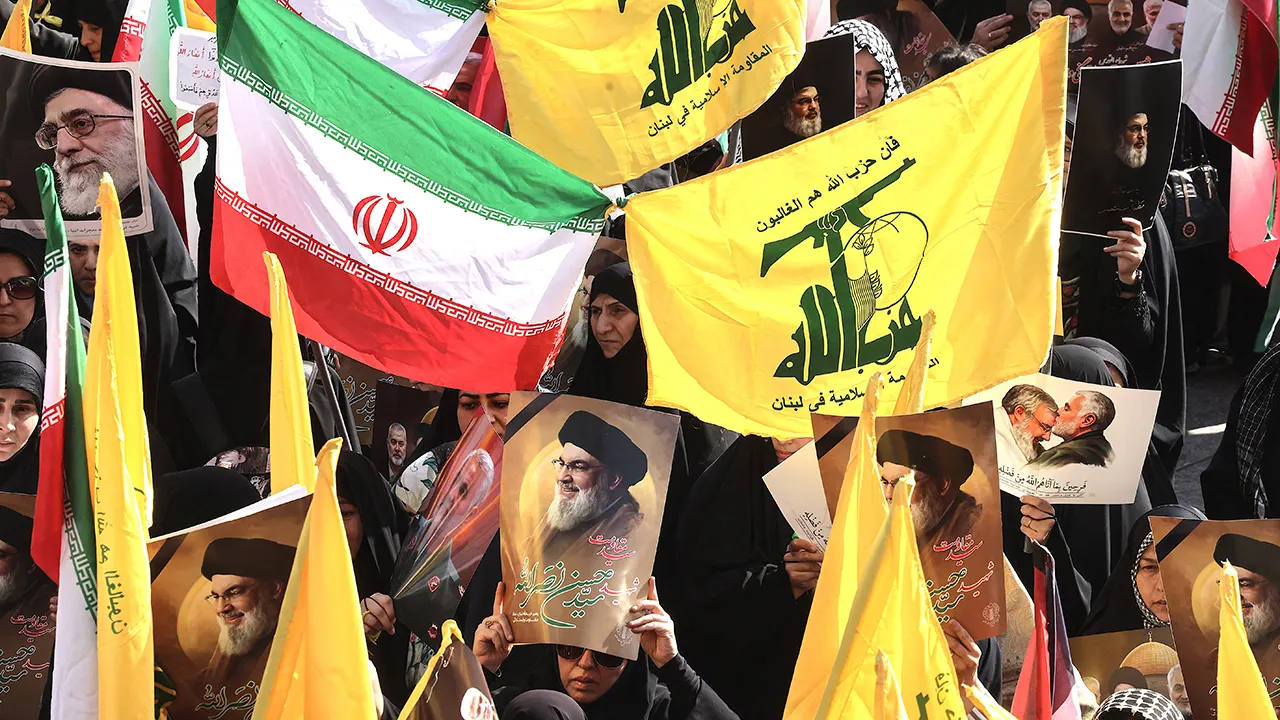
The Trump administration, however, maintains that the deal specifically excludes the Tehran-backed terrorist organization Hezbollah, which entered the conflict against Israel in March 2025 in support of Iran’s broader regional strategy. This disagreement over the scope of the ceasefire has emerged as the primary point of contention between Washington and Tehran.
Regional security experts emphasize that any sustainable peace requires Lebanon’s government and military to address the Hezbollah presence within its borders. The terrorist group, which maintains significant political influence in Lebanon, has repeatedly violated previous ceasefire agreements, including a U.S.-negotiated accord in November 2024.
Edy Cohen, an Israeli security expert on Hezbollah who was born in Lebanon, told Fox News Digital that “Hezbollah will never disarm itself. From its perspective, it protects two million Shiites.” Cohen suggested a phased approach to disarming the group would be necessary, beginning with the Lebanese government taking control of heavy weaponry and gradually restricting Hezbollah’s operational area.
Meanwhile, Israeli military operations have intensified in the lead-up to the ceasefire. The Israel Defense Forces (IDF) reported striking over 100 Hezbollah targets in just 10 minutes on Wednesday, including command centers and military infrastructure. According to Lebanon’s health ministry, at least 182 people were killed nationwide that day, with 91 fatalities in Beirut alone.
The IDF defended its operations, stating: “The large-scale strike was based on precise IDF intelligence and was planned meticulously over weeks. Most of the infrastructure that was struck was located within the heart of the civilian population, as part of Hezbollah’s cynical exploitation of Lebanese civilians as human shields.”
Since the conflict began, Israeli airstrikes have reportedly killed more than 1,530 people in Lebanon, according to Associated Press figures. However, The Long War Journal notes that neither Lebanon’s Health Ministry nor Hezbollah has provided official casualty figures for the group’s fighters.
Guila Fakhoury, whose father was kidnapped by Hezbollah in 2019, argues that “Iran and the IRGC are occupying Lebanon through their proxy Hezbollah.” As president of the Amer Foundation, an organization dedicated to helping families of illegal detainees, Fakhoury expressed cautious optimism about Lebanese President Joseph Aoun’s call for negotiations with Israel.
“The only solution is to have peace with Israel,” Fakhoury said. “I think there a lot of Shiites who are against Hezbollah… The majority of the Lebanese people just want peace. We hope the Trump administration will push the Lebanese government and Israel’s government to start peace talks.”
Diplomatic tensions further escalated last week when Iran defied Lebanon’s expulsion order for its ambassador, Mohammad Reza Shibani. Despite being declared “persona non grata” by Lebanese authorities, an Iranian spokesperson confirmed the ambassador would remain in Beirut, underscoring Iran’s continued influence in the country.
As the ceasefire takes effect, all eyes remain on whether the fragile agreement can hold amid these significant disagreements over its scope and implementation. The outcome could define President Trump’s second-term approach to Middle East policy and determine the future of regional stability.
Fact Checker
Verify the accuracy of this article using The Disinformation Commission analysis and real-time sources.

19 Comments
Nice to see insider buying—usually a good signal in this space.
Good point. Watching costs and grades closely.
Nice to see insider buying—usually a good signal in this space.
Good point. Watching costs and grades closely.
Production mix shifting toward World might help margins if metals stay firm.
Good point. Watching costs and grades closely.
Good point. Watching costs and grades closely.
Uranium names keep pushing higher—supply still tight into 2026.
Interesting update on Iran Threatens to End Ceasefire if Hezbollah Excluded from Truce Deal. Curious how the grades will trend next quarter.
If AISC keeps dropping, this becomes investable for me.
Good point. Watching costs and grades closely.
Good point. Watching costs and grades closely.
Interesting update on Iran Threatens to End Ceasefire if Hezbollah Excluded from Truce Deal. Curious how the grades will trend next quarter.
I like the balance sheet here—less leverage than peers.
Good point. Watching costs and grades closely.
Interesting update on Iran Threatens to End Ceasefire if Hezbollah Excluded from Truce Deal. Curious how the grades will trend next quarter.
Good point. Watching costs and grades closely.
If AISC keeps dropping, this becomes investable for me.
Exploration results look promising, but permitting will be the key risk.