


Listen to the article
Iran Launches Strikes on Gulf States as Conflict with Israel, U.S. Intensifies
Intense Iranian fire targeted several Gulf Arab states early Saturday as Israel and the United States continued their airstrikes on the Islamic Republic, signaling a dangerous expansion of the conflict across the Middle East.
The U.S. administration approved a new $151 million arms sale to Israel as President Donald Trump declared he would not negotiate with Iran without its “unconditional surrender.” U.S. officials warned of an impending bombing campaign they described as the most intense yet in the weeklong conflict.
Iran’s UN ambassador responded defiantly, stating the country would “take all necessary measures” to defend itself. Meanwhile, explosions flashed and smoke rose over western Tehran as Israel launched what it called a broad wave of strikes. Across Israel, loud booms sounded as incoming Iranian missiles forced people into bomb shelters.
The conflict showed troubling signs of regional spread when sirens sounded in Bahrain as Iranian attacks targeted the island kingdom. Saudi Arabia reported intercepting drones headed toward its vast Shaybah oil field and shooting down a ballistic missile aimed at Prince Sultan Air Base, which hosts U.S. forces.
In Dubai, several explosions were heard Saturday morning as the government activated air defenses. Passengers at Dubai International Airport, the world’s busiest for international travel, were evacuated to train tunnels beneath the sprawling airfield after alerts sounded.
The economic implications of the escalating conflict are becoming increasingly apparent. Qatar’s energy minister, Saad al-Kaabi, warned in a Financial Times interview that the war could “bring down the economies of the world,” predicting widespread disruption of Gulf energy exports that could send oil to $150 a barrel. The price for benchmark U.S. crude already surpassed $90 on Friday, reaching its highest level in more than two years.
Regional analysts have suggested Iran may be making a strategic miscalculation by expanding the conflict. Sultan al-Khulaifi, a senior researcher at the Center for Conflict and Humanitarian Studies, wrote for Al Jazeera that “by spreading the conflict to the Gulf, Tehran is doing precisely what Israel could not do alone: steering the war away from the Israeli-Iranian axis and transforming it into a confrontation between Iran and its Arab neighbors.”
Adding to the complexity, U.S. intelligence sources revealed that Russia has provided Iran with information potentially useful for striking American warships, aircraft, and assets in the region. Though officials cautioned that there’s no evidence Moscow is directing Tehran’s actions, this marks the first indication of Russian involvement in the conflict.
The U.S. stance on the endgame remains ambiguous. Trump’s social media declaration that “There will be no deal with Iran except UNCONDITIONAL SURRENDER!” followed by promises to help rebuild Iran after “the selection of a GREAT & ACCEPTABLE Leader(s)” raises questions about American objectives. Meanwhile, Iranian President Masoud Pezeshkian indicated that “some countries” had begun mediation efforts, without elaborating.
U.S. Treasury Secretary Scott Bessent warned in a television interview that the “biggest bombing campaign” of the war was still to come. Israel has reported extensively bombing underground bunkers that Iranian leaders had allegedly planned to use during hostilities.
The human toll continues to mount, with at least 1,230 people killed in Iran, more than 200 in Lebanon, around a dozen in Israel, and six U.S. troops, according to officials in those countries.
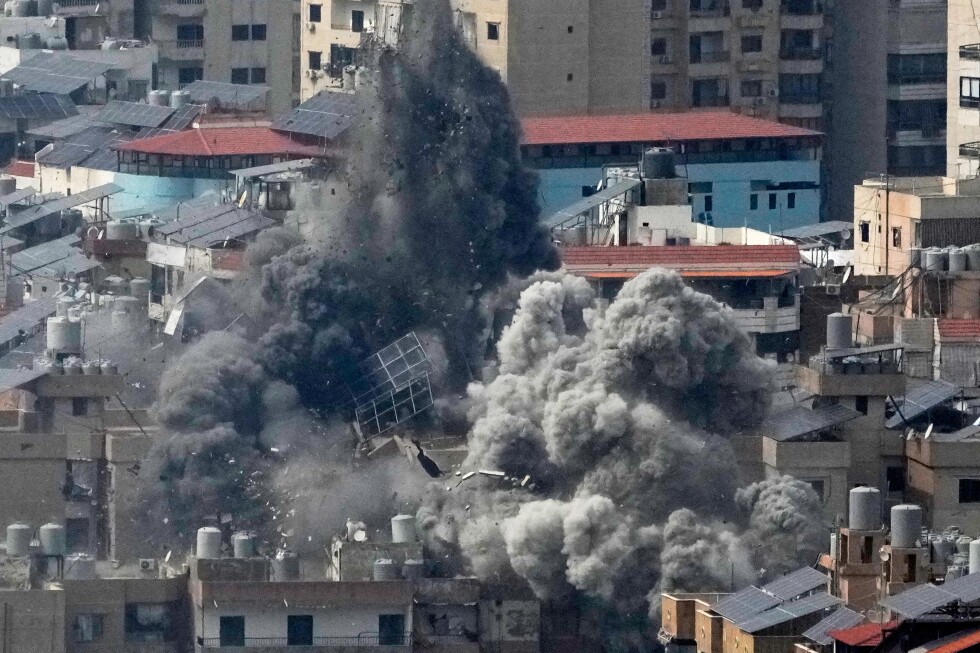
The conflict has also intensified in Lebanon, where Hezbollah reported clashes with Israeli forces in the eastern mountains. Israel has conducted massive airstrikes on Beirut’s southern suburbs, a Hezbollah stronghold that is also home to hundreds of thousands of civilians. Lebanon’s Health Ministry reported at least 217 people killed by Israeli strikes since Monday and 798 wounded.
As smoke rose over Beirut’s southern districts, roads in the Lebanese capital were congested with evacuees. Two hospitals evacuated patients and staff amid the deteriorating situation. One displaced resident, Jihan Shehadeh, lamented, “What can we do? We prayed here under the tree. During the night, we slept in the car because there is no place to stay.”
With no immediate resolution in sight, the Middle East appears poised for further escalation in what has rapidly evolved into a multilateral conflict with profound regional and global implications.
Fact Checker
Verify the accuracy of this article using The Disinformation Commission analysis and real-time sources.

7 Comments
Tensions in the Middle East continue to escalate as Iran targets Gulf states. The US warning of an intensifying campaign raises concerns about the potential for further regional conflict. Curious to see how this situation develops and what steps might be taken to de-escalate the situation.
The escalating conflict between Iran, Israel, and the US is deeply concerning. The reported arms sales and warnings of an intensifying campaign suggest the parties are digging in rather than seeking compromise. Hoping all sides can step back from the brink and prioritize de-escalation through diplomatic channels.
This is a highly complex and dangerous situation. On one hand, Iran’s aggression against its neighbors is deeply troubling. But the US and Israel’s military responses also risk further inflaming tensions. Ultimately, a diplomatic solution seems the only way to prevent this conflict from spiraling out of control.
I agree, a diplomatic off-ramp is critical at this stage. The rhetoric from all sides is increasingly belligerent, which only heightens the risks of miscalculation and unintended escalation. Cooler heads must prevail to find a negotiated settlement.
Iran’s strikes on Gulf states are a concerning development, as is the US approval of new arms sales to Israel. This conflict appears to be broadening in scope, raising the stakes for the entire region. We can only hope that all sides show restraint and prioritize de-escalation before the situation becomes uncontrollable.
The expanded conflict between Iran, Israel, and the US is deeply concerning. The reported arms sales to Israel and Iran’s defiant rhetoric suggest the parties are doubling down rather than seeking diplomatic resolution. Hoping cooler heads can prevail to prevent this from spiraling into a wider regional war.
I agree, the situation is extremely volatile. Continued military escalation seems inevitable without serious diplomatic efforts to find a peaceful solution. The risk of miscalculation and unintended consequences is very high.