


Listen to the article
An Iranian military spokesman defiantly vowed Tuesday that Tehran’s armed forces will fight “until complete victory,” despite suffering heavy losses from the joint U.S. and Israeli military campaign against the regime.
The remark from Maj. Gen. Ali Abdollahi Aliabadi of the Khatam-al Anbiya Central Headquarters, Iran’s top military command, comes after President Donald Trump paused planned U.S. strikes on Iran on Monday, citing diplomatic progress.
“Iran’s powerful armed forces are proud, victorious and steadfast in defending Iran’s integrity, and this path will continue until complete victory,” Iranian state television quoted Aliabadi as saying. The statement did not clarify what “complete victory” would entail for Iran.
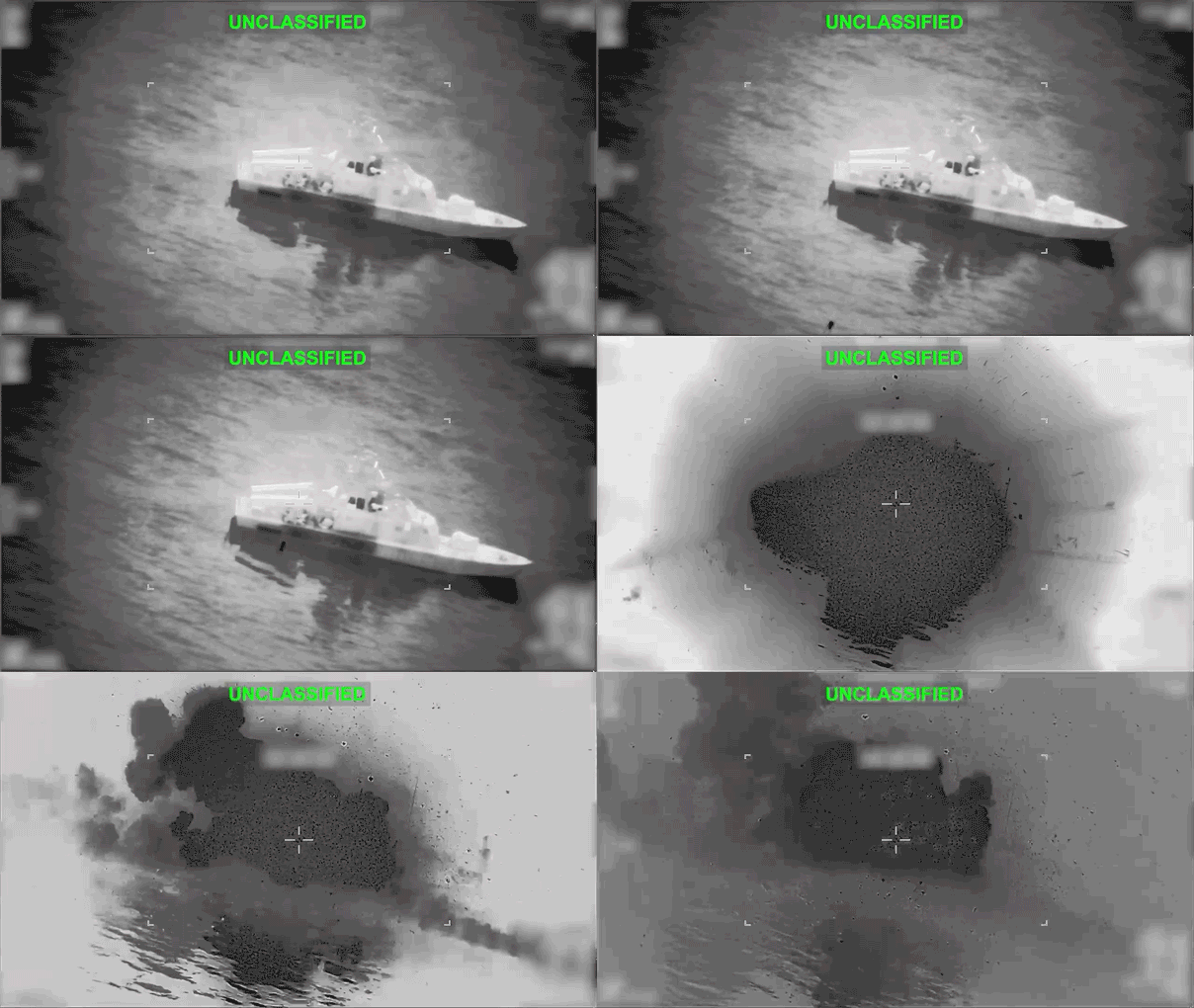
The defiant statement comes amid devastating losses for Iran’s military infrastructure. Operation Epic Fury, which began February 28, has resulted in the destruction or damage of more than 140 Iranian naval vessels, according to U.S. Central Command. The campaign has involved over 9,000 combat flights targeting key Iranian military assets.
“CENTCOM forces are striking targets to dismantle the Iranian regime’s security apparatus, prioritizing locations that pose an imminent threat,” the U.S. military command stated. The operation has systematically targeted Iranian navy ships and submarines, air defense systems, anti-ship missile sites, military communication infrastructure, and facilities involved in ballistic missile and drone manufacturing.
The military campaign has inflicted substantial damage to Iran’s defensive capabilities. President Trump assessed the impact bluntly last Friday, stating, “Their Navy’s gone, their Air Force is gone, their anti-aircraft is all gone.”
The operation has also reportedly eliminated multiple layers of Iranian leadership, beginning with Ayatollah Ali Khamenei at the start of the campaign. “Their leaders are all gone. The next set of leaders are all gone. And the next set of leaders are mostly gone,” Trump said. “And now, nobody wants to be a leader over there anymore. We’re having a hard time. We want to talk to them and there’s nobody to talk to.”
The pause in U.S. strikes announced Monday suggests a potential shift in the conflict dynamics. The Trump administration appears to be exploring diplomatic channels while maintaining military pressure, demonstrating what analysts have called his “doctrine of unpredictability” in foreign policy approach.
The conflict has had significant global repercussions beyond the immediate military engagement. Jet fuel prices have soared as a result of the instability in the oil-rich region, with some airlines warning that supplies could run critically low within weeks if the situation persists. This highlights the broader economic implications of the military confrontation in one of the world’s most strategically important waterways.
Trump has characterized Operation Epic Fury as “one of the most complex and successful military operations of all time against the Iranian regime.” The campaign represents one of the most direct and extensive U.S. military actions against Iran in decades, targeting the regime’s military capabilities while avoiding civilian infrastructure.
The standoff between the United States and Iran has deep historical roots, dating back to the 1979 Islamic Revolution and subsequent hostage crisis. Relations have fluctuated through periods of tension and limited engagement over the decades, with the current military confrontation marking a significant escalation in the long-standing adversarial relationship.
As the conflict enters what may be a new diplomatic phase following the pause in strikes, the international community watches closely for signs of how both sides will proceed. Iran’s defiant rhetoric suggests the regime remains committed to resistance despite substantial military losses, while the U.S. appears to be leveraging its military success to potentially force concessions at the negotiating table.
Fact Checker
Verify the accuracy of this article using The Disinformation Commission analysis and real-time sources.

12 Comments
This conflict appears to be taking a heavy toll on Iran’s military capabilities. Their continued defiance is understandable, but it’s hard to see how they can achieve the kind of “complete victory” they’re vowing for, given the devastation they’ve faced.
Exactly. Iran’s leadership seems unwilling to acknowledge the gravity of their situation, preferring instead to double down on their rhetoric. But the facts on the ground suggest their position is becoming increasingly untenable.
Iran’s military spokesman’s statement is certainly defiant, but it also seems detached from the realities on the ground. The reported scale of the damage to their forces, especially their naval assets, suggests their ability to sustain this conflict is severely compromised.
I agree. Iran’s unwillingness to acknowledge their weakened position raises concerns about their decision-making and long-term strategy. Their rhetoric may be intended for domestic consumption, but it’s hard to see how it aligns with the military realities they face.
The Iranian military’s insistence on fighting to “complete victory” despite their heavy losses is puzzling. Their defiant stance may be more about saving face than a realistic assessment of their capabilities and options at this stage of the conflict.
You make a good point. Iran’s leadership seems unwilling to admit the severity of the damage to their forces, preferring instead to double down on their rhetoric. This could be a dangerous strategy if it leads them to make decisions that further undermine their military position.
Interesting to see Iran remain defiant despite heavy losses. Their military leadership seems determined to fight on at all costs, but it raises questions about their long-term strategy and ability to sustain the conflict.
Iran’s unwavering stance is concerning, but I wonder if this is more about saving face than a realistic path forward. The scale of the damage to their forces suggests their position may be increasingly untenable.
The heavy losses Iran has suffered in this campaign are staggering. While their defiant rhetoric is understandable, it’s hard to see how they can realistically achieve “complete victory” given the toll on their military capabilities.
Agreed. Iran’s military infrastructure has been severely degraded. Their vow to fight on until “complete victory” seems more like posturing than a viable strategy at this point.
Iran’s pledge to fight until “complete victory” is concerning, but also raises questions about their long-term goals and feasibility. The reported damage to their naval forces in particular suggests they may be overextending themselves.
You’re right. The scale of the losses Iran has suffered, especially to their naval assets, makes their defiant rhetoric seem more like bravado than a realistic assessment of their military position.