


Listen to the article
US Deploys 1,500 Additional Troops as Tensions Rise with Iran
Iran responded defiantly on Sunday to reports suggesting the United States might be preparing ground forces for potential operations against Iranian nuclear facilities and to secure the vital Strait of Hormuz shipping lane.
“As long as the Americans seek Iran’s surrender, our response is that we will never accept humiliation,” declared Iran’s parliament speaker Mohammad Baqer Qalibaf, signaling Tehran’s unwillingness to yield to mounting pressure from Washington.
The statement comes in response to a Washington Post report claiming the Trump administration and Pentagon are developing options for potential ground operations in Iran. According to anonymous sources cited in the report, military planners are considering limited raids by Special Operations and conventional forces rather than a full-scale invasion.
These operations, which could potentially last weeks if approved by President Trump, would reportedly target strategic locations such as Kharg Island—Iran’s primary oil export terminal—and coastal weapons installations near the Strait of Hormuz, a critical maritime chokepoint through which approximately 20% of global oil shipments pass.
White House Press Secretary Karoline Leavitt responded to the report with a measured statement: “It’s the job of the Pentagon to make preparations in order to give the commander in chief maximum optionality. It does not mean the president has made a decision.”
In a parallel development, Reuters reported that the administration has considered deploying thousands of additional troops to the region. Secretary of State Marco Rubio has acknowledged that while the United States is not currently positioned for ground operations, such positioning would provide President Trump with “maximum flexibility,” though he maintained that American objectives could be achieved without ground forces.
Military analysts warn that even limited ground operations carry substantial risks. Seizing territory within Iran could expose American forces to sustained counterattacks and complicate efforts to achieve a swift resolution to the conflict. The prospect remains politically contentious domestically and internationally.
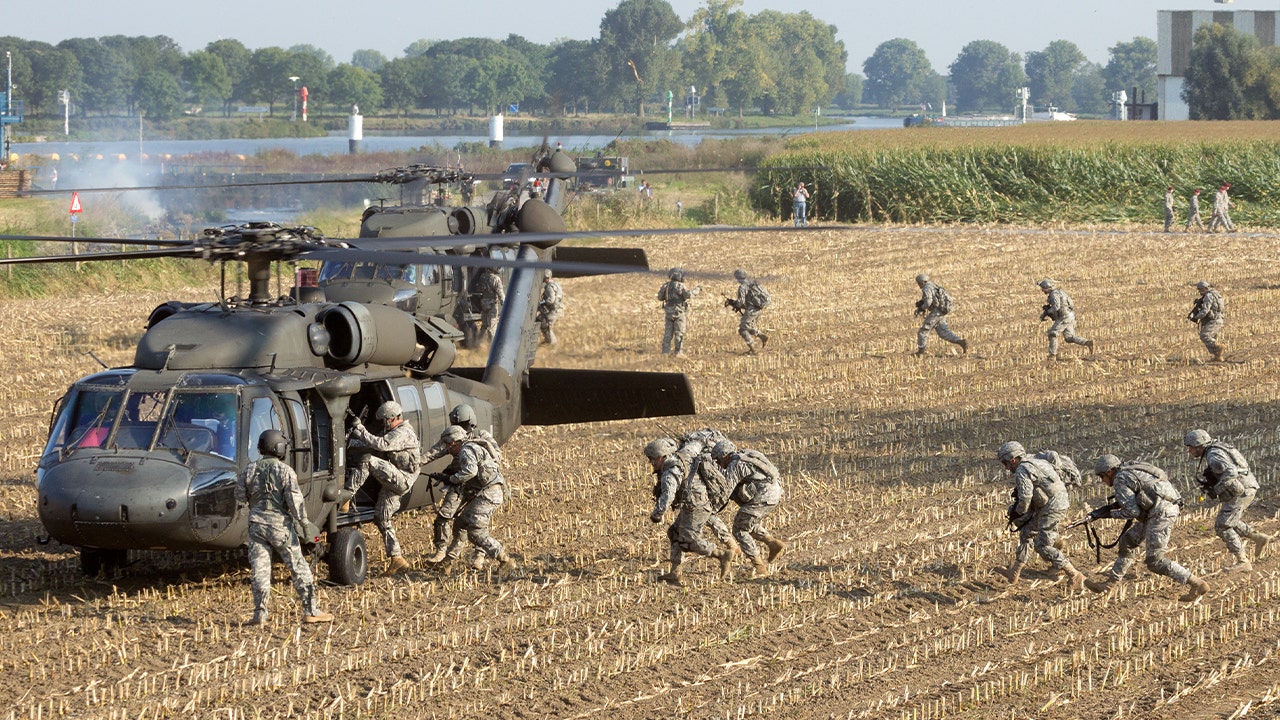
The Pentagon has already begun bolstering its military presence in the Middle East, with the first of two Marine contingents arriving Friday aboard an amphibious assault ship. Additionally, approximately 1,500 troops from the 82nd Airborne Division are being deployed to the region, signaling an escalation in America’s military posture.
The deployment comes amid deteriorating regional security. With the Strait of Hormuz effectively closed due to Iranian threats against commercial shipping, concerns are growing about alternative shipping lanes around the Arabian Peninsula and the Red Sea, particularly after Yemen’s Houthi rebels intensified attacks on maritime traffic in those waters.
Last week, the United States proposed a 15-point ceasefire plan to Iran, which included provisions to reopen the Strait of Hormuz and place new restrictions on Iran’s nuclear program. Tehran rejected this proposal and countered with demands of its own, further complicating diplomatic efforts to defuse tensions.
President Trump has threatened to strike Iranian power stations and other energy infrastructure if Iran does not reopen the Strait of Hormuz, though he recently extended his deadline by 10 days in what appears to be a window for potential diplomatic resolution.
The standoff has severely disrupted global energy markets, with most oil tankers avoiding the strait due to security concerns. In a limited concession, Iran has agreed to permit an additional 20 Pakistani-flagged vessels to transit the waterway, at a rate of two ships daily—far below the strait’s normal capacity.
As both sides continue to position themselves militarily and rhetorically, the risk of miscalculation grows, raising concerns among regional observers and international stakeholders about the potential for a broader conflict in one of the world’s most strategically significant regions.
Fact Checker
Verify the accuracy of this article using The Disinformation Commission analysis and real-time sources.

12 Comments
This is a concerning development. While the US may be exploring military options, Iran’s rejection of ‘humiliation’ suggests they will not back down easily. I hope both sides can find a peaceful resolution.
Deploying additional troops is a risky move that could further inflame tensions. I wonder what the strategic goals are behind these potential ground operations and whether they would actually achieve a positive outcome.
The potential for US ground operations in Iran is very concerning. While the details are unclear, this appears to be a risky and provocative move that could easily spiral out of control.
Iran’s rejection of ‘humiliation’ is a clear signal that they will not back down easily. Careful diplomacy will be essential to prevent this situation from deteriorating further.
The potential for a ground operation in Iran is very concerning. While the US may feel compelled to act, Iran’s unwillingness to accept ‘humiliation’ suggests this could quickly turn into a dangerous military confrontation.
I wonder what the strategic rationale is behind these potential ground operations. Targeting oil export infrastructure or coastal weapons seems risky and could have major unintended consequences.
This situation is highly volatile, and I fear that miscalculation or overreaction on either side could lead to a wider conflict. Diplomacy and de-escalation should be the top priorities right now.
Iran’s defiant tone is understandable given their history, but both sides need to exercise restraint. Escalating military tensions could have severe economic and geopolitical ramifications.
The Strait of Hormuz is a critical global chokepoint, so any military action there could have major economic consequences. I hope both sides show restraint and focus on de-escalation rather than escalation.
Iran’s defiant stance is understandable given the history of tensions, but it’s important that cooler heads prevail to prevent this from spiraling out of control. Constructive dialogue is needed.
Tensions between the US and Iran seem to be escalating again. I’m curious to see how this situation develops and whether diplomacy can defuse the situation before a military confrontation occurs.
Iran appears to be taking a firm stance, rejecting any suggestion of ‘humiliation’. Careful diplomacy will be crucial to de-escalate this standoff and avoid further escalation.