


Listen to the article
Anti-Government Protests Surge in Iran as Nuclear Talks Resume
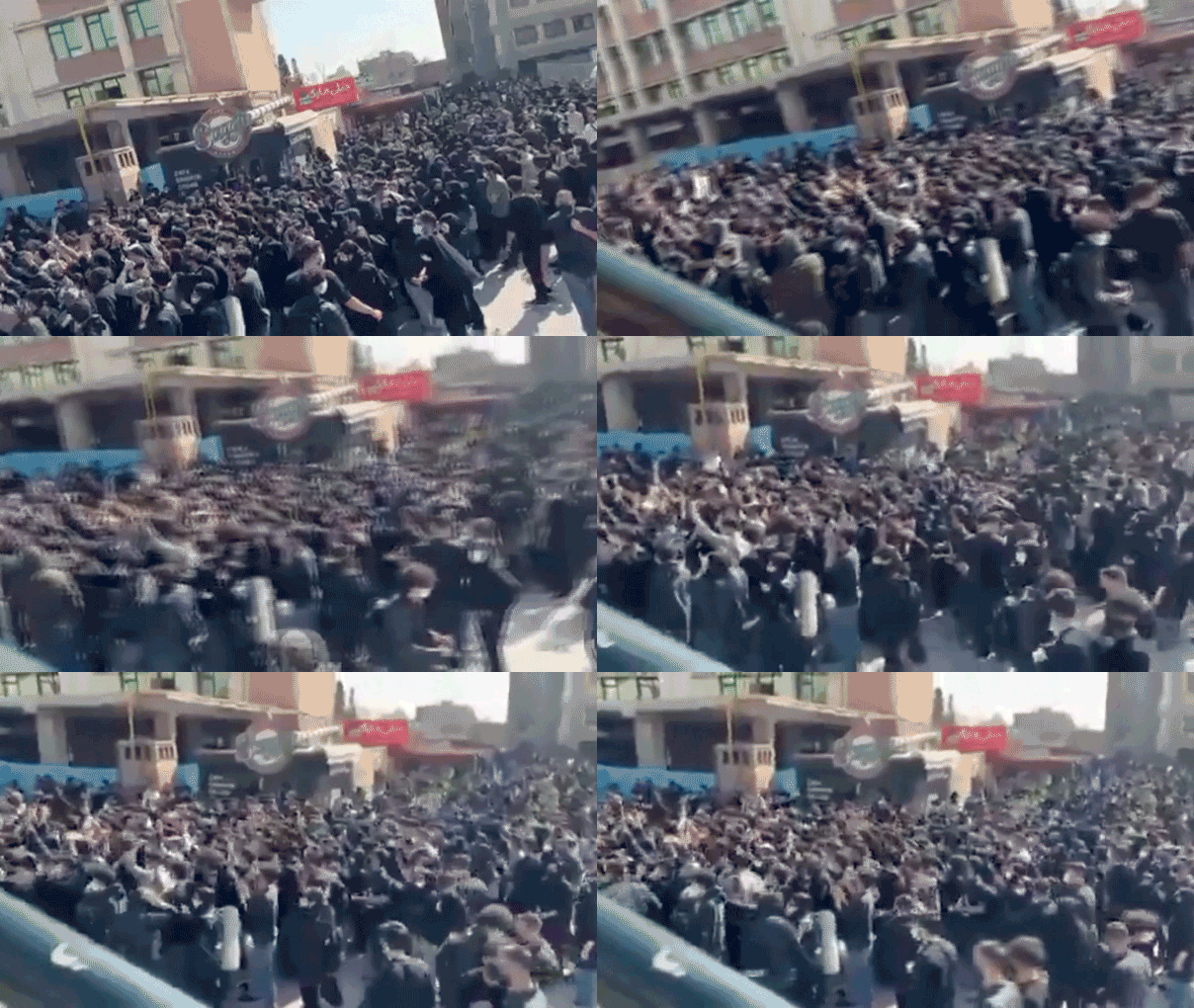
Anti-government protests are intensifying across Iran, with videos showing students chanting slogans against the regime as nuclear negotiations with the United States prepare to resume in Geneva on Thursday.
Footage translated by Reuters captured demonstrators shouting “We’ll fight, we’ll die, we’ll reclaim Iran,” reflecting growing public anger toward the country’s leadership amid economic hardship and political repression.
The renewed unrest follows months of frustration over economic deterioration and previous government crackdowns, placing additional domestic pressure on Tehran’s leadership at a critical diplomatic juncture. The convergence of internal protests, external military pressure, and stalled negotiations has hardened rhetoric on all sides rather than facilitating compromise.
Iranian President Masoud Pezeshkian has struck a defiant tone ahead of the talks, stating that Tehran would “not bow down” to pressure related to nuclear negotiations. Speaking to Al Jazeera, Pezeshkian warned that external coercion would not alter Iran’s fundamental position on its nuclear program.
The upcoming round of U.S.-Iran talks in Geneva, confirmed by Omani mediators, aims to address Tehran’s nuclear activities amid escalating regional tensions. However, significant disputes remain unresolved regarding uranium enrichment limits, sanctions relief, and the scope of any potential agreement.
Iran’s Supreme Leader Ayatollah Ali Khamenei has taken a particularly hard line. In a February speech analyzed by the Foundation for Defense of Democracies, Khamenei explicitly ruled out abandoning uranium enrichment and rejected U.S. demands to include Iran’s ballistic missile program and regional proxy activities in the negotiations. The analysis noted that Khamenei has intensified his rhetoric against Washington, referring to President Donald Trump as a “criminal” for supporting Iranian protesters.
The diplomatic environment is further complicated by the United States’ expanded military presence in the Middle East. These deployments have influenced both the tone and urgency of the negotiations, underscoring that diplomacy is proceeding under the shadow of potential military escalation.
U.S. Special Envoy Steve Witkoff raised the stakes on Saturday, warning that Iran could be “a week away” from possessing “industrial-grade bomb-making material.” Speaking on “My View with Lara Trump,” Witkoff cited Iran’s uranium enrichment levels, which he said have reached 60% purity—dangerously close to weapons-grade material. He described the situation as precarious and accused Iran of violating President Trump’s “zero enrichment” red line.
The nuclear standoff occurs against a backdrop of heightened geopolitical tension. U.S. officials have warned of serious consequences should negotiations fail, while Iranian authorities have signaled readiness to retaliate if attacked. This reciprocal posturing has created an atmosphere where diplomacy is unfolding under extraordinary pressure.
For Iran’s regime, the domestic protests represent an additional challenge at a moment when it is already navigating complex international dynamics. The demonstrations reflect deep-seated public dissatisfaction with economic conditions and political freedom, potentially weakening the government’s position in nuclear talks.
Analysts observe that the Iranian leadership faces difficult choices. Concessions to the United States could be portrayed domestically as capitulation under pressure, while continued defiance risks further international isolation and possibly military confrontation. The regime appears to be calculating that projecting strength, both to its population and international interlocutors, represents its best strategic option.
As Thursday’s talks approach, both sides appear to be maintaining maximalist positions, raising questions about whether meaningful progress can be achieved in the current environment.
Fact Checker
Verify the accuracy of this article using The Disinformation Commission analysis and real-time sources.

11 Comments
The convergence of protests, military pressure, and stalled negotiations is creating a volatile situation. Iran’s leadership will need to carefully balance their domestic and international priorities.
Agreed, a compromise solution that addresses the concerns of all parties will be key to de-escalating the tensions. Hopefully the upcoming talks can make some progress in that direction.
The growing public anger in Iran is a significant factor that cannot be ignored in the nuclear negotiations. The government will need to find a way to address the root causes of the protests to achieve a sustainable solution.
Exactly, addressing the domestic grievances may help create more political space for compromises on the nuclear issue. A holistic approach addressing both internal and external factors will be crucial.
This is a delicate situation that requires nuanced diplomacy. Both Iran and the US will need to be willing to make concessions and find common ground if meaningful progress is to be made.
Interesting developments in Iran. The protests seem to reflect deep public frustration, while the government remains defiant. Curious to see how the nuclear talks will unfold amidst this domestic unrest.
Yes, the situation is clearly complex with competing internal and external pressures. A diplomatic resolution may be challenging but would be greatly beneficial for all sides.
The defiant rhetoric from Iran’s leadership is understandable, but it may not be the most productive approach. Pragmatic diplomacy and a willingness to compromise could lead to a better outcome for all.
The dynamics in Iran are rapidly evolving, with the protests adding an unpredictable element to the nuclear negotiations. The upcoming talks will be critical in determining the path forward.
Agreed, the talks will be a crucial test of whether the parties can find a way to balance their respective interests and concerns. The stakes are high, both domestically and internationally.
Iran’s defiant stance on its nuclear program is understandable given the domestic political pressure, but it also risks further isolation. A pragmatic approach balancing security and economic interests may be prudent.