


Listen to the article
Iranian President Shifts Tone on Nuclear Talks Following Trump Warning
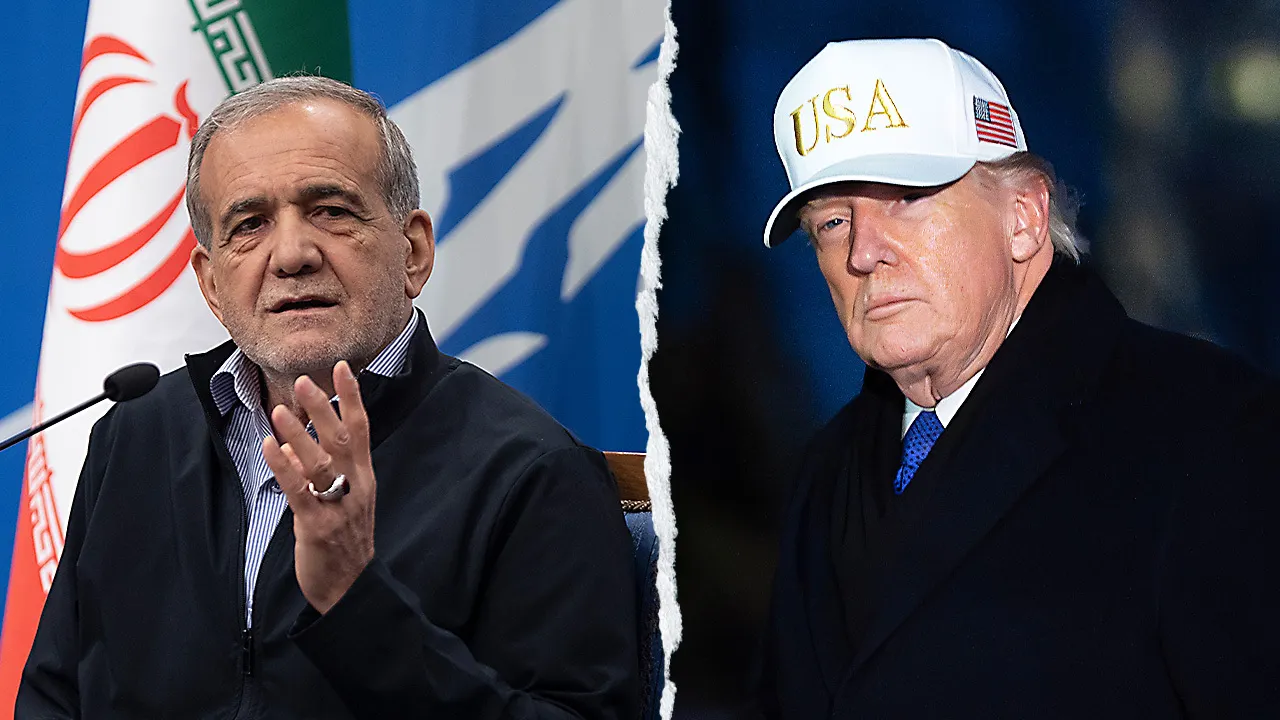
The Iranian president has adopted a more conciliatory stance regarding potential nuclear negotiations with the United States, just days after accusing President Donald Trump of attempting to destabilize Iran.
Masoud Pezeshkian announced on Tuesday that he has instructed his Foreign Minister to pursue “fair and equitable negotiations” in response to Trump’s recent overture. The Iranian leader specified that talks would proceed “provided that a suitable environment exists — one free from threats and unreasonable expectations,” and would be “guided by the principles of dignity, prudence, and expediency.”
This change in tone comes after Trump indicated at the White House on Monday that the U.S. is open to discussions with Iran. “I’d like to see a deal negotiated,” Trump said, before adding a warning: “And if we could work something out, that’d be great. And if we can’t, probably bad things would happen.”
According to reports, U.S. envoy Steve Witkoff is scheduled to meet with Iranian Foreign Minister Abbas Araghchi in Istanbul on Friday, though a source familiar with the matter revealed to Fox News that Iran is pushing to relocate the talks to Oman.
This diplomatic development represents a significant shift from Pezeshkian’s rhetoric just days earlier. On Saturday, the Iranian president told state television that Trump, Israeli Prime Minister Benjamin Netanyahu, and European leaders “rode on our problems, provoked, and were seeking — and still seek — to fragment society.”
Pezeshkian had specifically accused these leaders of encouraging recent anti-government protests in Iran, claiming they “brought them into the streets and wanted, as they said, to tear this country apart, to sow conflict and hatred among the people and create division.”
Meanwhile, Iran’s Supreme Leader Ayatollah Ali Khamenei has maintained his hardline stance, writing on social media Tuesday that “The United States wants to devour Iran; the Iranian nation and the Islamic Republic prevent this.” He further claimed without evidence that “the recent sedition was orchestrated by Zionists & the US” with the CIA and Mossad deploying “all of their resources into the field.”
The diplomatic developments follow Trump’s stern warning last week that “time is running out for Iran.” In a post on his Truth Social platform, the president referenced a “massive Armada” heading toward Iran, highlighting the USS Abraham Lincoln aircraft carrier as part of the naval force.
“It is moving quickly, with great power, enthusiasm, and purpose,” Trump wrote, adding that the fleet is “ready, willing, and able to rapidly fulfill its mission, with speed and violence, if necessary.” He urged Iran to “quickly ‘Come to the Table’ and negotiate a fair and equitable deal — NO NUCLEAR WEAPONS — one that is good for all parties.”
The potential talks come at a critical juncture in U.S.-Iran relations. The two nations have engaged in an increasingly tense standoff since the collapse of the 2015 nuclear deal during Trump’s first term. Renewed negotiations could signal a significant diplomatic opening, though significant obstacles remain.
Regional stability hangs in the balance, with Iran’s nuclear ambitions long concerning Western powers and Israel. Any new agreement would likely focus on limiting Iran’s nuclear capabilities while potentially addressing issues of sanctions relief and regional security concerns.
For both sides, the diplomatic dance involves balancing domestic political considerations with international pressures. Pezeshkian must navigate internal hardliners who oppose engagement with the U.S., while Trump faces scrutiny over his approach to foreign policy challenges as he returns to office.
As the parties prepare for potential talks, observers will be watching closely to see if this diplomatic opening leads to substantive progress or becomes another chapter in the long-running tensions between the two nations.
Fact Checker
Verify the accuracy of this article using The Disinformation Commission analysis and real-time sources.

10 Comments
This is certainly an interesting development in the long-running Iran nuclear saga. While the shift in rhetoric is notable, the real test will be whether substantive progress can be made at the negotiating table. Successful talks could have significant ramifications for global energy and commodity markets.
The geopolitical dynamics surrounding the Iran nuclear issue are highly complex. While Iran’s shift in tone is notable, the devil will be in the details when it comes to the substance of any potential agreement. Maintaining a clear-eyed, fact-based perspective will be crucial.
The US-Iran nuclear standoff has been a long-running geopolitical challenge. Iran’s conciliatory tone is a welcome change, but much will depend on whether substantive progress can be made at the negotiating table. Cautious optimism is warranted, but the devil will be in the details.
Commodity investors will be closely monitoring the progress of these nuclear talks. A resolution could have significant implications for uranium, lithium, and other critical materials. However, the negotiation process is likely to be arduous, with many potential pitfalls along the way.
This news comes at a pivotal time for global energy and commodities markets. A breakthrough in the Iran nuclear talks could have far-reaching consequences, both geopolitically and economically. However, the path forward remains fraught with uncertainty and potential pitfalls.
Interesting development in the Iran nuclear talks saga. Cautious optimism may be warranted, but much will depend on whether both sides can find common ground and compromise. A return to the negotiating table could be a positive step if approached in good faith.
Uranium and other critical minerals will be a key factor in any potential Iran nuclear deal. A resolution could have broader implications for global energy and commodity markets. However, the path forward remains uncertain, and verification will be crucial.
This shift in Iran’s rhetoric is intriguing, but the road ahead remains fraught with challenges. Restoring trust and finding common ground on complex technical and political issues will be no easy task. Careful diplomacy and good-faith negotiations will be essential.
The impending meeting between US and Iranian officials is an important development. Both sides will need to demonstrate flexibility and a commitment to compromise if a new agreement is to be reached. The implications for uranium, lithium, and other strategic minerals bear watching.
This shift in rhetoric from Iran is noteworthy. While the path to a new agreement remains uncertain, any indication of flexibility and willingness to pursue “fair and equitable negotiations” is a promising sign. The next round of talks will be closely watched.