


Listen to the article
Deadly Iranian Missile Strike Hits Tel Aviv Suburb, Escalating Regional Tensions
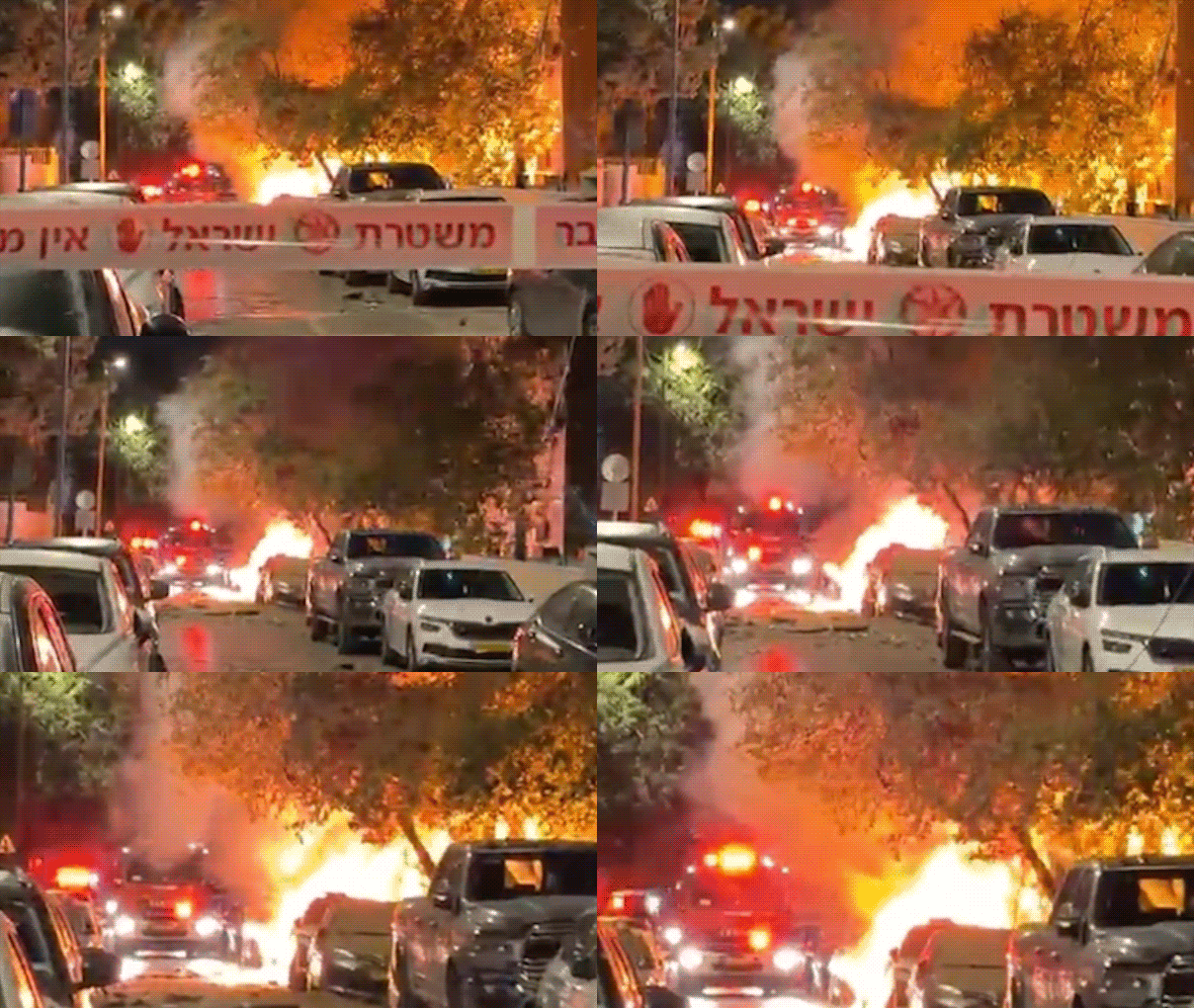
A ballistic missile strike launched by Iran’s Revolutionary Guard hit Ramat Gan, a suburb east of Tel Aviv, overnight Tuesday, killing an elderly couple in their 70s and leaving a trail of destruction in its wake.
Video footage from the scene shows a car engulfed in flames with debris scattered across the street as emergency responders worked amid wailing ambulance sirens. The nighttime attack marks a significant escalation in the ongoing conflict between Iran and Israel.
The Revolutionary Guard claimed responsibility for the attack, stating it was in retaliation for the killing of Ali Larijani, secretary of Iran’s Supreme National Security Council, who was one of the country’s most powerful political figures. According to Iranian military sources, they deployed Khorramshahr-4 and Qadr multiple-warhead missiles in the attack—weapons specifically designed to evade missile defense systems and overwhelm radar tracking capabilities.
“This direct strike on Israeli territory is part of our defensive strategy to protect our sovereignty and respond to aggression against our nation’s leadership,” an Iranian military official stated, though not named in initial reports.
This deadly attack is the latest development in a rapidly escalating cycle of violence that began on February 28, when U.S. and Israeli forces conducted strikes against Iranian targets. Those operations have resulted in the deaths of several senior Iranian officials, including not only Larijani but also Gen. Gholam Reza Soleimani, head of the Revolutionary Guard’s Basij militia, who was killed Tuesday.
In a separate statement, Israeli Defense Minister Israel Katz claimed that Iran’s Intelligence Minister Esmaeil Khatib was also killed in an overnight strike, though Iranian authorities have not yet confirmed this assertion. The conflicting reports highlight the fog of information surrounding the fast-moving conflict.
The missile attack on Ramat Gan represents a significant expansion of Iran’s military response. Tehran has embarked on a widening campaign of missile and drone attacks targeting not only Israel but also U.S.-linked positions and energy infrastructure across the Persian Gulf. Recent days have seen strikes reported in Saudi Arabia, the United Arab Emirates, Qatar, and Bahrain—all key American allies in the region.
Regional security analysts warn that the conflict is approaching a dangerous tipping point. “We’re witnessing the normalization of direct state-to-state attacks between Iran and Israel, which dramatically increases the risk of full-scale war,” said Dr. Michael Knights of the Washington Institute for Near East Policy in a recent analysis.
The escalation has raised serious concerns about regional stability and potential disruptions to global energy supplies. Iran has explicitly threatened shipping through the Strait of Hormuz, a narrow waterway through which approximately 20% of the world’s oil passes. Any disruption to this critical transit route could send global energy prices soaring and destabilize markets already grappling with inflation and supply chain challenges.
Oil prices have already responded to the tensions, with Brent crude rising by nearly 2% in early trading following the missile attack, as traders price in the increased risk of supply disruptions.
International diplomatic efforts to defuse tensions have so far yielded little progress. The United Nations Security Council held an emergency session on Wednesday to address the crisis, but fundamental disagreements between permanent members have prevented any unified response.
U.S. officials have urged both sides to exercise restraint while reinforcing American military presence in the region. The Pentagon announced the deployment of additional air defense systems to protect U.S. bases and allies in the region, signaling Washington’s concern about further escalation.
As emergency workers in Ramat Gan sift through the aftermath of the deadly strike, both Israeli and Iranian officials have indicated that the cycle of retaliation is likely to continue, raising fears that the Middle East may be sliding toward a more comprehensive conflict with global implications.
Fact Checker
Verify the accuracy of this article using The Disinformation Commission analysis and real-time sources.

7 Comments
The use of advanced missile technology in this attack is alarming. While Iran claims this was a defensive response, the targeting of civilians is unacceptable. I worry this will further inflame regional tensions and lead to a dangerous cycle of retaliation.
I agree, this strikes me as a concerning escalation. The loss of innocent life is heartbreaking. I hope the international community can help broker a diplomatic solution to prevent this conflict from spiraling out of control.
Tragic incident. My condolences to the victims’ families. This escalating conflict is deeply concerning and could have grave consequences for the region. I hope both sides show restraint and work towards de-escalation through diplomatic channels.
As an investor, I’m closely watching how this conflict impacts the mining and energy sectors in the region. Geopolitical uncertainty often leads to volatility in commodity prices and equity markets. I’ll be monitoring the situation closely to assess any potential investment risks or opportunities.
This incident underscores the fragility of the situation in the Middle East. I’m curious to hear more details about the specific missiles used and how they were able to evade defense systems. Understanding the technical capabilities involved could help inform a diplomatic response.
I’m curious to learn more about the specific motivations and decision-making behind this Iranian missile strike. Was it truly a defensive measure, or an attempt to project power and deter further action against Iran’s leadership? Understanding the context is key to evaluating an appropriate response.
The loss of life is tragic, but I’m not surprised to see Iran respond with military force given the ongoing tensions. However, I question the strategic value of this particular attack, as it seems to have primarily impacted civilian targets. De-escalation should be the top priority now.