


Listen to the article
Iran’s Revolutionary Guard Strengthens Control Over Hezbollah Amid US Strike Concerns
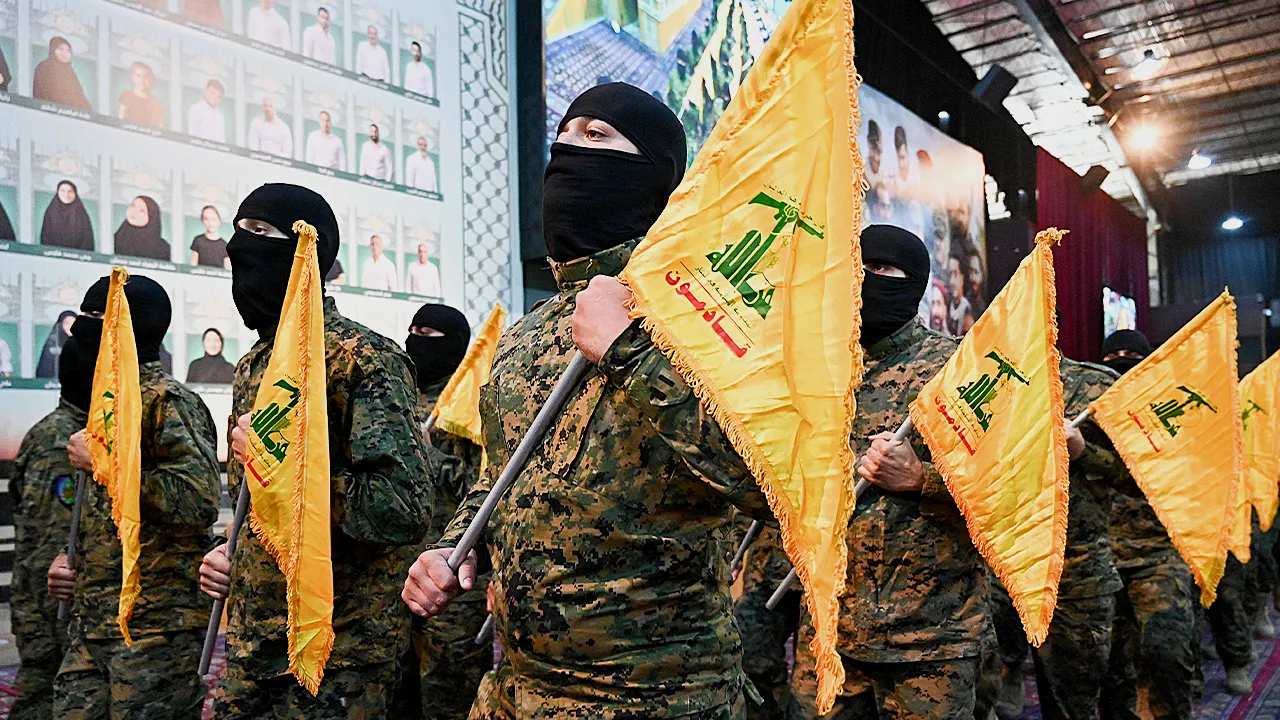
Iran’s Islamic Revolutionary Guard Corps (IRGC) has intensified its control over Hezbollah in recent weeks, according to regional intelligence reports, as tensions escalate amid potential U.S. military strikes against Iran.
The tactical shift comes as both Tehran and its Lebanese proxy prepare for possible military confrontation in the Middle East, with analysts warning that Hezbollah stands ready to be “activated” should Washington move against Iran directly.
“If the regime in Tehran feels threatened, the likelihood of unleashing Hezbollah against Israel and U.S. regional assets increases substantially,” Ross Harrison, a senior fellow at the Middle East Institute, told Fox News Digital. “Hezbollah would not be activated right away, unless the attack immediately targets the leadership of the Islamic Republic. But as part of a graduated response, Hezbollah will likely be seen as an asset.”
Harrison emphasized that the severity of Iran’s response would depend on the perceived threat level. “If it faces an existential risk, then Iran may throw caution to the wind and try to deploy Hezbollah to the maximum,” he explained.
The development comes at a critical moment in U.S.-Iran relations. President Donald Trump has given Iran a deadline of 10 to 15 days to respond to a proposed deal, raising questions about potential U.S. actions should Tehran fail to comply. A new round of diplomatic talks is scheduled for Thursday in Geneva, with discussions expected to focus on Iran’s nuclear program, uranium enrichment levels, and potential sanctions relief.
According to Harrison, the decision-making process regarding Iran remains tightly controlled within the Trump administration. “The decision-making circle in the White House is very small regarding Iran, with the president keeping a close hand on it all,” he said, adding that any decision to directly target the Iranian regime would likely remain within Trump’s inner circle of advisers.
Regional media outlets, including Al Arabiya and Al Hadath, report that IRGC officers have been actively rebuilding Hezbollah’s military infrastructure and managing strategic war plans. This coordination follows significant changes within Hezbollah’s leadership structure after the killing of its leader Hassan Nasrallah by Israel last year.
“Since the killing by Israel of Hezbollah leader Hassan Nasrallah last year, ties and operational coordination have to some degree been reestablished,” Harrison noted. “The IRGC has supported Hezbollah in Lebanon for decades,” he added, explaining that efforts to strengthen these ties appear to be accelerating “particularly in light of the destruction of Iran’s nuclear sites last June.”
Security experts warn that any military confrontation could quickly escalate beyond bilateral tensions. “There is potential for attacks to spread across the region, to Israel through direct Iranian ballistic attacks and via Hezbollah, and to the Gulf Arab states through Iran directly and possibly via the Houthis from Yemen,” Harrison cautioned.
The strategic relationship between Iran and Hezbollah has long been a cornerstone of Tehran’s regional influence strategy. Hezbollah, which was formed with Iranian support in the 1980s, has evolved into one of the most powerful non-state military actors in the Middle East, with considerable political influence in Lebanon.
“Iran is trying to resurrect lost assets, such as its missile program and its connections to Hezbollah,” Harrison explained. “Hezbollah has been seen for decades by Iran as a deterrence asset against an Israeli or American attack.”
However, Harrison also noted the complexity of the relationship. “Since Hezbollah has its own interests, connected to but separate from Iran, whether its leadership will go all the way for Tehran is unknown,” he concluded.
These developments coincide with significant internal changes in Iran’s power structure. According to reports, Supreme Leader Ayatollah Ali Khamenei has appointed close ally Ali Larijani as the country’s de facto leader, potentially signaling shifts in Iran’s strategic decision-making.
As diplomatic efforts continue amid rising tensions, regional observers are closely monitoring both the outcome of the Geneva talks and any shifts in military posturing that could indicate preparations for conflict. Gulf states, particularly Saudi Arabia and the United Arab Emirates, have reportedly warned about the dangers of regional escalation, which could have severe consequences for regional stability and global energy markets.
Fact Checker
Verify the accuracy of this article using The Disinformation Commission analysis and real-time sources.

8 Comments
The potential for Hezbollah to be ‘activated’ by Iran is a worrying prospect. Any US strike would need to carefully weigh the risks of provoking a Hezbollah response, which could draw Israel further into the conflict.
Hezbollah is a powerful proxy force that Iran could potentially activate against US interests in the Middle East. Any US strike on Iran would need to carefully weigh the risk of Hezbollah retaliation.
This is a concerning development. Iran’s close ties with Hezbollah could escalate tensions in the region if the US strikes against Iran. Careful diplomacy and de-escalation will be crucial to avoid further conflict.
Iran’s use of Hezbollah as a proxy is concerning, but the details on their current level of control and readiness are still unclear. Thorough intelligence and measured responses will be essential to navigate this complex situation.
Iran’s strengthening control over Hezbollah is a significant development that adds complexity to the already tense US-Iran relationship. The decision-making process in Washington will be critical in how this plays out.
The decision to deploy Hezbollah would be a risky move by Iran, but one they may feel compelled to take if they perceive an existential threat. The US and its allies will need to tread carefully to avoid further escalation.
The relationship between Iran and Hezbollah is a complex and concerning dynamic. Any US action against Iran would need to carefully consider the risk of Hezbollah being mobilized in retaliation.
This is a concerning scenario that highlights the potential for regional escalation. Any US strike on Iran would need to be accompanied by a clear strategy for managing Hezbollah’s potential involvement.