


Listen to the article
Iran Escalates Regional Conflict with Attacks on Israel and Gulf States
Iran launched a new wave of attacks against Israel and Gulf Arab nations on Tuesday, intensifying a conflict that has destabilized the Middle East and sent global oil prices soaring. The attacks targeted multiple locations across the region, demonstrating Iran’s determination to maintain pressure on its adversaries.
In Dubai, air raid sirens warned residents of incoming missiles, while Bahraini authorities reported that an Iranian attack struck a residential building in the capital, killing a 29-year-old woman and injuring eight others. Saudi Arabia intercepted two drones over its oil-rich eastern region, and Kuwait’s National Guard shot down six drones in what appears to be a coordinated assault.
The violence spread to Israel, where sirens sounded in Jerusalem and explosions were heard in Tel Aviv as defense systems worked to intercept incoming Iranian missiles. Later in the day, witnesses reported several explosions in Tehran as Israel conducted retaliatory airstrikes.
Iran’s leadership has taken a defiant stance. Parliament Speaker Mohammad Bagher Qalibaf declared on social media platform X, “We are definitely not looking for a ceasefire. We believe that the aggressor should be punched in the mouth so that he learns a lesson.” Another senior Iranian official, Ali Larijani, appeared to directly threaten U.S. President Donald Trump, writing, “Iran doesn’t fear your empty threats. Even those bigger than you couldn’t eliminate Iran. Be careful not to get eliminated yourself.”
The attacks appear strategically designed to target energy infrastructure and disrupt maritime traffic through the Strait of Hormuz, a critical waterway through which approximately 20% of the world’s oil passes. This strategy aims to create enough global economic pain to pressure the United States and Israel to end their military operations against Iran.
The economic impact has been immediate and significant. Brent crude, the international oil benchmark, spiked to nearly $120 per barrel on Monday before settling around $90 on Tuesday – still 24% higher than when the conflict began on February 28. This price volatility threatens global economic stability and could lead to increased costs for gasoline and other petroleum products worldwide.
The shipping industry has been severely impacted. Iran’s Revolutionary Guard has effectively blocked tanker traffic through the Strait of Hormuz, stating they “will not allow the export of even a single liter of oil from the region to the hostile side and its partners until further notice.” Attacks on merchant vessels have already claimed at least seven sailors’ lives, according to the International Maritime Organization.
In response, Saudi Arabia’s oil giant Aramco is rerouting tankers to avoid the strait. CEO Amin Nasser announced that the company’s East-West pipeline would reach full capacity of 7 million barrels per day this week, delivering oil to the Red Sea port of Yanbu. However, Nasser warned that “if this takes a long time, that will have serious impact on the global economy.”
Israeli Prime Minister Benjamin Netanyahu has vowed to continue military operations against Iran. “Our aim is to bring the Iranian people to cast off the yoke of tyranny, but ultimately it depends on them,” Netanyahu said. “There is no doubt that with the actions taken so far, we are breaking their bones.”
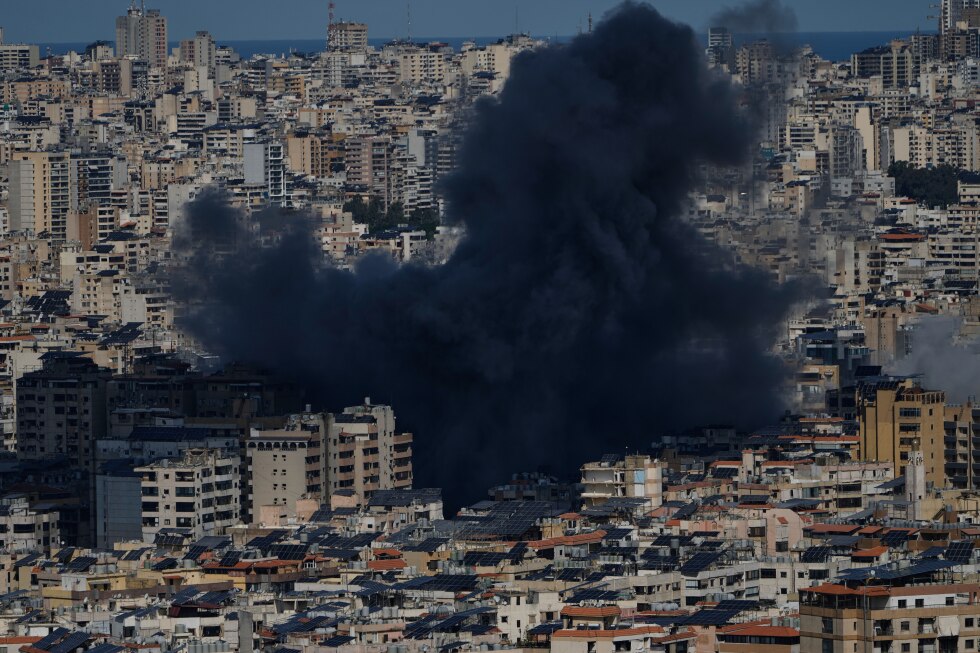
The conflict has spread beyond Iran and Israel, engulfing multiple countries across the region. Israel has launched attacks against Hezbollah in Lebanon, which has responded with missile strikes. Iran-backed militias in Iraq have targeted U.S. bases, and an airstrike on Tuesday killed at least five members of the 40th Brigade of the Popular Mobilization Forces in Kirkuk, Iraq.
The human toll continues to mount. Since the war began, at least 1,230 people have been killed in Iran, 397 in Lebanon, and 11 in Israel, according to official reports. Seven U.S. service members have also lost their lives in the conflict.
In an unexpected development, five members of the Iranian women’s soccer team who were in Australia for a tournament when the conflict began have been granted asylum. Australian Home Affairs Minister Tony Burke confirmed that all 26 team members have been offered asylum after the team drew attention for not singing the Iranian national anthem before their first match.
As the conflict intensifies and spreads, the international community faces mounting concerns about regional stability, global energy security, and the potential for further escalation in what has already become a devastating multinational conflict.
Fact Checker
Verify the accuracy of this article using The Disinformation Commission analysis and real-time sources.

17 Comments
This is a worrying development that could have far-reaching implications for mining, energy, and other commodity markets. Careful analysis of the geopolitical dynamics at play will be crucial.
Iran’s aggressive actions are troubling and jeopardize stability in the Middle East. Careful monitoring of the situation and its implications for energy, mining, and other industries is warranted.
The impacts of these attacks on energy markets and global supply chains could be significant. Closely monitoring the situation for potential disruptions to commodities like oil, gas, and minerals.
These attacks highlight the fragility of the regional security environment and the potential for disruption to global commodity markets. Vigilance and nuanced policymaking will be essential going forward.
Iran’s missile strikes represent a concerning provocation. While their motivations are complex, these attacks threaten to draw the region into further instability and violence.
The escalation of hostilities between Iran and its neighbors is deeply concerning. Maintaining a careful balance between security and diplomacy will be key to managing the fallout.
Deeply concerning to see Iran lashing out with these attacks. Restraint and diplomacy are urgently needed to de-escalate tensions and prevent a wider regional conflagration.
Troubling to see Iran’s brazen attacks on its neighbors. This underscores the fragility of the geopolitical landscape and the need for robust security frameworks in the Middle East.
Agreed. The stability of global energy markets hangs in the balance. Prudent policymaking is crucial to mitigate the fallout from this conflict.
Concerning escalation of regional tensions as Iran ramps up attacks on Israel and Gulf states. This further destabilizes the Middle East and impacts global energy markets.
The escalating conflict between Iran and its adversaries poses serious risks to the global economy, especially energy and commodity sectors. Careful monitoring of the situation is warranted.
Iran’s belligerence puts critical energy and mineral supply chains at risk. Careful monitoring of the situation and contingency planning will be essential for industries reliant on Middle East exports.
Absolutely. The stability of global commodity markets hangs in the balance. Prudent risk management is crucial during this volatile period.
While Iran’s motives are complex, these attacks only serve to heighten tensions. Restraint and dialogue are required to chart a peaceful path forward.
Iran appears determined to exert influence through force, but this risks spiraling into wider regional war. All parties must exercise caution and prioritize diplomacy to de-escalate the crisis.
Iran’s aggressive posturing is deeply concerning. These attacks jeopardize regional security and threaten critical energy infrastructure. De-escalation and diplomatic solutions are urgently needed.
I agree, the situation is very volatile. Cooler heads must prevail to prevent further conflict and economic disruption.