


Listen to the article
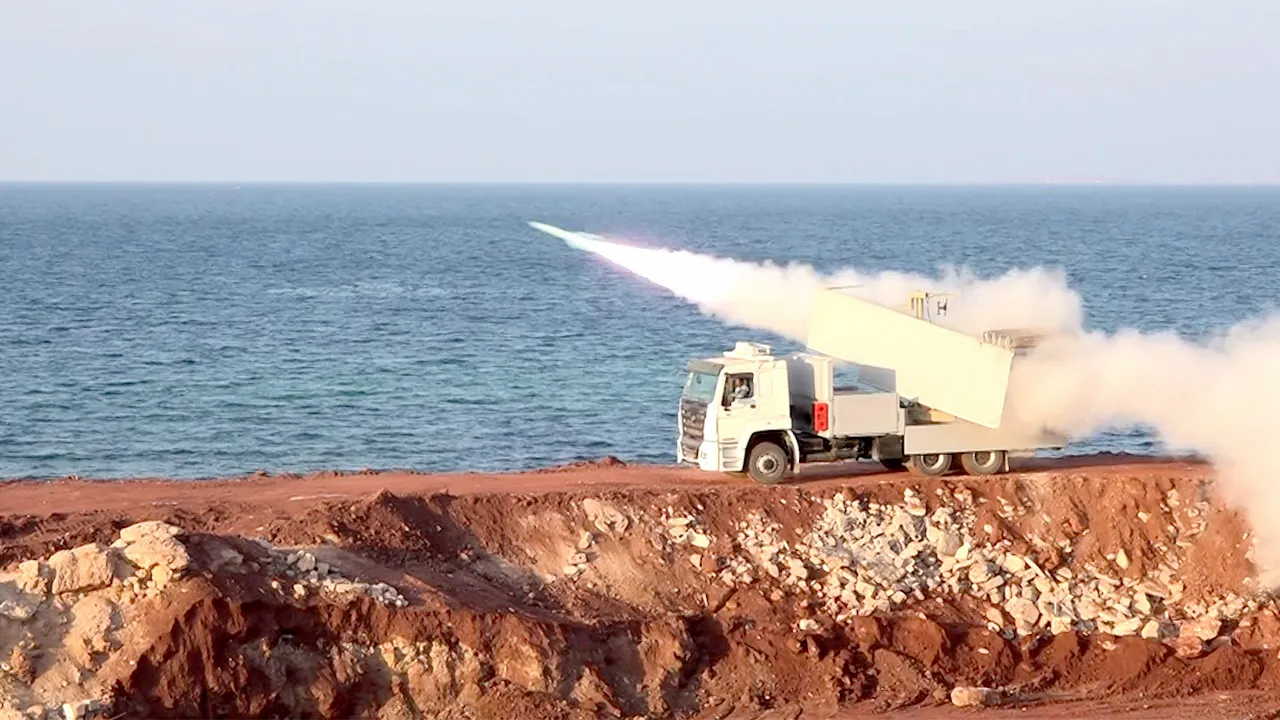
Iran conducted a significant military exercise in the Strait of Hormuz on Tuesday, firing live missiles and temporarily suspending maritime traffic through this critical global oil transit route. According to Iranian state-affiliated media, the Islamic Revolutionary Guard Corps (IRGC) Navy stands ready to shut down the strait if ordered by senior leadership.
Rear Admiral Alireza Tangsiri, commander of the IRGC Navy, made the statement about Iran’s readiness to close the waterway, according to Tasnim News Agency, which is affiliated with the IRGC. The exercise, dubbed “Smart Control of the Strait of Hormuz,” involved comprehensive military operations including missile launches from vessels, coastal positions, and inland sites, as well as drone operations conducted under signal-jamming conditions.
The timing of the drills is particularly significant as they coincide with ongoing diplomatic efforts between the United States and Iran. President Donald Trump’s envoys Steve Witkoff and Jared Kushner are currently meeting with senior Iranian officials in Geneva for a second round of nuclear talks, highlighting the complex dynamics at play in U.S.-Iran relations.
The Strait of Hormuz represents one of the world’s most strategically important maritime chokepoints, with approximately one-fifth of global oil shipments passing through its narrow waters. Any disruption to this passage would have immediate and severe consequences for global energy markets and the world economy.
In late January, U.S. Central Command (CENTCOM) had urged the IRGC to conduct its announced live-fire naval exercises “in a manner that is safe, professional and avoids unnecessary risk to freedom of navigation for international maritime traffic.” CENTCOM emphasized that while Iran has the right to operate in international waters, “unsafe and unprofessional behavior” increases risks of collision, escalation, and regional destabilization.
The Trump administration has maintained a substantial military presence in the Middle East as nuclear talks continue. U.S. officials have indicated that any potential agreement with Iran would need to address concerns beyond uranium enrichment, including the country’s ballistic missile program, support for regional proxy groups, and domestic human rights issues.
Secretary of State Marco Rubio articulated this position in February, stating that for negotiations to be “meaningful,” they would need to comprehensively address Iran’s nuclear activities, ballistic missile development, sponsorship of terrorist organizations across the region, and treatment of its own citizens.
The current diplomatic engagement represents a critical juncture in U.S.-Iran relations, which have been marked by tensions since the collapse of the previous nuclear agreement when Trump withdrew from the deal during his first term. The administration’s dual approach of maintaining military pressure while pursuing diplomatic channels reflects the complex challenges in managing relations with Tehran.
Speaking to reporters aboard Air Force One on Monday, President Trump indicated he would be involved in the talks “indirectly” and acknowledged Iran’s reputation as a tough negotiator. “They want to make a deal,” Trump stated, while referencing past military actions directed at Iran’s nuclear facilities.
The naval exercises and timing of the diplomatic talks underscore the delicate balance between military posturing and diplomatic engagement that characterizes the current state of U.S.-Iran relations. As negotiations continue in Geneva, activities in the Strait of Hormuz serve as a reminder of the high stakes involved and the potential for regional instability should diplomatic efforts fail.
Energy markets will be closely monitoring developments in both the military and diplomatic arenas, as any escalation in tensions could have immediate impacts on global oil prices and supply chains that depend on free passage through this vital maritime corridor.
Fact Checker
Verify the accuracy of this article using The Disinformation Commission analysis and real-time sources.

27 Comments
Exploration results look promising, but permitting will be the key risk.
Good point. Watching costs and grades closely.
Good point. Watching costs and grades closely.
Uranium names keep pushing higher—supply still tight into 2026.
Good point. Watching costs and grades closely.
Production mix shifting toward World might help margins if metals stay firm.
Exploration results look promising, but permitting will be the key risk.
Good point. Watching costs and grades closely.
Good point. Watching costs and grades closely.
Exploration results look promising, but permitting will be the key risk.
Good point. Watching costs and grades closely.
Good point. Watching costs and grades closely.
I like the balance sheet here—less leverage than peers.
Good point. Watching costs and grades closely.
If AISC keeps dropping, this becomes investable for me.
Good point. Watching costs and grades closely.
Good point. Watching costs and grades closely.
I like the balance sheet here—less leverage than peers.
Good point. Watching costs and grades closely.
Good point. Watching costs and grades closely.
The cost guidance is better than expected. If they deliver, the stock could rerate.
Good point. Watching costs and grades closely.
The cost guidance is better than expected. If they deliver, the stock could rerate.
Good point. Watching costs and grades closely.
Good point. Watching costs and grades closely.
Nice to see insider buying—usually a good signal in this space.
Good point. Watching costs and grades closely.