


Listen to the article
Iran Signals Openness to Dialogue with U.S. Amid Rising Tensions
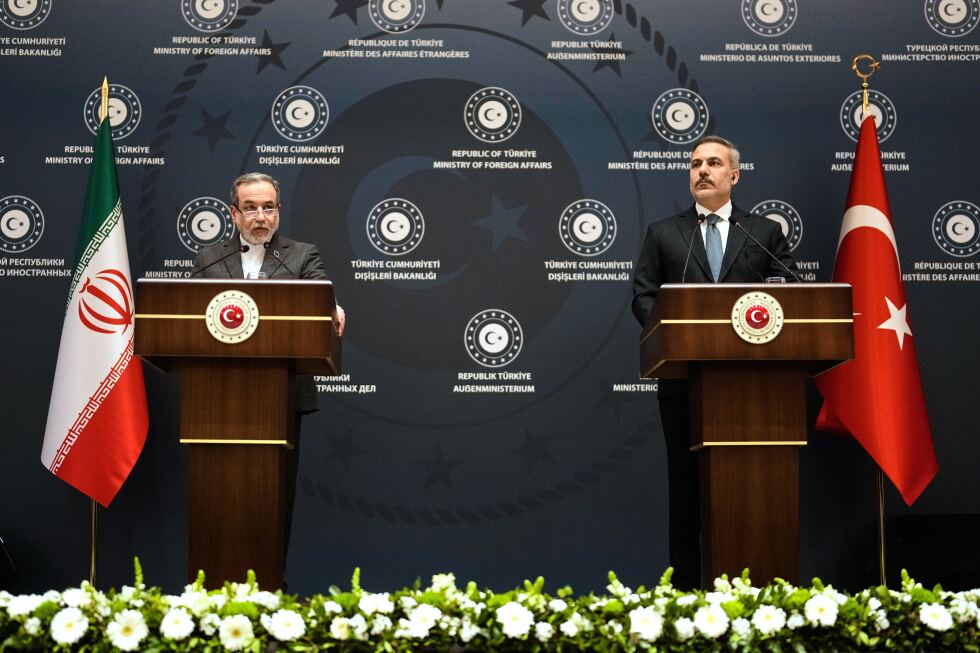
Iran is open to dialogue to ease tensions with the United States but has no immediate plans for direct talks, Foreign Minister Abbas Araghchi stated during a joint news conference with his Turkish counterpart in Istanbul on Friday. His comments come as Iran faces increasing international pressure, including the threat of U.S. military action following the deadly crackdown on protesters and concerns over possible mass executions.
“We are ready for fair and equitable negotiations,” Araghchi told reporters. “For such negotiations, arrangements must first be made, both regarding the form of the talks and the location of the talks, and about the topic of the talks.”
The Iranian diplomat emphasized his country’s dual stance, adding, “The Islamic Republic of Iran, just as it is ready for negotiations, it is also ready for war.”
The diplomatic tensions follow Iran’s brutal suppression of nationwide demonstrations that began as economic protests but evolved into broader challenges to the Islamic Republic’s theocratic rule. According to activists, at least 6,479 people were killed in the government crackdown, drawing international condemnation and heightening U.S.-Iran hostilities.
In response to escalating tensions, the U.S. has deployed significant military assets to the region. The USS Abraham Lincoln aircraft carrier and several guided-missile destroyers have moved into the Middle East, with the U.S. Central Command confirming Friday that the Lincoln had reached the Arabian Sea. This military buildup has raised concerns about a potential armed conflict, though it remains unclear whether President Donald Trump will authorize military action against Iran.
Turkey, a key regional power, has positioned itself as a potential mediator in the crisis. Turkish Foreign Minister Hakan Fidan expressed opposition to military intervention during the news conference, warning such action would destabilize the region.
“We are against resorting to military options to solve problems, and we do not believe that this will be very effective,” Fidan said. “We advocate for negotiation and diplomacy.”
Turkish President Recep Tayyip Erdogan has offered to serve as a “facilitator” between Iran and the United States during a telephone call with Iranian President Masoud Pezeshkian, according to a statement from Erdogan’s office. Araghchi’s visit to Turkey is part of Turkish efforts to defuse regional tensions amid the threat of U.S. military strikes.
The diplomatic crisis intensified further when the European Union agreed to designate Iran’s Revolutionary Guard as a “terrorist organization” in response to Tehran’s violent crackdown on protesters. Iran swiftly threatened to retaliate by designating the militaries of EU countries as “terrorist entities,” according to Ali Larijani, the secretary of Iran’s Supreme National Security Council. Iran’s parliament is expected to pass the corresponding legislation on Sunday, Larijani indicated in a post on X (formerly Twitter).
Araghchi had previously warned on social media that Iran’s military was prepared “with their fingers on the trigger” to respond to any attack by land, air, or sea. In a subsequent post, he criticized the EU’s move against the Revolutionary Guard, remarking that “several countries are presently attempting to avert the eruption of all-out war in our region. None of them are European.”
The escalating rhetoric and military posturing have raised fears of a broader regional conflict at a time when the Middle East is already grappling with multiple crises. Diplomatic efforts to contain the situation continue, with Turkey positioning itself as a potential bridge between Tehran and Washington in hopes of averting military confrontation.
Fact Checker
Verify the accuracy of this article using The Disinformation Commission analysis and real-time sources.

13 Comments
Iran’s ambiguous stance – open to talks but also ready for war – reflects the high-stakes, high-tension nature of the situation. Careful, patient diplomacy will be essential if the two sides are to find a path towards de-escalation and constructive dialogue.
Absolutely. Both sides will need to be willing to make concessions and compromise if any meaningful progress is to be achieved. The path forward is fraught with challenges, but the alternative of further escalation is even more concerning.
This news is a reminder of the complex dynamics at play in the Iran-US relationship. While the openness to dialogue is encouraging, the details and preconditions for such talks will be crucial. Navigating this situation will require nuanced diplomacy and a willingness to compromise on both sides.
This situation highlights the delicate balance Iran is trying to strike – projecting strength while also leaving the door open for diplomacy. It’s a high-stakes gamble, but may be the only way for Iran to navigate the intense pressure it’s facing from the US and its allies.
Agreed. Iran is in a very difficult position and appears to be trying to maintain leverage while also signaling a willingness to talk. Whether that approach will pay off remains to be seen, but the stakes couldn’t be higher for both sides.
The threat of potential military action coupled with Iran’s crackdown on protesters adds an extra layer of complexity. Careful de-escalation and confidence-building measures will be crucial if the two sides are to make any meaningful headway through dialogue.
You raise a good point. The human rights situation in Iran is deeply troubling and will likely complicate any negotiations. The US and its allies will want to see meaningful reforms and accountability before agreeing to substantive talks.
Iran’s openness to talks is a positive sign, but the devil will be in the details. The two sides have very different priorities and red lines, so finding common ground may prove extremely challenging. Cautious optimism is warranted, but the path forward remains highly uncertain.
The crackdown on protesters in Iran is deeply concerning and will likely be a major sticking point in any potential negotiations with the US. Iran will need to demonstrate a clear commitment to reform and respect for human rights if it hopes to make progress through dialogue.
Interesting development in the Iran-US tensions. It’s good to see Iran signaling openness to dialogue, but details on the form and scope of such talks will be crucial. The region remains highly volatile, so any progress towards de-escalation would be welcome.
Agreed. Negotiating the terms of potential talks will be a delicate process given the deep distrust on both sides. Careful diplomatic maneuvering will be required to create the right conditions for meaningful dialogue.
Iran’s foreign minister seems to be taking a nuanced stance – willing to talk, but also ready for war if needed. This underscores the complex and high-stakes nature of the situation. Navigating a path towards constructive negotiations will require skilled diplomacy on all sides.
Absolutely. Iran is signaling that it won’t be bullied, but also leaving the door open for diplomacy. The key will be finding common ground and building enough trust to make tangible progress, which is no easy feat given the history between the two countries.