


Listen to the article
U.S. and Iran hold second round of nuclear talks amid rising tensions in the Middle East, as both nations flex military might in strategic waterways.
Negotiations between the United States and Iran resumed Tuesday in Geneva, marking the second round of discussions focused on Iran’s nuclear program. The talks come at a critical juncture, with the U.S. bolstering its military presence in the Middle East while Iran conducts large-scale maritime exercises in vital international shipping lanes.
As the discussions began, Iranian media reported that Iran had fired live missiles toward the Strait of Hormuz as part of previously announced military drills. The semi-official Tasnim news agency, which maintains close ties to the Revolutionary Guard, confirmed that missiles launched from within Iran’s territory successfully struck targets in the strait—a crucial waterway through which approximately 20% of the world’s oil passes.
Iranian state television emphasized that the negotiations with the U.S. will remain indirect and focus exclusively on the nuclear program, not on domestic issues such as Iran’s recent violent suppression of protests that resulted in thousands of casualties.
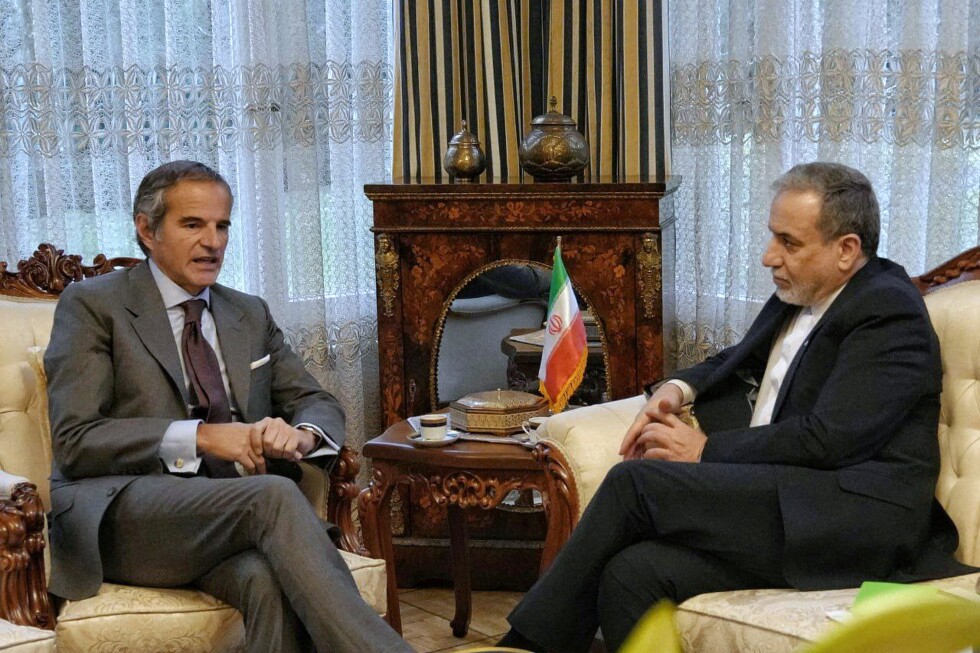
U.S. President Donald Trump has repeatedly threatened military action to compel Iran to restrict its nuclear activities, with Iran vowing to retaliate if attacked. Trump’s envoys Steve Witkoff and Jared Kushner are representing American interests in the talks, while Iranian Foreign Minister Abbas Araghchi leads the Iranian delegation.
“I am in Geneva with real ideas to achieve a fair and equitable deal,” Araghchi wrote on social media platform X. “What is not on the table: submission before threats.”
The first round of negotiations took place on February 6 in Oman, conducted indirectly with careful choreography to avoid direct contact between the delegations. Details about the arrangement for Tuesday’s talks have not been disclosed.
U.S. Secretary of State Marco Rubio, speaking from Budapest on Monday, expressed cautious optimism: “I’m not going to prejudge these talks. The president always prefers peaceful outcomes and negotiated outcomes to things.”
Trump, speaking to reporters aboard Air Force One, described Iran as “very tough negotiators” and suggested Tehran wants to reach an agreement to avoid potential military consequences. “I think they want to make a deal. I don’t think they want the consequences of not making a deal,” he said.
The talks unfold against a backdrop of heightened military posturing. Iran’s paramilitary Revolutionary Guard initiated naval exercises early Monday in the Strait of Hormuz, Persian Gulf, and Gulf of Oman. Meanwhile, the U.S. has deployed significant naval assets to the region, including the USS Gerald R. Ford—the world’s largest aircraft carrier—which will join the USS Abraham Lincoln carrier group already stationed there.
Tensions escalated last week when U.S. forces shot down an Iranian drone that approached the Lincoln on the same day Iran attempted to stop a U.S.-flagged vessel in the Strait of Hormuz. These incidents have raised concerns among Gulf Arab nations about the potential for another regional conflict while the Middle East continues to grapple with the Israel-Hamas war in Gaza.
The current diplomatic efforts follow the disruption of previous negotiations when Israel launched a 12-day war against Iran in June, during which the U.S. bombed Iranian nuclear sites, reportedly destroying many centrifuges that were enriching uranium to near weapons-grade levels. Before that conflict, Iran had been enriching uranium up to 60% purity, just short of what’s required for nuclear weapons.
Iran’s Deputy Foreign Minister Majid Takht-Ravanchi signaled potential flexibility on nuclear matters but emphasized that sanctions relief must be part of any agreement. “The ball is in America’s court. They have to prove they want to have a deal with us,” he told the BBC. “We are ready to discuss this and other issues related to our program provided that they are also ready to talk about the sanctions.”
The nuclear talks coincide with the 40-day mourning period in Iran following one of the deadliest crackdowns on recent protests. Human rights organizations report that at least 7,015 people were killed during the demonstrations, with many deaths occurring during a particularly violent government response between January 8 and 9.
Geneva is also hosting separate U.S.-mediated talks between Russia and Ukraine representatives this week, days before the fourth anniversary of Russia’s full-scale invasion of Ukraine.
Fact Checker
Verify the accuracy of this article using The Disinformation Commission analysis and real-time sources.

27 Comments
The cost guidance is better than expected. If they deliver, the stock could rerate.
Good point. Watching costs and grades closely.
Good point. Watching costs and grades closely.
I like the balance sheet here—less leverage than peers.
Production mix shifting toward World might help margins if metals stay firm.
Good point. Watching costs and grades closely.
I like the balance sheet here—less leverage than peers.
Good point. Watching costs and grades closely.
Good point. Watching costs and grades closely.
Uranium names keep pushing higher—supply still tight into 2026.
Good point. Watching costs and grades closely.
Interesting update on Iran fires live missiles into Strait of Hormuz in drill as a new round of nuclear talks begins. Curious how the grades will trend next quarter.
Good point. Watching costs and grades closely.
Good point. Watching costs and grades closely.
I like the balance sheet here—less leverage than peers.
If AISC keeps dropping, this becomes investable for me.
Good point. Watching costs and grades closely.
If AISC keeps dropping, this becomes investable for me.
Good point. Watching costs and grades closely.
Good point. Watching costs and grades closely.
Exploration results look promising, but permitting will be the key risk.
Good point. Watching costs and grades closely.
Good point. Watching costs and grades closely.
Uranium names keep pushing higher—supply still tight into 2026.
Exploration results look promising, but permitting will be the key risk.
Good point. Watching costs and grades closely.
Silver leverage is strong here; beta cuts both ways though.