


Listen to the article
Iran Escalates Regional Threats While Cracking Down on Protests Amid Renewed Diplomatic Efforts
As diplomatic discussions between Washington and Tehran gain momentum, Iran has intensified its rhetoric toward neighboring countries while continuing a violent domestic crackdown, according to analysts and eyewitness accounts.
Iran issued stern warnings Sunday and Monday that any military strike against its territory would trigger a regional conflict, even as high-ranking officials signal willingness to negotiate. Reuters reported Monday that Tehran is exploring renewed nuclear talks with the United States, with Turkey emerging as a potential venue. Regional mediators, including Saudi Arabia and Qatar, are taking active roles in the process, following President Donald Trump’s expressed hope that a deal could avert military action against Iran.
U.S. envoy Steve Witkoff is scheduled to arrive in Israel Tuesday for meetings with Prime Minister Benjamin Netanyahu and Israel Defense Forces Chief of Staff Lt. Gen. Eyal Zamir. The talks will likely focus on Iran, following Zamir’s weekend visit to Washington, where he met with U.S. defense officials to discuss the Islamic Republic.
“This is very typical behavior for the Iranian regime,” said Benny Sabti, an Iran expert at Israel’s Institute for National Security Studies, in comments to Fox News Digital. He noted that Iran deliberately escalated threats days ago, warning that if attacked, no country in the Middle East would be safe. “They treat the region as if it is being held hostage,” Sabti explained, adding that the tactic appears effective.
The strategy has prompted regional powers to advocate for diplomatic solutions. “Saudi Arabia, Turkey, Qatar, all of them went to the United States pushing for talks,” Sabti said. “They are trying to avoid being dragged into the Iranian threat.”
Tehran’s dual messaging strategy is deliberate, according to analysts. “There are two voices coming out of Iran,” Sabti observed. “On one side, the generals, the IRGC, the military, escalating threats. On the other side, the foreign minister and the president are talking about negotiations.”
The mixed signals continued Monday morning when Iranian news agencies Tasnim and Fars reportedly deleted a report referencing approval for negotiations with the United States, according to Al Arabiya.
Even Iran’s National Security Council reflects this approach, with a deputy official recently indicating Iran would not yet further advance its enriched uranium, while military officials simultaneously heightened their rhetoric. “It is meant to confuse the enemy and to keep the entire Middle East under pressure,” Sabti explained.
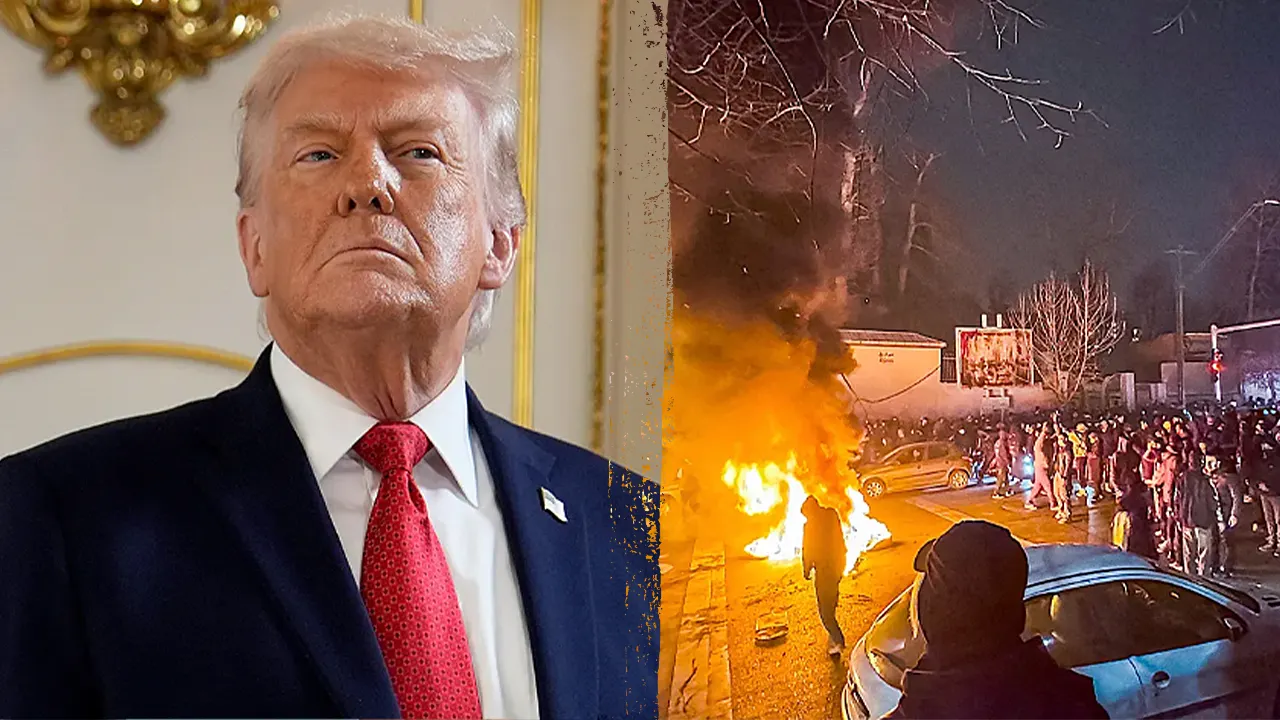
While projecting this calibrated external posture, reports from inside Iran point to an intensifying crackdown on protesters. Casualty estimates vary widely, with the Human Rights Activists News Agency (HRANA) reporting that based on its latest data, 6,842 people had been killed through the 36th day of protests. According to HRANA, 6,425 of those were protesters, with 146 being children under 18. An additional 11,280 cases remain under investigation.
Opposition-linked groups warn the final death toll could reach as high as 30,000, significantly higher than current confirmed figures.
Fox News Digital received eyewitness accounts from individuals identified as part of the MEK’s Resistance Units network inside Iran. One witness from Eslamshahr, a southern district of Tehran, reported that security forces fired upon a group of 27 protesters, killing 10. The source said a cousin was killed, while another 20-year-old cousin was mutilated, with bodies allegedly buried in a nearby park.
In Lahijan, northern Gilan Province, a witness reported 30 protesters were shot outside the governor’s office on January 8, with seven later dying in the hospital. A 16-year-old from Shiraz reported being shot with pellet guns in the lips, eye, and throat, resulting in vision problems.
Another account from Bandar Abbas in southern Iran claimed that since January 18, martial law has effectively been imposed, with residents barred from streets after 4 p.m. The source alleged security forces entered hospitals to remove or kill wounded protesters and claimed families were told to pay approximately $8,000 to recover the bodies of their relatives.
The renewed diplomatic efforts have reportedly deepened disillusionment among protesters inside Iran. “Many protesters are very disappointed,” Sabti noted. “When Trump said on January 13 that ‘help is on its way,’ they believed it. They were very emotional about it. After 47 years, an American president was speaking in support of the Iranian people. But now they interpret his words as helping the regime, not the protesters. The disappointment is very deep.”
As regional and international stakeholders weigh their options, Iran’s leadership continues to project strength externally while facing significant internal pressure. The ongoing diplomatic dance reflects the complex calculus facing both Iran’s government and international powers seeking to address nuclear concerns while navigating the humanitarian crisis unfolding within the country’s borders.
Fact Checker
Verify the accuracy of this article using The Disinformation Commission analysis and real-time sources.

5 Comments
Iran’s escalating regional rhetoric is certainly concerning. However, the reported willingness to engage in renewed nuclear talks suggests a potential opening for diplomacy. The outcome of these discussions will have far-reaching implications.
Interesting developments in the Iran-US diplomatic saga. It’s a delicate balance as both sides weigh their options amidst rising regional tensions. I’m curious to see if any breakthroughs emerge from the upcoming negotiations.
The potential for a renewed nuclear deal with Iran is certainly compelling, especially given the broader geopolitical implications. However, the domestic crackdown on protests remains deeply concerning. Tough choices ahead for all parties involved.
The involvement of regional mediators like Saudi Arabia and Qatar is an interesting development. Their ability to bridge divides and facilitate dialogue could prove pivotal. I hope all sides can find common ground to de-escalate tensions.
As a close ally of the US, Israel’s role in these discussions will be crucial. I wonder how the meetings between US and Israeli officials will shape the diplomatic path forward on Iran. Navigating this complex situation requires careful diplomacy.