


Listen to the article
Iran’s Terrorist Proxies Poised to Join Counteroffensive Against US-Israel Strikes
The Islamic Republic of Iran has mobilized its network of predominantly Shiite terrorist organizations—collectively known as the “axis of resistance”—to prepare for retaliatory strikes following joint US-Israel military operations against Iranian military installations and leadership targets.
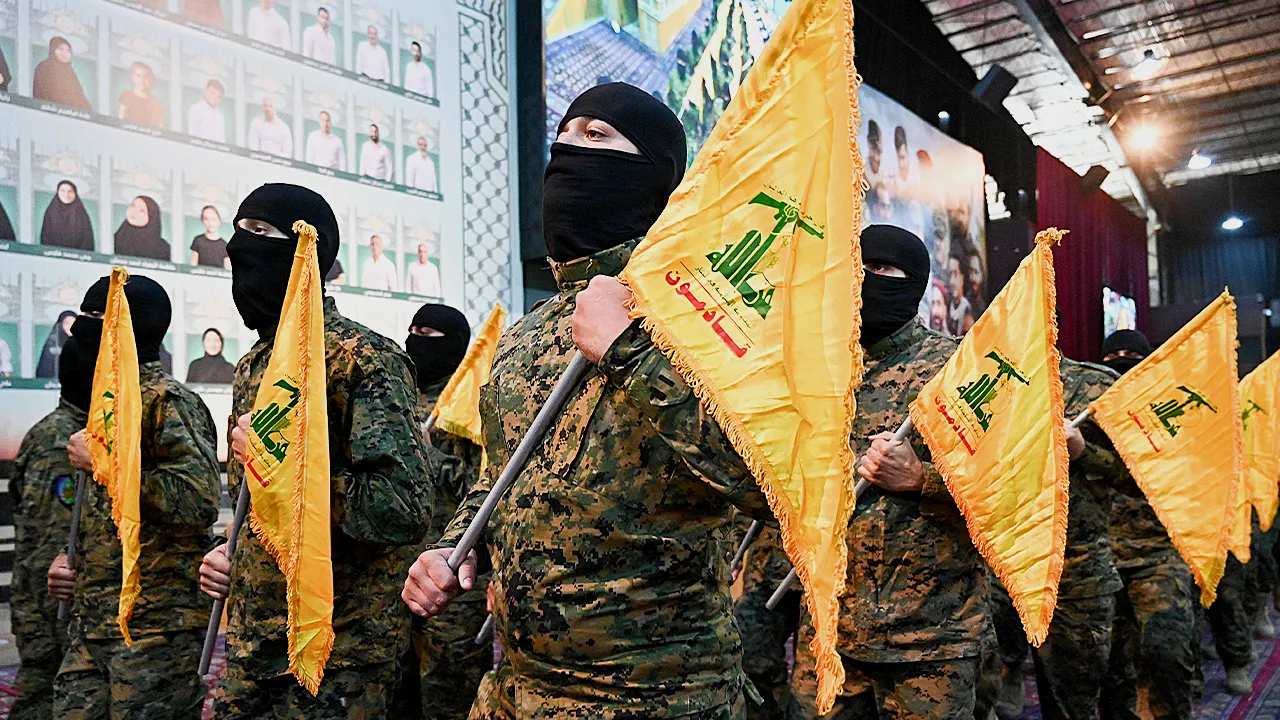
At the forefront of Iran’s proxy alliance stands Hezbollah, the Lebanese terrorist organization that serves as Tehran’s most formidable strategic partner. Israeli forces had been conducting intensive operations against Hezbollah positions in the lead-up to the US campaign, dubbed “Operation Epic Fury.”
According to IDF spokesperson Effie Defrin, “In Lebanon, we continue to act daily against attempts by the Hezbollah terrorist organization to rebuild and rearm.” He cited a recent strike in the Baalbek area, where Israeli forces targeted ammunition depots and eliminated terrorists from Hezbollah’s elite Radwan Force.
“We will not allow Hezbollah to rebuild its capabilities and pose a threat to Israeli civilians,” Defrin emphasized.
Despite the November 2024 ceasefire agreement requiring the Lebanese Armed Forces (LAF) to disarm Hezbollah, implementation has been minimal. IDF Lt. Col. (Res.) Sarit Zehavi, president and founder of the Israel-based Alma Research and Education Center in northern Israel, told Fox News Digital, “The Lebanese army is not putting much effort into disarming Hezbollah. The outcome of that is good intentions are just words. As a resident of the north, I have not seen any systematic disarmament.”
A Hezbollah official stated on Wednesday that the organization would refrain from military intervention if the US conducts “limited” strikes against Iran. However, the official indicated that any attack targeting Iran’s Supreme Leader, Ayatollah Ali Khamenei, constitutes a “red line” that could trigger Hezbollah’s involvement.
Military analysts estimate Hezbollah’s combat strength at approximately 40,000-50,000 active fighters with an additional 30,000-50,000 reservists. The organization has been working diligently to rebuild its Radwan Unit, which suffered significant losses during previous conflicts with Israel.
The Iraqi Popular Mobilization Forces represent the second major component of Iran’s proxy network. Entifadh Qanbar, a former spokesman for Iraq’s deputy Prime Minister, believes these Shiite militias will join Iran’s war effort.
“Many second-tier Shia leaders, militia lords, as I like to call them, harbor ambitions to rise and challenge the aging top-tier leadership,” Qanbar explained. “They have accumulated enormous wealth, and the only way they can compete with the old guard is by proving to Iran that they are bold, reckless and ready to fight in defense of Tehran.”
On Saturday, the pro-Iran Iraqi militia Kataeb Hezbollah accused the United States of bombing an Iraqi military base housing its forces. The group vowed to “soon start assaulting American bases in response to their attacks.” Unlike more established groups such as Lebanese Hezbollah, these younger Iraqi militias appear more willing to engage in direct confrontation with US forces.
“These are militia terrorists with little understanding of the outside world, yet they are dangerously overconfident,” Qanbar noted. “They are loose cannons, completely out of control, and Iran is prepared to throw them into the fire because they are expendable.”
The Yemen-based Houthi movement constitutes the third significant element of Iran’s “axis of resistance.” According to two senior Houthi officials speaking anonymously to the Associated Press, the group has decided to resume missile and drone attacks on shipping routes and Israel in support of Iran. One official indicated the first attack could come as early as “tonight.”
The Houthis have previously demonstrated their ability to disrupt international maritime traffic in the Red Sea and Gulf of Aden, causing significant disruption to global supply chains and forcing commercial vessels to reroute around Africa.
Palestinian Islamic Jihad (PIJ) in the Gaza Strip is also part of Iran’s regional alliance network. Along with Hamas, these groups share Iran’s strategic objective of eliminating the Jewish state, though their operational capabilities have been severely degraded during the ongoing conflict that began with Hamas’s October 7, 2023, attack on Israel.
The coordinated response from Iran’s proxy network presents a complex security challenge for both Israel and the United States, potentially opening multiple fronts across the Middle East and threatening to escalate the conflict beyond its current parameters.
As regional tensions continue to mount, international observers remain concerned about the potential for a wider regional war that could draw in additional state and non-state actors across the Middle East.
Fact Checker
Verify the accuracy of this article using The Disinformation Commission analysis and real-time sources.

13 Comments
The ongoing battle between Iran and Israel/US over influence in the Middle East is deeply concerning. I hope cooler heads can prevail and diplomatic solutions can be found to address the core issues driving this conflict.
Resolving the underlying geopolitical tensions is crucial to finding a lasting peace in the region. This will require compromise and good-faith negotiations from all parties involved.
The escalating tensions between Iran and its rivals pose significant risks for regional stability and global security. Careful management of this situation through a combination of deterrence, dialogue, and conflict resolution mechanisms will be critical in the period ahead.
Absolutely. De-escalation and finding a peaceful resolution should be the paramount objectives for all parties involved. Avoiding miscalculation and unintended consequences must be the top priority.
The dynamic between Iran, its proxies, Israel, and the US is extremely complex and fraught with risk. I hope the parties involved can find a way to dial down the tensions and pursue diplomatic solutions rather than further military confrontation.
Agreed. The potential for miscalculation and unintended consequences is high. Deescalation and conflict resolution through negotiation should be the top priority.
Hezbollah’s continued efforts to rearm and rebuild its capabilities despite the ceasefire agreement is deeply concerning. Israel’s airstrike against their ammunition depots is a strong message, but risks further escalation. All sides need to exercise maximum restraint.
This is certainly an escalating situation in the Middle East. Iran’s proxy groups pose a serious threat to regional stability. Careful diplomacy and measured military action may be required to de-escalate tensions and prevent further violence.
Agreed, the situation is very delicate. All sides need to exercise restraint to avoid a broader regional conflict.
This conflict appears to be intensifying, with Iran-backed groups mobilizing in response to US-Israel actions. The risk of regional conflagration is very real. Maintaining open communication channels and pursuing diplomatic solutions should be the highest priority for all stakeholders.
The buildup of Iran-backed militant groups in the region is very worrying. Their actions could spark a wider regional conflagration. Robust intelligence gathering, military deterrence, and diplomatic initiatives will all be needed to manage this volatile situation.
Absolutely. The international community must work together to rein in these extremist groups and find a peaceful resolution to this protracted conflict.
This proxy war between Iran and its rivals is extremely dangerous and destabilizing for the entire Middle East. I worry about the potential for miscalculation and unintended escalation. Maintaining open communication channels is vital to preventing further conflict.