


Listen to the article
Houthis Launch Missile Strike Against Israel, Opening Third Front in Regional Conflict
The Iranian-backed Houthi movement launched two missiles at Israel on Saturday, effectively creating a third battlefront for the Jewish state, which is already engaged in conflicts with Iran and its proxy Hezbollah in Lebanon.
According to Yemeni militants, they “targeted sensitive Israeli military sites” with what they described as a “barrage of ballistic missiles.” The Israel Defense Forces (IDF) confirmed it had successfully intercepted both a cruise missile and a ballistic missile fired by the Houthis early Saturday morning.
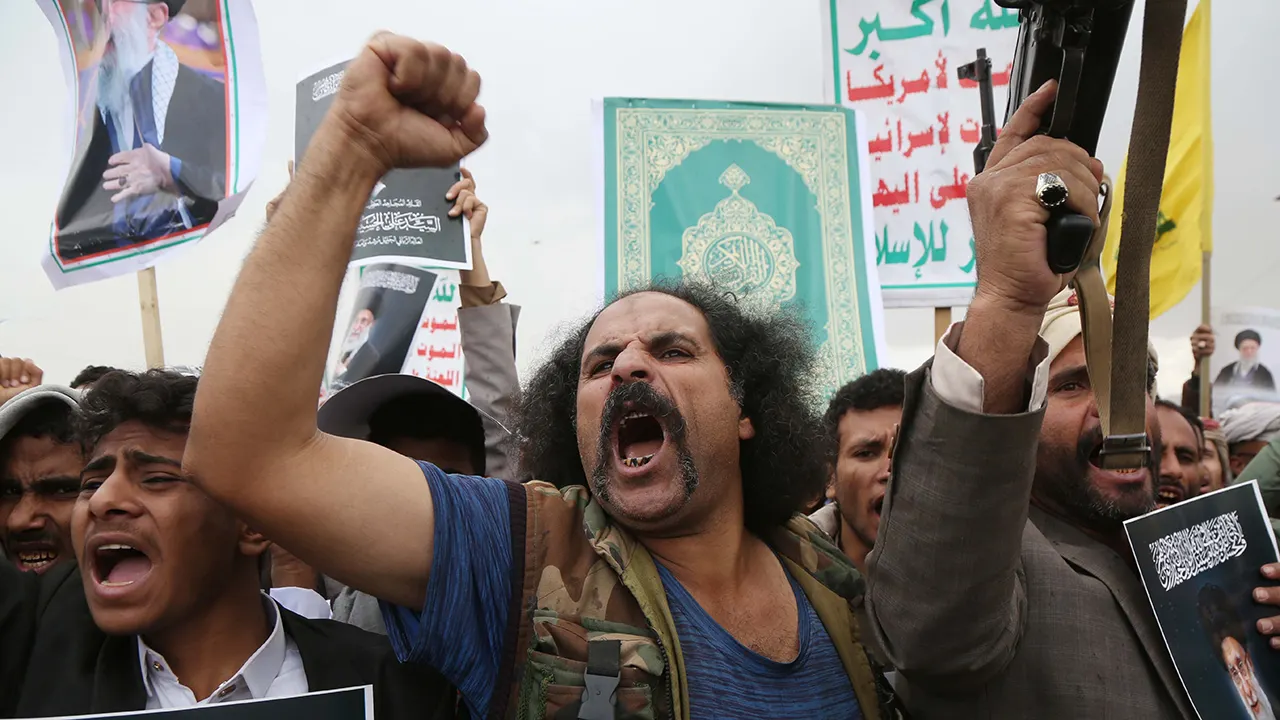
This escalation marks a significant development in the widening Middle East conflict that has drawn in multiple Iranian proxies across the region. The Houthis, who control most of northwest Yemen, have been increasingly assertive in their attacks since joining Hamas’s war against Israel in October 2023.
“This is now fundamentally about the survival of the Iranian regime,” said Nadwa Al-Dawsari, a Yemen expert and associate fellow at the Middle East Institute. “The intervention of the Houthis and other Axis members is determined by the IRGC-run Axis of Resistance Operations Room. The Houthis have already demonstrated their ability to withstand intense U.S. and Israeli airstrikes.”
Al-Dawsari emphasized that both Iran and the Houthis define victory not by decisive military action but by survival and prolonging the conflict to increase costs for their adversaries. “The Houthis are uniquely positioned to do that, given their ability to disrupt critical maritime routes and open additional pressure fronts,” she noted.
The Houthis were previously engaged in a protracted war with Saudi Arabia until the Biden administration reportedly pressured Riyadh to halt its military campaign against the group. In a policy reversal that has drawn criticism, Biden had delisted the Houthis as a foreign terrorist organization early in his term, only for the Trump administration to reimpose the terror designation upon returning to office.
Salman Al-Ansari, a Saudi geopolitical analyst, suggests the timing of the attacks reveals Tehran’s hand. “The Houthis appear to be acting under heavy pressure from Iran. Iran wanted them involved two weeks ago, and this attack looks more symbolic than strategic,” he said. “It is part of Tehran’s effort to improve its position in negotiations with the U.S. by showing that it still has cards to play beyond Hormuz.”
Al-Ansari added that while the Houthis cannot fully control the strategically vital Bab el-Mandeb Strait, they maintain the capability to seriously disrupt shipping in the Red Sea—a crucial international maritime passage. However, he noted that Houthi leadership may be hedging their bets, as they “seem to view Iran as a dead horse and are cautious about betting too heavily on it.”
The Houthi movement, officially known as Ansar Allah, is notorious for its virulently anti-American and anti-Israeli ideology. Their official slogan reads: “Allah is Greater. Death to America. Death to Israel. Curse on the Jews. Victory to Islam.” Since ousting Yemen’s internationally recognized government from the capital Sanaa in 2015, they have consolidated control over much of northwestern Yemen.
Their involvement in the wider regional conflict escalated after Hamas’s October 7, 2023, attack on Israel, which resulted in the deaths of over 1,200 people, including more than 40 Americans. The Houthis have since conducted numerous drone and missile attacks toward Israel, with one drone strike killing an Israeli civilian in Tel Aviv last year.
Military experts question the Houthis’ ability to sustain attacks against Israel given their geographic distance and potential supply challenges. “Iran has already been badly hit by the United States and Israel, and all supply routes between Iran and Yemen will likely be cut off by U.S. forces,” said international relations expert Michael Szanto. “This means that Yemen will lack the supply lines to maintain a sustained offensive against Israel, though it still likely has a large stockpile of missiles and drones.”
Szanto warned that the Houthis may have miscalculated by provoking Israel, which could now turn its attention to neutralizing the threat from Yemen. “The Houthis have proven themselves to also be a menace to the Saudis, the Emiratis, the U.S., and the world,” he added.
Saturday’s missile attack occurred just hours before a Houthi spokesman issued further threats, claiming the group’s “fingers were on the trigger”—signaling the possibility of more attacks to come as regional tensions continue to escalate.
Fact Checker
Verify the accuracy of this article using The Disinformation Commission analysis and real-time sources.

14 Comments
The missile strikes by the Houthis against Israel mark a concerning escalation in the regional conflict. As an Iranian proxy, their involvement adds another dimension to the already complex dynamics at play. Careful analysis and a multilateral approach will be essential to navigate this situation.
Interesting development in the regional conflict. The involvement of the Houthis as another Iranian proxy adds further complexity to the situation. It’s critical to understand the dynamics at play and the broader strategic objectives of the different actors.
The Houthis’ involvement in this conflict is a concerning twist, as their actions as an Iranian proxy risk further destabilizing an already tense situation. Careful analysis of the strategic motivations and potential for escalation will be crucial in the weeks and months ahead.
Absolutely, the Houthis’ actions as an Iranian proxy add a new level of complexity to an already fragile regional situation. A comprehensive diplomatic strategy will be essential to navigate this crisis and work towards a sustainable resolution.
This is a worrying development, as the Houthis’ actions as an Iranian proxy risk further destabilizing an already volatile situation. The potential for unintended consequences and escalation is high, underscoring the need for coordinated diplomatic efforts to address the root causes of the conflict.
This is yet another example of the destabilizing role Iran is playing in the region through its support of proxy groups like the Houthis. The survival of the Iranian regime appears to be a key driver behind these actions, which is worrying from a regional security perspective.
The Houthis’ involvement in this conflict is a significant twist. As an Iranian proxy, their actions add another layer of complexity to an already volatile situation. It will be important to understand the strategic calculus behind their involvement and the potential for further escalation.
Agreed. The Houthis’ actions are clearly aligned with Iran’s broader regional objectives, which is troubling. Diplomatic efforts to de-escalate tensions and address the root causes of the conflict will be crucial in the weeks and months ahead.
The Houthis’ missile strikes against Israel represent a serious escalation. It’s clear that Iran is seeking to leverage the Houthis as part of a broader strategy to gain negotiating leverage. This underscores the need for a comprehensive diplomatic approach to address the complex web of regional tensions.
The Houthis’ involvement in this conflict is a concerning development. As an Iranian proxy, their actions risk further inflaming the already tense situation in the region. Careful analysis of the strategic motivations and potential for escalation will be crucial going forward.
This is a worrying development, as the Houthis’ actions as an Iranian proxy further complicate an already volatile regional situation. The potential for unintended consequences and escalation is high, highlighting the need for a coordinated, multilateral approach to address the root causes of the conflict.
The Houthis’ missile strikes against Israel represent a significant broadening of the regional conflict. As an Iranian proxy, their involvement adds another layer of complexity to an already fragile situation. Careful monitoring and a comprehensive diplomatic strategy will be crucial to de-escalate tensions and find a sustainable resolution.
The Houthis’ missile strikes against Israel mark a significant escalation in the regional conflict. As an Iranian proxy, their involvement further underscores the destabilizing role Iran is playing in the region. Careful analysis and coordinated diplomatic efforts will be critical to address this complex and evolving situation.
The escalation with the missile strikes against Israel is concerning. It will be important to closely monitor the situation and assess the potential for further retaliation or unintended consequences. Diplomatic efforts to de-escalate tensions should be a priority.