


Listen to the article
Iran and U.S. Set for High-Stakes Nuclear Talks in Oman Amid Regional Tensions
Iran and the United States are preparing to hold crucial negotiations in Oman focusing on Tehran’s nuclear program, marking the first significant diplomatic engagement between the two nations since their brief military confrontation earlier this year. The talks, scheduled to begin Friday in Muscat, come after a week of diplomatic uncertainty that initially involved plans for regional countries to participate in discussions in Turkey.
The two adversaries return to Oman, a strategically located sultanate on the Arabian Peninsula known for its role as a neutral mediator in Middle Eastern disputes. Previous diplomatic efforts were derailed in June when Israel launched a 12-day military campaign against Iran, during which the U.S. conducted strikes on Iranian nuclear facilities. These attacks reportedly destroyed many of Tehran’s uranium-enriching centrifuges and severely damaged the country’s air defense systems and ballistic missile arsenal.
Secretary of State Marco Rubio and other U.S. officials believe Iran’s leadership is currently at its most vulnerable point since the 1979 Islamic Revolution. The regime faced unprecedented nationwide protests last month that posed a significant challenge to 86-year-old Supreme Leader Ayatollah Ali Khamenei. The government’s subsequent crackdown reportedly resulted in thousands of deaths and tens of thousands of arrests, prompting new military threats from President Donald Trump.
The United States has substantially increased its military presence in the region, with the aircraft carrier USS Abraham Lincoln, additional warships, and fighter jets positioned nearby. While this buildup provides the U.S. with considerable strike capabilities, analysts question whether military action alone could force meaningful policy changes in Tehran or destabilize the regime.
Gulf Arab nations have expressed concern that any military escalation could ignite a wider regional conflict in which they would inevitably be drawn. These fears are well-founded, as tensions have already manifested in several incidents – U.S. forces recently shot down an Iranian drone near the USS Lincoln, and Iran attempted to interfere with a U.S.-flagged vessel in the Strait of Hormuz.
“President Trump seeks to corner Iran into reaching a negotiated solution, strong-arming its leaders into making concessions on the nuclear deal,” said Alissa Pavia, a fellow at the Atlantic Council. “The Iranians, on the other hand, are weakened after years of proxy warfare, economic crisis, and internal unrest. Trump is aware of this vulnerability and is hoping to use it to extract concessions and make inroads toward a renewed nuclear agreement.”
As the talks approach, details remain scarce about their exact format and participants. Omani officials have shown particular vigilance at border checkpoints, especially regarding individuals carrying cameras into the country ahead of the negotiations.
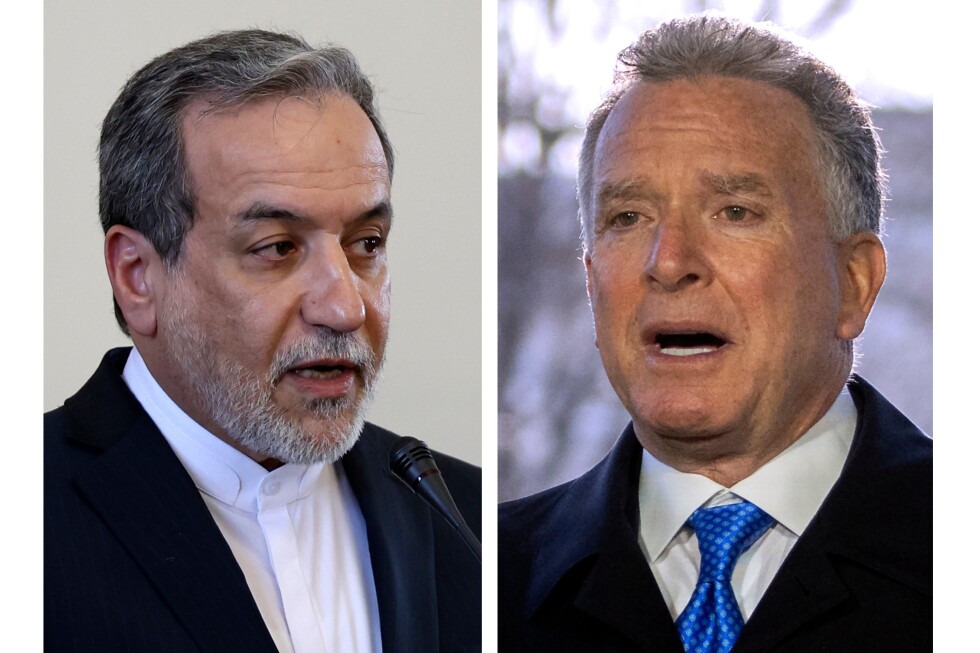
Iran’s Foreign Minister Abbas Araghchi arrived in Muscat with a delegation of diplomats, according to the state-run IRNA news agency. In what appears to be an endorsement from Iran’s supreme leadership, Ali Shamkhani, a top adviser to Khamenei, praised Araghchi on social media as “a skilled, strategic and trustworthy negotiator at the highest levels of decision-making and military intelligence.”
The U.S. delegation is expected to be led by Special Envoy for the Middle East Steve Witkoff, a 68-year-old billionaire real estate developer with close ties to President Trump. Accompanying Witkoff is Trump’s son-in-law Jared Kushner, who has recently been involved in proposals for Gaza and participated in trilateral discussions with Russia and Ukraine in Abu Dhabi. The American officials reportedly traveled from Abu Dhabi to Qatar on Thursday for meetings with officials there before heading to Oman.
While Tehran has insisted the talks will focus exclusively on its nuclear program, broader agendas may be in play. Al Jazeera reported that diplomats from Egypt, Turkey, and Qatar have proposed that Iran halt uranium enrichment for three years, transfer its highly enriched uranium out of the country, and commit to not initiating the use of ballistic missiles. Russia has indicated willingness to accept the uranium, but Shamkhani recently dismissed ending the program or shipping out uranium as non-starters for Iran.
Another contentious issue is Iran’s network of regional militias, which Tehran calls the “Axis of Resistance.” While Iran has signaled this topic is off the table, Secretary Rubio maintains that comprehensive talks must address all these concerns.
“I think in order for talks to actually lead to something meaningful, they will have to include certain things, and that includes the range of their ballistic missiles,” Rubio told journalists Wednesday. “That includes their sponsorship of terrorist organizations across the region. That includes the nuclear program, and that includes the treatment of their own people.”
With both sides approaching the negotiations from positions of strength and vulnerability, the outcome remains uncertain. As Rubio acknowledged, “I’m not sure you can reach a deal with these guys, but we’re going to try to find out.”
Fact Checker
Verify the accuracy of this article using The Disinformation Commission analysis and real-time sources.

18 Comments
These talks in Oman represent a crucial opportunity for both sides to make progress on the nuclear issue and potentially ease tensions in the region. However, the path forward remains uncertain given the complex geopolitical landscape.
Agreed. The stakes are high, and any breakthrough would be significant. But the distrust and competing priorities between Iran and the US make a comprehensive deal difficult to achieve. Oman’s mediation role will be crucial.
The nationwide protests in Iran add an interesting dynamic to these upcoming talks in Oman. The US may try to leverage Iran’s internal turmoil, while Iran will likely aim to project strength and unity. Navigating this delicate balance will be crucial for any progress.
That’s a good point. The domestic unrest in Iran is a wild card that could influence the negotiations, but the US will need to be careful not to overplay its hand and risk further inflaming tensions. Oman’s mediation role will be crucial in finding the right balance.
Interesting that the talks are happening in Oman, which has historically played a mediating role in Middle Eastern disputes. This could be an opportunity for Iran and the US to find common ground.
Yes, Oman’s neutrality and diplomatic experience could be valuable in navigating these high-stakes negotiations. Both sides will need to show flexibility to make progress.
With tensions high, I hope these talks in Oman can make meaningful progress on Iran’s nuclear program. Constructive dialogue is key to reducing regional instability and the risk of escalation.
Agreed. The regional dynamics are incredibly complex, so a neutral venue like Oman could help facilitate compromises and build trust between the US and Iran.
The nationwide protests in Iran add an additional layer of complexity to these negotiations. The US will likely want to leverage Iran’s internal challenges, while Iran may try to project strength domestically.
That’s a good point. The domestic turmoil in Iran could influence their negotiating position, but the US will have to balance that with a pragmatic approach to reach a workable agreement.
Given the history of tensions and mistrust between Iran and the US, I’m curious to see if these talks in Oman can produce any tangible results on the nuclear issue. A lot will depend on the willingness of both sides to compromise.
Absolutely. The path to a deal will require political courage and concessions from both Iran and the US. Rebuilding trust won’t be easy, but Oman’s involvement could help bridge the gaps.
The US and Iran have a long history of confrontation, so it will be interesting to see if they can put aside their differences and find common ground during these talks in Oman. Successful negotiations could have far-reaching implications for regional stability.
Absolutely. Even small steps towards détente between the US and Iran could have a positive ripple effect across the Middle East. But the challenges are significant, and both sides will have to show flexibility and restraint.
These talks in Oman represent a critical moment for both Iran and the US to demonstrate their willingness to engage in constructive diplomacy and find a path forward on the nuclear issue. The regional implications of a successful outcome cannot be overstated.
Absolutely. A breakthrough, even a small one, could help to reduce tensions and open the door for further dialogue and cooperation between the two adversaries. However, the challenges are significant, and both sides will need to show political courage and flexibility to reach an agreement.
The timing of these talks, coming after Iran’s crackdown on nationwide protests, will put additional pressure on the Iranian government. It will be interesting to see how that dynamic plays out at the negotiating table.
That’s a good observation. The internal unrest in Iran could give the US more leverage, but they’ll have to balance that with Iran’s desire to project strength and avoid appearing weak domestically.