


Listen to the article
Two years ahead of the Los Angeles Olympics, the United States is already commanding attention in the lead-up to the Milan Cortina Winter Games, but not entirely for reasons Olympic officials would prefer.
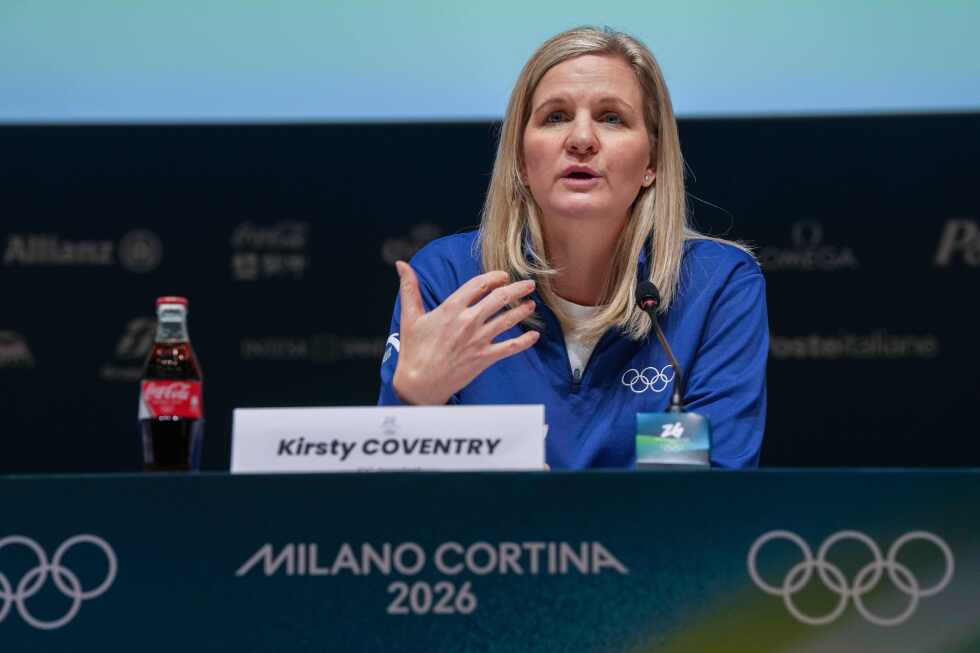
At a news conference in Milan on Sunday, International Olympic Committee President Kirsty Coventry faced persistent questions about controversial issues involving the U.S., including the deployment of Immigration and Customs Enforcement (ICE) agents at the upcoming Winter Games and connections to Jeffrey Epstein revealed in recently released files.
Coventry expressed disappointment that these matters were overshadowing the Olympic event. “I think anything that is distracting from these Games is sad,” she acknowledged. “But we’ve learned over the many years, there’s always been something that has taken the lead leading up to the Games. Whether it has been Zika, COVID, there has always been something.”
Despite the distractions, Coventry remains optimistic about the power of Olympic competition to shift public focus. “When that opening ceremony happens and those athletes start competing, suddenly the world remembers the magic and the spirit that the games have,” she said.
The controversy surrounding ICE agents at the Milan Cortina Games intensified on Saturday when hundreds of protesters gathered in Milan to demonstrate against their deployment. The protesters remained undeterred despite clarifications that these agents would be stationed in a control room rather than operating on city streets.
When pressed on the ICE issue, Coventry deflected, saying, “From all the information that we have and I believe that the US authorities, as the other authorities, have made all the clarifications needed, so from our side that’s not for us to further comment.”
Perhaps more concerning for Olympic organizers is the revelation that Casey Wasserman, head of the Los Angeles Olympics organizing committee, appears in the latest Epstein files. The documents include emails from 2003 between Wasserman and Ghislaine Maxwell, Epstein’s former girlfriend who was later convicted for her role in his sex trafficking operation.
Coventry was notably reticent when questioned about Wasserman. “We didn’t discuss it yesterday and I believe Mr. Wasserman has put out his statement and we now have nothing further to add,” she stated firmly.
The Epstein files also mention two current IOC members: Richard Carrion, a Puerto Rican banker who was runner-up to Thomas Bach in the 2013 IOC presidential election, and Johan Eliasch, president of the International Ski and Snowboard Federation who competed against Coventry in last year’s IOC leadership race. There is no indication either individual did anything improper.
“In terms of IOC members, we’re obviously watching and monitoring the media and we’re aware of a few things that have been reported just today,” Coventry noted. “We need some time to look into that and to be given intel.”
These controversies come at a critical time for the Olympic movement, which has faced numerous challenges in recent years, from pandemic disruptions to increasing questions about host city selection processes and the financial burdens of staging the Games.
The Milan Cortina Winter Olympics, scheduled for February 6-22, represent Italy’s return to hosting winter sports’ premier event for the first time since Turin in 2006. U.S. Vice President JD Vance will lead the American delegation at the opening ceremony, underscoring the high-profile nature of U.S. participation despite the controversies.
For Coventry, who made history as the first female IOC president when elected just under a year ago, these pre-Games controversies present an early test of her leadership. The former Olympic swimming champion from Zimbabwe has emphasized transparency and athlete welfare as cornerstones of her presidency.
As the Olympic flame approaches Milan, organizers hope the focus will soon shift to athletic competition rather than political controversy – a recurring challenge that has faced virtually every modern Olympics.
Fact Checker
Verify the accuracy of this article using The Disinformation Commission analysis and real-time sources.

5 Comments
While it’s disappointing to see political distractions, I’m glad the IOC president remains optimistic that the games themselves will capture the public’s attention and imagination. The Olympics are a chance to celebrate international unity through sport.
It’s unfortunate that controversies around the Olympics are drawing attention away from the athletic competition. Hopefully the focus can shift back to the spirit and excitement of the games once the events begin.
The Olympics have always faced various controversies leading up to the games, but the president’s remarks suggest these current issues may be more disruptive than usual. I’m curious to learn more about the specific concerns and how the IOC plans to address them.
The Olympics should be a time to put aside geopolitics and appreciate the hard work and dedication of the athletes. Hopefully the Winter Games can still generate that sense of wonder and global camaraderie, despite the pre-event controversies.
It’s concerning to hear about the IOC president’s comments on the ‘sad’ distractions from the Winter Olympics. What specific issues are they referring to, and how might they impact the overall event?