


Listen to the article
Interpol’s massive global operation has led to the arrest of more than 3,700 human traffickers and smugglers while rescuing over 4,400 potential victims, the international law enforcement agency announced Monday.
The coordinated effort, known as Operation Liberterra III, deployed 14,000 officers across 119 countries during an intensive 11-day period between November 10 and 21. The operation uncovered nearly 13,000 people caught in illegal migration schemes and triggered at least 720 new investigations into trafficking networks.
“Criminal networks are evolving, exploiting new routes, digital platforms and vulnerable populations,” said Interpol Secretary General Valdecy Urquiza in a statement. “Identifying these patterns allows law enforcement to anticipate threats, disrupt networks earlier and better protect victims.”
One notable finding from the operation revealed an emerging shift in trafficking patterns across Africa. Interpol highlighted cases involving South American and Asian victims being trafficked within Africa, representing a reversal of historical trends where African victims were typically transported abroad.
The operation disrupted numerous trafficking scams along dangerous migration routes. Officers intercepted migrants along coastal routes in Senegal, Guinea-Bissau, Morocco, and Algeria, as well as through land networks operating in Peru, Brazil, and other countries.
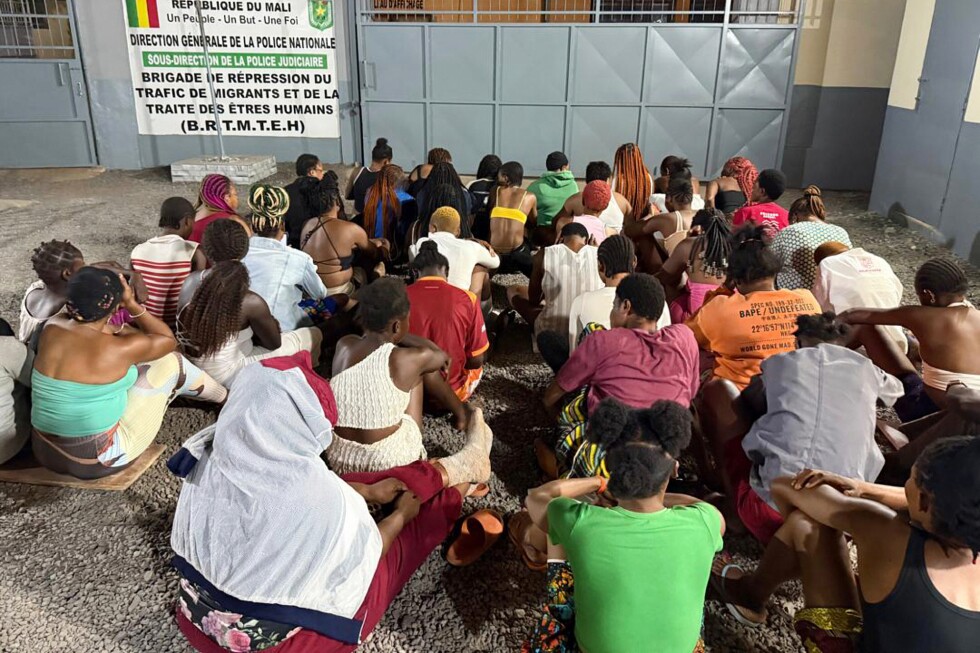
In West and Central Africa, authorities in Benin, Burkina Faso, Côte d’Ivoire, Ghana, Senegal, and Sierra Leone conducted operations that rescued more than 200 victims and dismantled “multiple recruitment and exploitation hubs,” according to Interpol.
The agency detailed how traffickers in Africa typically lure victims with false promises of legitimate foreign employment. After charging exorbitant fees, traffickers force victims to recruit friends and family members in exchange for improved conditions, creating a self-perpetuating pyramid scheme that rapidly expands their criminal operations.
A separate cybercrime operation targeting trafficking networks in Africa resulted in 1,209 arrests of suspects who had targeted approximately 88,000 potential victims. In Asia, a single raid on a compound in Myanmar led to the discovery of 450 workers being held in exploitative conditions.
Human trafficking remains one of the world’s most profitable criminal enterprises, generating an estimated $150 billion annually according to International Labour Organization data. The crime affects virtually every country, either as a source, transit, or destination for victims.
The scale of Operation Liberterra III reflects growing international recognition of trafficking as a transnational threat requiring coordinated response. Previous Interpol operations have shown that trafficking networks quickly adapt to enforcement efforts, changing routes and methods to avoid detection.
Experts note that modern trafficking increasingly exploits digital platforms to recruit victims and arrange transportation. Social media, messaging apps, and the dark web have become essential tools for traffickers, complicating enforcement efforts.
Interpol, headquartered in Lyon, France, serves as the primary international organization facilitating police cooperation across borders. With 196 member countries, the agency provides technical and operational support to help national law enforcement agencies combat international crime.
The success of Operation Liberterra III demonstrates the effectiveness of multinational cooperation in combating human trafficking networks that typically operate across multiple jurisdictions. By sharing intelligence and coordinating simultaneous enforcement actions, authorities can more effectively disrupt criminal organizations that would otherwise exploit gaps between national law enforcement systems.
As trafficking networks continue to evolve, Interpol officials emphasize the need for sustained international cooperation and specialized training to identify victims and prosecute traffickers.
Fact Checker
Verify the accuracy of this article using The Disinformation Commission analysis and real-time sources.

9 Comments
Kudos to Interpol for this large-scale operation. Arresting over 3,700 suspects and rescuing 4,400 victims is a significant achievement, but the battle against human trafficking is ongoing. Sustained efforts and innovative approaches will be needed to dismantle these illicit networks.
The emergence of new trafficking routes and the exploitation of digital platforms is a concerning development. Law enforcement must remain vigilant and adapt their tactics to effectively counter these evolving criminal tactics.
Agreed. Addressing the root causes and vulnerabilities that enable trafficking, in addition to enforcement, will be crucial to making meaningful progress in this fight.
Encouraging to see Interpol leading this global crackdown on human trafficking. Dismantling these criminal networks is crucial to protect vulnerable populations. I hope the rescued victims are provided the necessary support and rehabilitation services.
Yes, it’s great to see these coordinated efforts across 119 countries. Trafficking is a complex global issue that requires international cooperation to effectively disrupt and prevent.
The shifting trafficking patterns in Africa are concerning, with victims now being trafficked within the continent rather than just abroad. This highlights the need for enhanced monitoring and enforcement across all regions.
Absolutely, the evolving tactics of traffickers require law enforcement to stay vigilant and adapt their approaches accordingly. Protecting vulnerable populations should be the top priority.
This crackdown is an important step, but the work is far from over. Criminal networks will likely find new ways to exploit people, so continued international cooperation and intelligence-sharing will be critical to stay ahead of the threat.
While this crackdown is a positive step, the sheer scale of the problem highlighted by the number of suspects arrested and victims rescued is sobering. Sustained commitment and resources will be required to make a real dent in the global human trafficking crisis.