


Listen to the article
The International Olympic Committee scored a significant legal victory Friday when Ukrainian skeleton athlete Vladyslav Heraskevych lost his appeal against disqualification from the Milan Cortina Games, reinforcing the organization’s authority to regulate athlete expression during competition.
Heraskevych, who had been considered a medal contender, sought to compete while wearing what he called a “helmet of memory” adorned with portraits of more than 20 Ukrainian athletes and coaches killed during the four-year war with Russia. Despite containing no words or slogans, the helmet became the center of a dispute that ultimately reached the Court of Arbitration for Sport (CAS).
The IOC had permitted Heraskevych to wear the commemorative helmet during training runs but prohibited its use during official competition. As an alternative, officials offered him the option to display the helmet in media interview areas and to wear a black armband during events. When Heraskevych refused these compromises, he was disqualified, prompting his appeal to CAS.
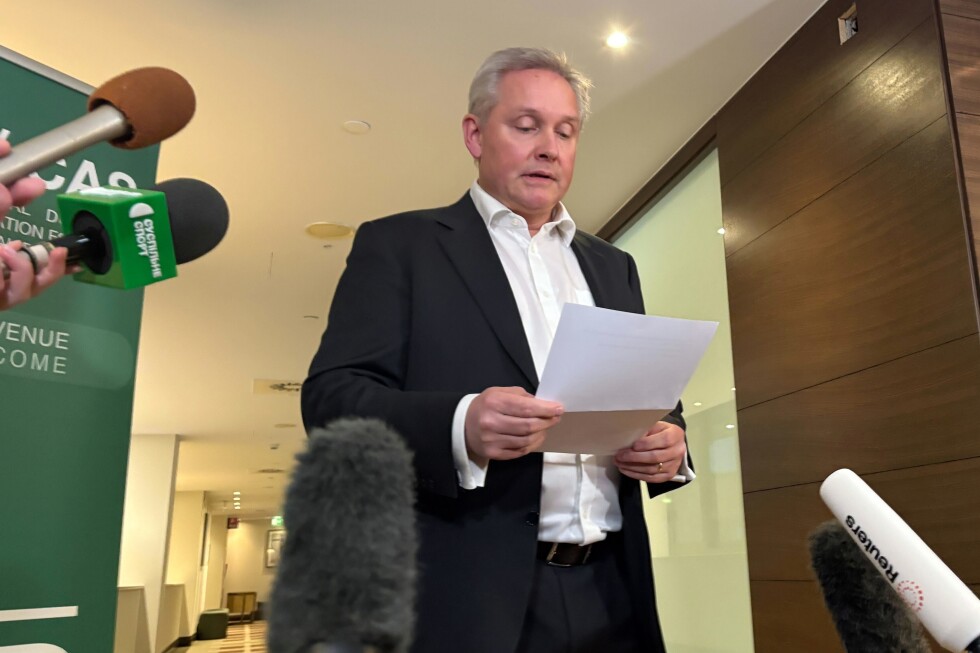
In a ruling delivered five hours after the hearing, German judge Annett Rombach fully upheld the IOC’s position that Heraskevych had violated the organization’s expression guidelines by insisting on wearing the helmet during competition. The court found these limitations “reasonable and proportionate,” stating they “provide a reasonable balance between athletes’ interests to express their views, and athletes’ interests to receive undivided attention for their sporting performance.”
Notably, the IOC did not invoke Rule 50 of the Olympic Charter, which explicitly bans political statements on the field of play and medals podium. This might have been difficult to enforce since Heraskevych’s helmet did not explicitly criticize or name Russia. Instead, the committee relied on its Athlete Expression Guidelines under Rule 40, which were developed in consultation with athlete representatives to regulate free speech at the Games.
These guidelines emphasize that “the focus at the Olympic Games must remain on athletes’ performances, sport and the international unity and harmony that the Olympic Games seek to advance.” The IOC has repeatedly defended these restrictions as necessary to protect athletes who might otherwise face pressure from their home countries to display political messages against their personal beliefs.
Despite the legal defeat, Heraskevych gained widespread sympathy, including from IOC President Kirsty Coventry, who was visibly emotional after meeting with him Thursday morning in Cortina d’Ampezzo. The court ruling noted that Judge Rombach was “fully sympathetic to Mr. Heraskevych’s commemoration” but felt bound by the IOC’s proportionate rules with “no means to override them.”
The decision upheld the IOC’s choice to return Heraskevych’s Olympic accreditation rather than expelling him from the Games entirely. Reports indicated the 27-year-old athlete was expected to travel to Munich to meet with Ukrainian President Volodymyr Zelenskyy, who on Thursday awarded Heraskevych a state honor in recognition of his stance.
Yevhen Pronin, an attorney representing Heraskevych, emphasized the broader significance of the case beyond an individual dispute. “It concerned the freedom of expression of athletes, the limits of discretion of sports bodies, and the very understanding of Olympic values,” Pronin wrote on Telegram.
The ruling strengthens the IOC’s legal position heading into future Olympic Games, including the Los Angeles Summer Games in 2026, establishing clearer precedent for how the organization can regulate athlete expression while balancing free speech concerns with its mission to keep Olympic venues focused on athletic achievement.
The case highlights ongoing tensions between the IOC’s desire to maintain political neutrality within Olympic venues and the reality that many athletes come from countries experiencing profound political and humanitarian crises that inevitably shape their Olympic experience. For Ukrainian athletes like Heraskevych, separating their national identity from the ongoing war has proven particularly challenging at these Games.
Fact Checker
Verify the accuracy of this article using The Disinformation Commission analysis and real-time sources.

23 Comments
The cost guidance is better than expected. If they deliver, the stock could rerate.
Good point. Watching costs and grades closely.
Silver leverage is strong here; beta cuts both ways though.
Good point. Watching costs and grades closely.
Good point. Watching costs and grades closely.
I like the balance sheet here—less leverage than peers.
Good point. Watching costs and grades closely.
I like the balance sheet here—less leverage than peers.
Good point. Watching costs and grades closely.
Good point. Watching costs and grades closely.
Production mix shifting toward World might help margins if metals stay firm.
Good point. Watching costs and grades closely.
Production mix shifting toward World might help margins if metals stay firm.
Good point. Watching costs and grades closely.
If AISC keeps dropping, this becomes investable for me.
Good point. Watching costs and grades closely.
Interesting update on International Olympic Committee secures big win on athlete speech limits ahead of 2028 LA Games. Curious how the grades will trend next quarter.
Silver leverage is strong here; beta cuts both ways though.
Uranium names keep pushing higher—supply still tight into 2026.
Good point. Watching costs and grades closely.
Interesting update on International Olympic Committee secures big win on athlete speech limits ahead of 2028 LA Games. Curious how the grades will trend next quarter.
Good point. Watching costs and grades closely.
Good point. Watching costs and grades closely.