


Listen to the article
Indonesia Begins Training Peacekeeping Force for Gaza as Part of Trump’s Postwar Plan
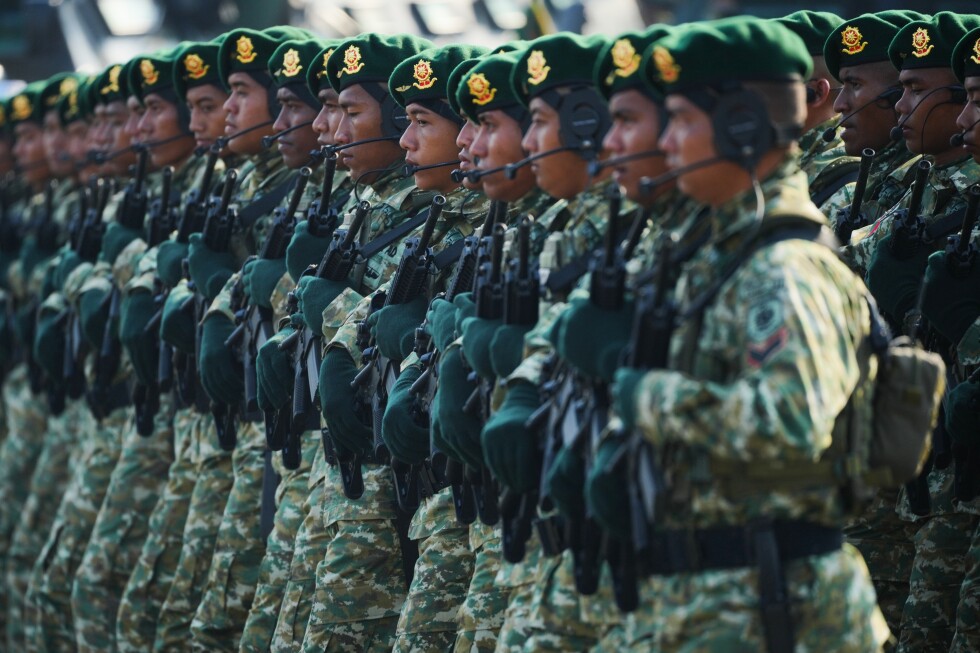
Indonesia has commenced training for a contingent of up to 8,000 soldiers intended for deployment to Gaza as part of an international peacekeeping force, marking the first concrete commitment to a key component of U.S. President Donald Trump’s postwar reconstruction plan for the region.
The Southeast Asian nation brings substantial peacekeeping experience as one of the top 10 contributors to United Nations missions, including operations in Lebanon. Indonesia has also been actively involved in humanitarian efforts in Gaza, where it has funded a hospital.
However, President Prabowo Subianto’s decision to join Washington’s proposed Board of Peace and participate in the International Security Force (ISF) has sparked skepticism among many Indonesians. Critics view the move as acquiescing to Trump’s agenda while the two countries negotiate a trade deal.
“We need to be careful to ensure that our military personnel are not supporting the Israeli military forces,” warned Muhammad Zulfikar Rakhmat from Jakarta’s Center of Economic and Law Studies. “We need to be careful that our military forces are not fighting against wrong actors.”
A major concern revolves around the ISF’s operating parameters. Unlike UN peacekeeping missions with clear mandates, the ISF will function outside UN authority, raising questions about troop utilization and funding. Last year’s ceasefire agreement broadly states that the ISF will “provide support to vetted Palestinian police forces in Gaza” and “work with Israel and Egypt to help secure border areas.”
Indonesia currently receives UN compensation for its peacekeeping troops, but there are fears the country will have to self-fund the Gaza deployment. Additionally, a draft charter suggests Indonesia may need to contribute $1 billion for a permanent position on the Board of Peace.
As the world’s most populous Muslim country and a staunch advocate for a two-state solution in the Middle East, Indonesian officials have defended their participation in the Board of Peace as necessary to represent Palestinian interests from within. The board includes Israel but lacks Palestinian representation.
“Indonesia sees the importance of the involvement of the parties to the conflict as part of the process towards peace,” Foreign Ministry spokesperson Yvonne Mewengkang stated this week. She added that Indonesia would use its membership to “ensure that the entire process remains oriented towards the interests of Palestine and respects the basic rights of the Palestinian people, as well as encouraging the realization of a two-state solution.”
The Jakarta Post criticized this reasoning in a recent editorial, arguing that an “independent Palestinian state, if it emerges at all, is likely decades away.” The paper’s Abdul Khalik wrote, “Indonesia will end up paying $1 billion long before any meaningful outcome is achieved. And if Indonesia eventually withdraws in frustration, it will have already spent vast resources—financial, diplomatic and political—for nothing.”
Initially conceived as a small group overseeing Trump’s plan for Gaza’s future, the Board of Peace has expanded in scope, with Trump suggesting it could mediate worldwide conflicts outside the UN’s framework. This shift has intensified concerns about the board’s legitimacy and purpose.
Prabowo, a former army general eager to elevate Indonesia’s global profile, quickly accepted Trump’s invitation to join the Board of Peace. During his address at the United Nations General Assembly, he pledged 20,000 Indonesian troops as peacekeepers—a figure now revised to between 5,000 and 8,000.
Opposition has materialized in various forms, including an online petition started by Muslim scholars and activists questioning Indonesia’s participation in a body chaired by Trump. The petition, which has garnered over 9,000 signatures, cites Trump’s controversial actions including the American veto of a UN Security Council resolution calling for a Gaza ceasefire last year.
“In our belief, peace will be difficult to achieve by a country or a leader of a country who repeatedly uses his veto power to prevent the occurrence of peace itself,” the petition states. “The BoP faces serious legitimacy problems, both normatively, structurally and morally.”
Approximately 100 protesters gathered outside the U.S. Embassy in Jakarta last Friday, displaying signs with slogans like “Bored of peace?” and “Free Gaza.”
Despite domestic resistance, Indonesian Army Chief of Staff Gen. Maruli Simanjuntak confirmed that training for peacekeepers has begun, even without specific guidance on required personnel types. “We have started training personnel who might later serve as peacekeepers,” he said. “So that means engineering, medical units—the types often deployed.”
Regional experts view Indonesia’s potential peacekeeping role in Gaza more positively. Hassan Jouni, a Qatar-based analyst and former Lebanese army general, described Indonesia as an “honest and acceptable broker” to all parties. “Indonesia is a Muslim country… and its religious identity gives it a large distinction in its security participation as part of the peacekeeping forces in the Arab region,” he noted. “At the same time, it does not pose a strategic threat to Israel.”
The inaugural Board of Peace meeting is scheduled for next week in Washington, where other countries are expected to announce their own troop commitments. President Prabowo plans to attend in person and will likely sign a new U.S.-Indonesia trade deal during his visit.
Rakhmat from the Center of Economic and Law Studies believes the president will remain steadfast despite public opposition: “I don’t think the domestic opposition would significantly change the decision of Indonesia in joining the BoP.”
Fact Checker
Verify the accuracy of this article using The Disinformation Commission analysis and real-time sources.

16 Comments
This is a complex geopolitical situation, and Indonesia’s role as a regional power could be influential. However, the concerns raised about potential bias towards the Israeli forces are valid and will need to be addressed carefully.
Absolutely. Indonesia’s experience in peacekeeping missions will be crucial, but navigating the sensitivities of this conflict will require a deft diplomatic touch.
This is an interesting development, as Indonesia brings substantial peacekeeping experience to the table. However, I share the concerns about ensuring the troops do not get entangled in supporting the Israeli military forces. The need for impartiality and protecting civilian lives should be the top priority.
Agreed. Indonesia will need to navigate this carefully to maintain its reputation as an independent and principled peacekeeper.
Indonesia’s peacekeeping experience is valuable, but the concerns about potential bias towards the Israeli forces are valid. Maintaining strict neutrality and a laser-focus on protecting civilian lives should be the top priorities.
Absolutely. Indonesia will need to demonstrate its independence and unwavering commitment to impartial peacekeeping to be effective in this complex situation.
This is a significant commitment from Indonesia, but the skepticism around aligning with Trump’s agenda is warranted. Indonesia will need to demonstrate its independence and commitment to impartial peacekeeping to build trust and credibility.
Well put. Indonesia’s track record in peacekeeping missions will be important, but navigating the political sensitivities of this conflict will be a delicate balancing act.
The commitment of 8,000 troops is a significant contribution, but Indonesia will need to ensure its forces remain neutral and focused on protecting civilians. Balancing regional interests and humanitarian concerns will be a delicate challenge.
Well said. Indonesia’s role could be pivotal, but maintaining impartiality and preventing escalation should be the top priorities.
The decision to commit up to 8,000 troops is a significant contribution, but I can understand the skepticism around aligning with Trump’s agenda. Indonesia will have to balance its regional interests and humanitarian concerns in this delicate situation.
You make a good point. Indonesia’s involvement will be closely watched, and it will need to demonstrate its autonomy and commitment to impartial peacekeeping.
Indonesia’s peacekeeping experience is commendable, but the concerns about potential bias towards the Israeli forces are understandable. Ensuring the troops remain strictly neutral and focused on protecting civilian lives will be critical.
Agreed. Indonesia will need to tread carefully to avoid any perception of partiality and uphold its reputation as an impartial peacekeeper.
The commitment of 8,000 troops is substantial, but Indonesia will need to ensure its forces remain strictly neutral and focused on protecting civilians. Balancing regional interests and humanitarian concerns in this delicate conflict will be a significant challenge.
Well said. Indonesia’s reputation as an impartial peacekeeper will be critical, and it will need to navigate this situation with great diplomatic skill.