


Listen to the article
Inuit artifacts returned by the Vatican have found a temporary home at the Canadian Museum of History in Ottawa, marking a significant step in the repatriation of Indigenous cultural treasures. First Nations, Inuit and Métis leaders received the collection of 62 items at Montreal’s airport on Saturday, culminating years of advocacy for the return of these historically significant objects.
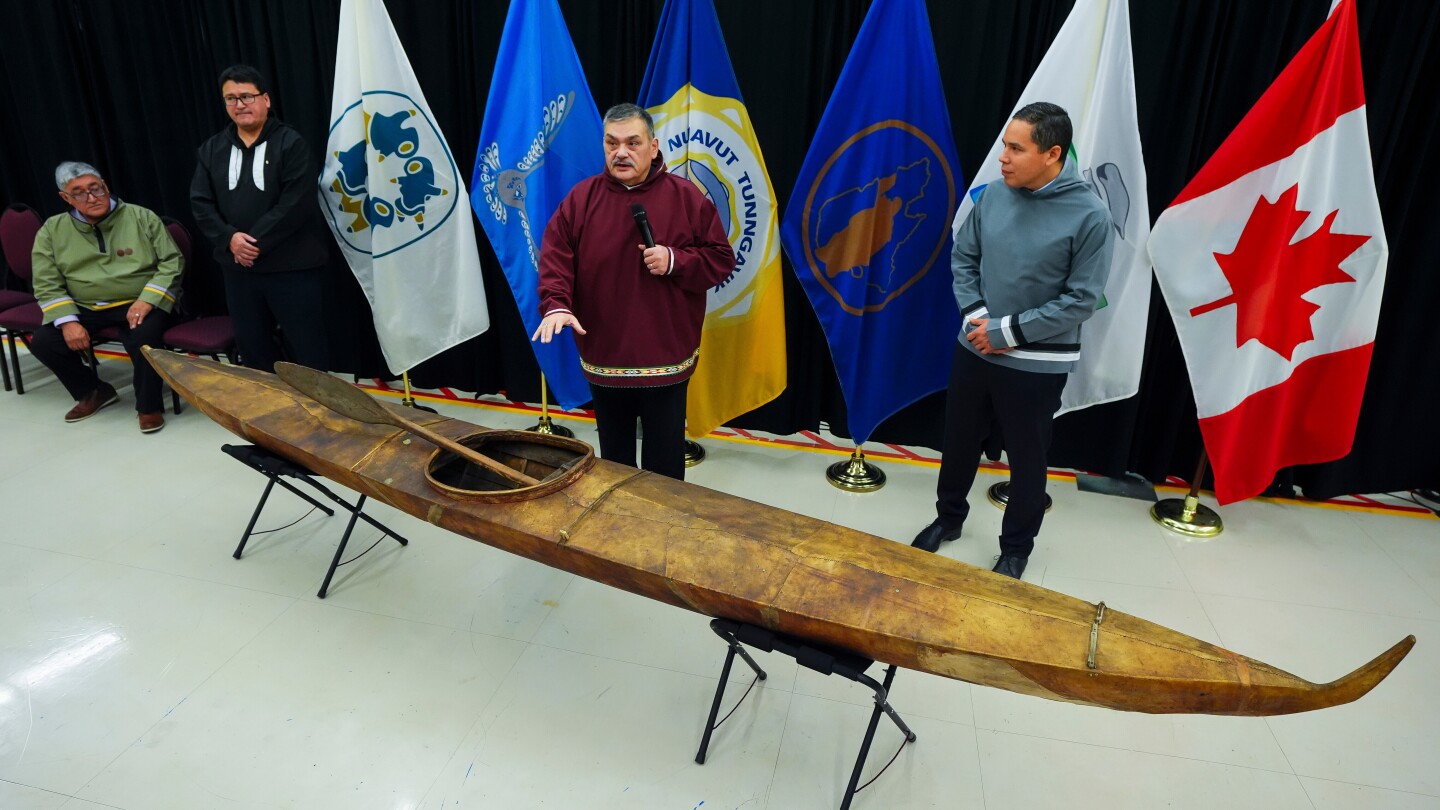
At a small gathering of Indigenous representatives and media on Tuesday, Inuit leaders showcased several of the returned items, including a traditional kayak that stands as the centerpiece of the collection. The kayak, meticulously crafted from driftwood, sealskin, and sinew, represents not merely an object of cultural significance but a vital tool once used for activities like beluga hunting.
“This kayak was essential to the life of the community,” explained Inuit Tapiriit Kanatami President Natan Obed, though he acknowledged that the circumstances of how it came into the Vatican’s possession remain unclear.
Other displayed artifacts included practical items central to traditional Inuit life: a soup ladle, needle casings, and an ulu knife—a versatile tool with a semi-circular blade historically used by Inuit women for everything from food preparation to skinning animals.
The artifacts will not be immediately placed on public display. Instead, a group of Inuit advisers will undertake the painstaking process of tracing each item to its community of origin. Until then, the collection will remain in a secure, climate-controlled facility at the Canadian Museum of History.
For approximately a century, these artifacts were housed in the Vatican Museums’ ethnographic collection, now known as the Anima Mundi museum. Most items were sent to Rome by Catholic missionaries for a 1925 exhibition in the Vatican gardens, intended to showcase the global reach of the Catholic Church and its missionary work among Indigenous peoples.
While the Vatican has consistently maintained that the items were “gifts” to Pope Pius XI, historians and Indigenous groups have long questioned this narrative. The power dynamics between missionaries and Indigenous communities during that colonial period cast doubt on whether such items could have been freely offered.
The repatriation comes as part of the Catholic Church’s broader reconciliation efforts addressing its historical role in suppressing Indigenous cultures throughout the Americas. Pope Leo XIV transferred the artifacts and accompanying documentation to the Canadian Conference of Catholic Bishops, with the understanding that the items would be returned to their rightful communities “as soon as possible.”
During Tuesday’s presentation, Inuit leaders demonstrated how the artifacts were made and used, allowing those present to handle the items—a practice that might unsettle traditional museum curators but represents an important aspect of reconnecting with cultural heritage.
Paul Irngaut, acting president of Nunavut Tunngavik Inc., explained the cultural significance of the objects as attendees were encouraged to touch them. “I’m sure that there were some people who are curators who might have been quite aghast at us touching the item, lifting it up, handling the paddle,” Obed remarked, emphasizing that this direct interaction with the artifacts is “part of reconciliation.”
The return of these items represents more than a transfer of physical objects; it symbolizes a reclamation of cultural identity and a step toward healing historical wounds. The repatriation occurs amid growing international momentum for museums and institutions to return artifacts acquired during colonial periods to their communities of origin.
For Canada’s Indigenous peoples, who have experienced generations of cultural suppression—including through the residential school system that the Catholic Church helped operate—the return of these artifacts carries profound significance in the ongoing journey of reconciliation and cultural revitalization.
Fact Checker
Verify the accuracy of this article using The Disinformation Commission analysis and real-time sources.

20 Comments
The Canadian Museum of History is the perfect temporary home for these Inuit artifacts as they begin their journey back to their rightful place. Ensuring their proper care and display is critical.
Agreed. The museum’s role in this repatriation process is crucial, as they work to respectfully steward and exhibit these culturally significant items.
The return of these Inuit artifacts to Canada is an important milestone, but the work of reconciliation and cultural preservation is far from over. Sustained commitment and partnership will be key to ensuring Indigenous communities can fully reclaim their heritage.
Well said. This repatriation is a positive step, but it represents just the beginning of a much larger effort to right historical wrongs and empower Indigenous self-determination.
While the specifics of how these artifacts came to be in the Vatican’s possession remain unclear, their return represents an important step towards reconciliation and honoring the cultural rights of Indigenous communities.
This is a positive step towards acknowledging the Vatican’s past role in the displacement of Indigenous cultural items. Hopefully this sets a precedent for further repatriation efforts around the world.
I agree. Returning these artifacts is the right thing to do and an important recognition of the injustices faced by Indigenous communities.
The display of the kayak and other practical items in the Canadian Museum of History will be a valuable educational opportunity, helping to share the rich cultural heritage and traditional ways of life of the Inuit people.
The kayak is a stunning piece of Inuit craftsmanship and a powerful symbol of their connection to the land and sea. Its display in a Canadian museum will help educate the public about this rich cultural heritage.
This repatriation effort is a significant achievement, but it also highlights the ongoing need to address the historical displacement of Indigenous cultural items worldwide. Continued dialogue and collaboration will be essential.
While the circumstances of how these artifacts ended up in the Vatican’s possession remain unclear, I’m glad they have now found their way back to Canada. Repatriation is a complex but important process.
Agreed. Unraveling the history and rightful ownership of cultural items can be challenging, but prioritizing their return to Indigenous communities is crucial.
The ulu knife and other practical items on display offer a glimpse into the daily lives and traditions of the Inuit people. It’s valuable to preserve and share this cultural knowledge.
It’s heartening to see Indigenous leaders from First Nations, Inuit, and Métis communities come together to receive these returned artifacts. Their unity and advocacy have been instrumental in this process.
It’s great to see these important Indigenous artifacts returned to their rightful home in Canada. Repatriating cultural treasures like this kayak helps preserve and honor the traditions and history of the Inuit people.
Absolutely. The kayak is an incredible example of Inuit craftsmanship and its return is a significant moment for reconciliation.
This repatriation effort is a significant milestone, but there is still more work to be done in addressing the historical displacement of Indigenous artifacts worldwide. Ongoing collaboration and dialogue will be key.
You’re right. This is an important first step, but continued progress requires sustained commitment and partnership between Indigenous leaders and institutions holding their cultural items.
The display of the kayak and other practical items offers valuable educational opportunities. Sharing these cultural treasures can help foster greater understanding and appreciation of Inuit heritage.
Absolutely. Highlighting the functionality and significance of these artifacts is crucial for preserving and transmitting Indigenous knowledge to younger generations.