


Listen to the article
Across India, a nascent battery recycling industry is emerging as a critical component in the nation’s transition to clean energy, though it faces significant challenges amid growing opportunities.
In the past decade, a developing system has begun recovering valuable materials from batteries used in electric vehicles, smartphones, and consumer electronics. Companies like Lohum Cleantech are extracting minerals such as lithium, cobalt, and nickel for reuse in India’s expanding fleet of electric vehicles and solar installations, reducing the country’s dependence on imports for these hard-to-obtain metals.
“More than 40% of the country’s copper and aluminum needs are met by recycling scrap, and we want to aspire for the same when it comes to lithium, cobalt, and nickel,” said Rajat Verma, founder and CEO of Lohum Cleantech, a battery manufacturing and recycling company based near New Delhi.
According to a November study by renewable energy think tank RMI, a formalized recycling system could potentially create 100,000 green jobs and meet nearly 40% of India’s demand for key minerals. As India’s battery demand skyrockets, primarily driven by electric vehicles, the industry around recycling and reusing batteries could be worth $9 billion.
“What’s exciting about these materials is it’s not like plastics. You can recycle them for perpetuity, and they can still have material strength and the quality you need once you refine them,” explained Marie McNamara, a manager with RMI’s India program who co-authored the report.
The sector, however, faces significant hurdles. Despite having 60,000 tons of battery recycling capacity, much remains unused as supply chains are still developing. A primary challenge stems from India’s waste recycling ecosystem, which largely relies on an informal workforce—estimated at up to four million people—who handle various scrap materials without formal contracts.
India ranks among the world’s highest emitters of greenhouse gases as it provides power for its massive population. Simultaneously, its clean energy sector has grown rapidly, particularly in solar power and electric vehicles. In 2022, the government implemented battery waste management rules mandating environmentally safe disposal and management of battery waste, with heavy fines for violations.
However, experts and recycling companies report poor implementation of these regulations. Companies must establish their own recycling systems without designated outlets for discarded batteries. Jaideep Saraswat, an energy expert with the New Delhi-based Vasudha Foundation, noted that while India has moved “surprisingly fast from a policy perspective,” the appropriate battery recycling supply chain remains underdeveloped.
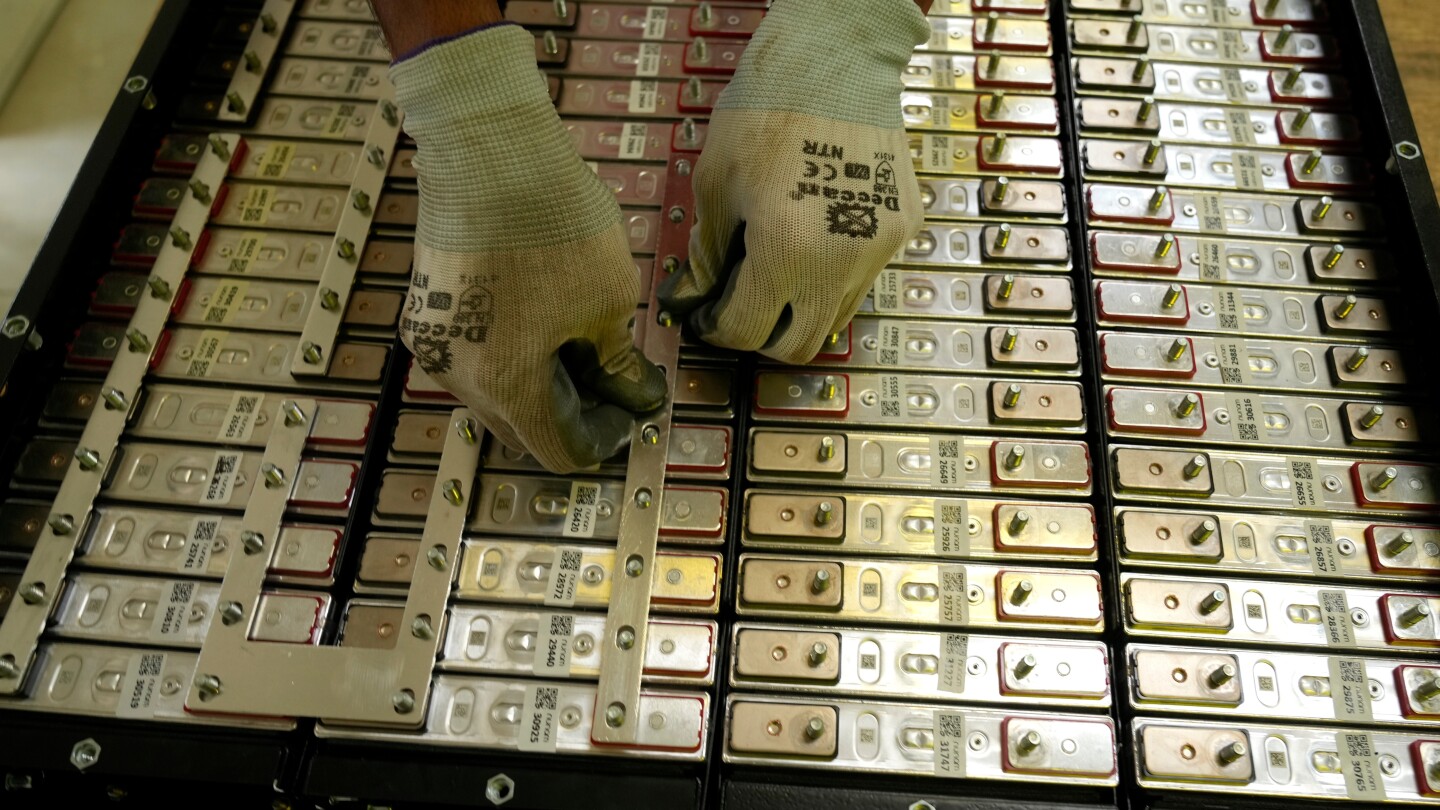
Battery recycling processes vary but typically involve either “shredding” battery modules into powder using machines or smelting them in industrial furnaces. These products are then processed using acids or chemicals to recover specific metals. Alternatively, discarded batteries can be repurposed to store excess solar and wind energy for homes and small businesses.
Environmental concerns persist, as toxic contaminants are sometimes illegally dumped by recyclers. If not properly managed, lithium battery recycling can emit carbon monoxide and other hazardous gases, while the process produces wastewater containing heavy metals that can contaminate soil and water.
“We’ve not expanded much in India because we don’t see much appreciation for clean operations, whether it’s lead or lithium,” said Nishchay Chadha, CEO of U.S.-based ACE Green Recycling, which has operations in India. McNamara advocates for training programs to help scrap workers transition to formal jobs, emphasizing that “formalization will really help drive safety and accountability.”
The global supply chain for critical minerals like lithium, nickel, and cobalt—essential for products from smartphones to electric cars—is largely controlled by China. India currently lacks operational mines for lithium and other key minerals, making effective recovery from used products increasingly important.
Chadha suggests India should take measured steps, noting that China prioritizes recycling as an integral part of the supply chain, even when it’s unprofitable on its own. “They also actually lose money on recycling, but they look at it as part of the whole puzzle where recycling is a critical part, and they’re looking at making money across the whole value chain,” he explained.
Despite challenges, industry leaders remain optimistic. “If the momentum that is there in India today continues, in my opinion, we can probably create five multibillion-dollar giants in this industry,” predicted Verma of Lohum Cleantech.
As India continues its clean energy transition, developing an efficient, environmentally sound battery recycling industry will be essential for reducing import dependence and supporting sustainable growth in the electric vehicle and renewable energy sectors.
Fact Checker
Verify the accuracy of this article using The Disinformation Commission analysis and real-time sources.

18 Comments
The promise of 100,000 green jobs from a formalized battery recycling system is an impressive potential benefit. This industry could provide good employment opportunities while also supporting India’s climate goals.
Agreed, the job creation potential is a major upside. Building a skilled workforce in battery recycling will help drive India’s transition to a more sustainable, circular economy.
I’m curious to see how India’s battery recycling industry develops. Overcoming the challenges to create a formalized system with 100,000 green jobs sounds ambitious but impactful if successful.
Agreed, the scale of the potential benefits is quite remarkable. It will be interesting to follow India’s progress in this space and see how it compares to recycling efforts in other major economies.
Reducing India’s reliance on imports for critical minerals like lithium, cobalt, and nickel is a smart strategic move. Domestic recycling can insulate the country from global supply chain risks and price volatility.
You make a great point. As the demand for these minerals continues to surge worldwide, having a secure domestic source through recycling will be a major competitive advantage for India.
Reducing reliance on imports for key battery minerals is a smart strategic move for India. Domestic recycling can help insulate the country from global supply chain disruptions and price volatility.
That’s a great point. Developing a robust recycling industry is an important part of India’s energy security and self-sufficiency objectives.
The potential to meet 40% of India’s mineral demand through recycling is quite impressive. This could be a game-changer for the country’s clean energy transition and overall industrial competitiveness.
Absolutely. Capturing that much of the domestic mineral supply from recycling would be a major achievement and significantly strengthen India’s position in the global clean tech supply chain.
It’s great to see India taking proactive steps to build up its battery recycling capabilities. This could be a major boost for the country’s electric vehicle and renewable energy sectors.
Absolutely. Developing a domestic supply of recycled battery materials will be crucial as India scales up its clean energy infrastructure in the years ahead.
Recovering valuable materials from used batteries is a clever way to extract minerals domestically. This could help India meet its surging demand for EVs and solar while reducing its carbon footprint.
You’re right, this aligns well with India’s climate goals. Recycling these critical minerals is a win-win for the environment and the economy.
This is great news for India’s transition to clean energy. Recycling critical minerals like lithium, cobalt, and nickel will reduce reliance on imports and create green jobs. It’s an important step towards mineral security and sustainability.
Absolutely. Recycling is a crucial part of the circular economy for batteries and renewable energy tech. India is smart to invest in this emerging industry.
Extracting lithium, cobalt, and nickel from used batteries is a smart way to recover critical raw materials. India’s push to build up this industry is an innovative approach to the energy transition.
Agreed, this is an intelligent and forward-thinking strategy. Circular economy models like battery recycling will be key to ensuring a sustainable supply of minerals for clean tech.