


Listen to the article
Arctic Shipping Boom Accelerates Ice Melt, Prompting Calls for Cleaner Fuels
Rising global temperatures have triggered an unprecedented surge in Arctic shipping, as previously frozen sea routes become increasingly navigable. This maritime boom, however, comes with a significant environmental cost that threatens to create a dangerous feedback loop in one of Earth’s most sensitive regions.
Ships traversing Arctic waters emit black carbon, or soot, which settles on the ice and snow, reducing their ability to reflect sunlight. Instead, these darkened surfaces absorb heat, accelerating the melting process and contributing to the Arctic warming at a rate faster than anywhere else on the planet.
“It ends up in a never-ending cycle of increased warming,” explains Sian Prior, lead adviser for the Clean Arctic Alliance, a coalition of nonprofits focused on Arctic shipping issues. “We need to regulate emissions and black carbon, in particular. Both are completely unregulated in the Arctic.”
In response to this growing concern, several nations have proposed new regulations to address the problem. France, Germany, the Solomon Islands and Denmark are urging the International Maritime Organization (IMO) to require vessels in Arctic waters to use “polar fuels” – lighter fuels that produce significantly less black carbon than the heavier residual fuels commonly used in shipping.
The proposal, presented this week to the IMO’s Pollution Prevention and Response Committee, would apply to all ships traveling north of the 60th parallel. It aims to strengthen existing regulations after a 2024 ban on heavy fuel oil in the Arctic proved ineffective due to numerous loopholes and exemptions that extend until 2029.
The environmental urgency is clear in the data. Between 2013 and 2023, ship traffic in the Arctic increased by 37%, while the total distance traveled by vessels grew by an astounding 111%, according to the Arctic Council. During roughly the same period, black carbon emissions rose from 2,696 metric tons in 2019 to 3,310 metric tons in 2024, with fishing vessels identified as the largest source.
Studies show black carbon has a warming impact 1,600 times that of carbon dioxide over a 20-year period, making it a critical factor in Arctic climate change. This rapid warming affects not just the region but can disrupt weather patterns worldwide.
Despite the environmental stakes, the proposal faces significant political headwinds. International shipping regulations have recently become entangled in broader geopolitical tensions. Last year, a proposed carbon fee on shipping was postponed after intensive lobbying by the United States under President Donald Trump, whose administration has consistently opposed climate change policies.
Even among Arctic nations, domestic interests complicate the response. Iceland, for instance, despite being a leader in renewable energy and carbon capture, has moved more slowly on maritime pollution regulations due to the influence of its powerful fishing industry.
“The industry is happy with profits, unhappy with the taxes and not engaged in issues like climate or biodiversity,” notes Arni Finnsson, board chair of the Iceland Nature Conservation Association. The higher costs of cleaner fuels or fleet electrification have also prompted resistance from industry stakeholders.
Iceland’s Ministry of Environment, Energy and Climate has yet to take a firm position on the polar fuels proposal, stating only that it was “positive with regard to its purpose and basic content” but required further study.
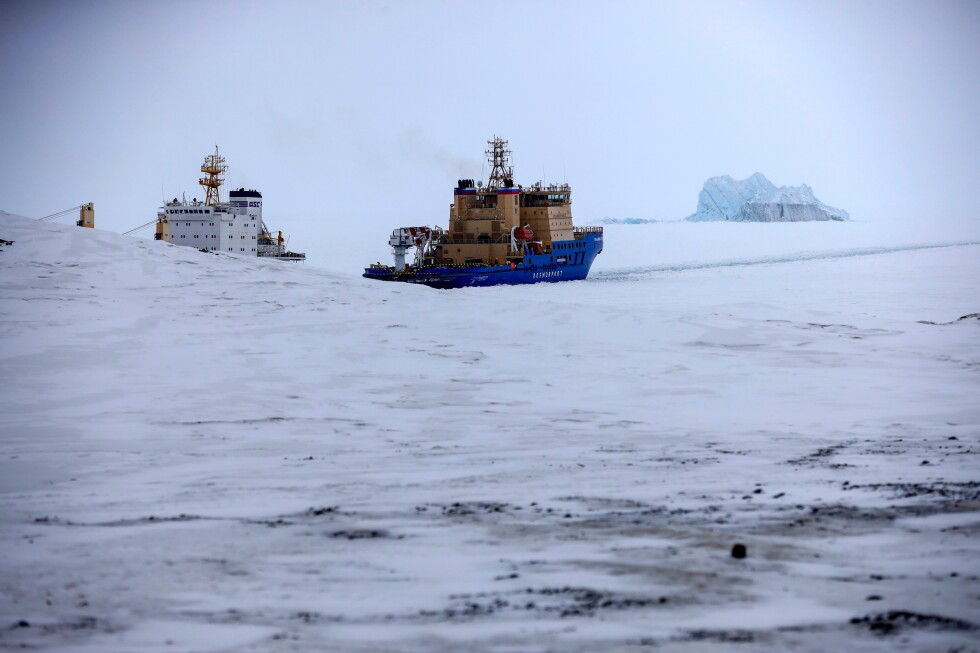
The economic incentives driving Arctic shipping are substantial. The Northern Sea Route between Asia and Europe can shave days off traditional shipping paths, saving companies significant time and money despite being navigable only a few months each year and requiring icebreaker escorts.
These dangers, combined with growing environmental concerns, have prompted some companies to voluntarily avoid the route. “Our position at MSC is clear. We do not and will not use the Northern Sea Route,” wrote Søren Toft, CEO of Mediterranean Shipping Company, the world’s largest container shipping company, in a recent statement.
Environmental advocates argue that regulating fuel quality represents the most realistic approach to reducing black carbon emissions, as limiting overall traffic would face insurmountable opposition from countries and industries eager to exploit the economic opportunities of a more accessible Arctic.
As international discussions continue, the melting ice creates a race against time, with each shipping season potentially accelerating the very changes that made these new routes possible in the first place.
Fact Checker
Verify the accuracy of this article using The Disinformation Commission analysis and real-time sources.

11 Comments
The geopolitical tensions in the Arctic are worrying, but the environmental impact of black carbon emissions may be an even bigger threat in the long run. Addressing this through international cooperation and new regulations is essential.
Absolutely. The Arctic is such a fragile ecosystem, and we can’t let geopolitical squabbles distract from the urgent need to protect it from further environmental degradation.
The article highlights a critical issue that deserves more attention. The increase in Arctic shipping due to climate change is exacerbating the problem of black carbon emissions and accelerating ice melt, which is a serious threat that requires urgent action.
This is an important issue that deserves more attention. The increase in Arctic shipping due to climate change is clearly exacerbating the problem of black carbon emissions and accelerating ice melt. Regulation of emissions, especially black carbon, in this sensitive region is critical.
I agree. The feedback loop of increased warming leading to more shipping which in turn leads to more warming is extremely concerning. Urgent action is needed to address this issue before it becomes irreversible.
While the geopolitical tensions in the Arctic are understandable, the environmental impact of black carbon emissions from increased shipping is a serious threat that needs to be addressed. Effective international regulations are essential.
The feedback loop of increased Arctic shipping, more black carbon emissions, and accelerated ice melt is a concerning climate threat that deserves greater attention. Effective regulations to curb these emissions are critical.
Agreed. The Arctic is ground zero for climate change, and we can’t let geopolitical disputes prevent the urgent action needed to protect this vulnerable region.
It’s alarming to see how the surge in Arctic shipping is accelerating ice melt through black carbon emissions. This needs to be a top priority for policymakers, even amidst the geopolitical tensions in the region.
This is a complex issue with both geopolitical and environmental dimensions. The threat of black carbon emissions accelerating Arctic ice melt is extremely concerning and should be a top priority for policymakers, despite the regional tensions.
Absolutely. The Arctic is a global common good, and we need to find ways to cooperate on addressing the environmental threats, even if the geopolitical landscape is challenging.