


Listen to the article
The Iran war is darkening the outlook for the world economy — whether or not a fragile ceasefire holds, the head of the International Monetary Fund warned Thursday.
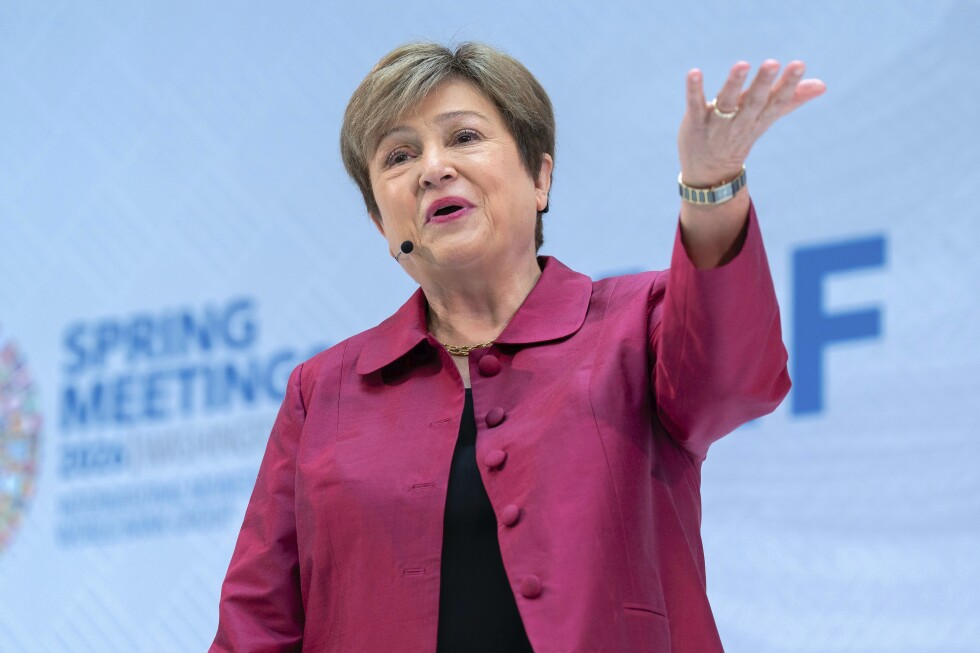
IMF Managing Director Kristalina Georgieva announced that the fund will downgrade its forecast for global economic growth when it releases new projections next week during the IMF-World Bank spring meetings in Washington.
“Had it not been for this shock, we would have been upgrading global growth,” Georgieva said. “But now, even our most hopeful scenario involves a growth downgrade.”
The global economy had previously demonstrated resilience despite President Donald Trump’s decision last year to impose sweeping tariffs on imports from most countries worldwide. In January, the 191-country IMF had raised its global growth forecast to 3.3% and was positioned to increase projections further until the outbreak of hostilities changed the economic landscape.
The conflict, which began on February 28, has created multiple shockwaves throughout the global economy. Energy markets have been particularly disrupted, with oil and natural gas prices surging amid supply uncertainties. Critical energy infrastructure including oil refineries and tanker terminals have sustained damage, compromising distribution networks that world markets depend on.
Beyond immediate energy concerns, the war has disrupted shipments of fertilizer essential to global agricultural production, threatening food security in regions already facing challenges. Market analysts note that these disruptions come at a particularly vulnerable time, as many countries continue to rebuild supply chains that were damaged during the pandemic.
The United States and Iran announced a ceasefire on Tuesday, following stark warnings from President Trump that without an agreement, “a whole civilization will die tonight.” Despite this development, Georgieva cautioned that economic damage would continue: “Growth will be slower — even if the new peace is durable.”
The IMF chief identified Sub-Saharan African nations and small island countries as particularly vulnerable to the ongoing energy shock. Their economies, often heavily dependent on imported fuel and with limited financial reserves, face outsized impacts from price increases and supply disruptions.
Complicating the situation further, governments worldwide have diminished capacity to support their economies through traditional fiscal measures like spending increases or tax cuts. “High debt levels have left many countries with limited policy space to respond,” said one IMF economist familiar with the upcoming report.
Some nations have already implemented emergency measures to mitigate the effects of the energy crisis. These include encouraging or mandating remote work, promoting increased use of public transportation, and restricting official government travel. While these approaches may provide some short-term relief, experts suggest they represent stopgap measures rather than sustainable solutions.
Georgieva specifically warned against protectionist responses that could exacerbate global economic strain. “Be careful not to make things worse with ‘go-it-alone’ moves such as limiting exports and imposing price controls,” she cautioned. “Don’t pour gasoline on the fire.”
Market analysts note that the conflict has revealed vulnerabilities in global energy security that many had overlooked. The rapid price increases have particularly affected manufacturing sectors in Europe and transportation industries worldwide, with some companies already announcing production cuts and revised profit outlooks.
The upcoming IMF-World Bank meetings will likely focus on coordinated responses to the crisis, with particular attention to protecting vulnerable populations from energy and food price shocks. Financial assistance packages for the hardest-hit regions are expected to be among the priorities discussed.
As the fragile ceasefire takes hold, economists will be watching closely for signs of infrastructure recovery and normalization in shipping routes, which could determine how quickly global markets stabilize in the coming months.
Fact Checker
Verify the accuracy of this article using The Disinformation Commission analysis and real-time sources.

6 Comments
It’s unfortunate that the Iran conflict has derailed what was shaping up to be a reasonably positive global growth picture. Policymakers will be under pressure to stabilize energy markets and mitigate the broader economic fallout.
The economic fallout from the Iran-US conflict is concerning. Global growth will likely take a hit, especially if energy markets remain volatile. Prudent policymaking will be crucial to mitigating the impacts.
This geopolitical tension is worrying for commodity markets, particularly energy. A growth downgrade by the IMF is not surprising given the disruptions to critical infrastructure and supply chains. Diversifying energy sources could help build resilience.
Interesting that the IMF was poised to upgrade global growth forecasts before the Iran situation escalated. Clearly this conflict has created significant economic uncertainty and risk. I wonder how long the downgrade will last if a ceasefire holds.
The impact of the Iran conflict on energy markets is a key concern. With oil and gas prices surging, this could weigh heavily on global growth, especially for energy-intensive industries. Careful monitoring of the situation will be crucial in the coming weeks.
This is a stark reminder of how geopolitical shocks can undermine the global economic outlook. The IMF will need to carefully assess the duration and severity of the growth impacts as the situation evolves.