


Listen to the article
Iceland’s government has proposed an August referendum on restarting European Union membership talks, a significant shift in policy for the Nordic nation after more than a decade of hesitation about joining the bloc.
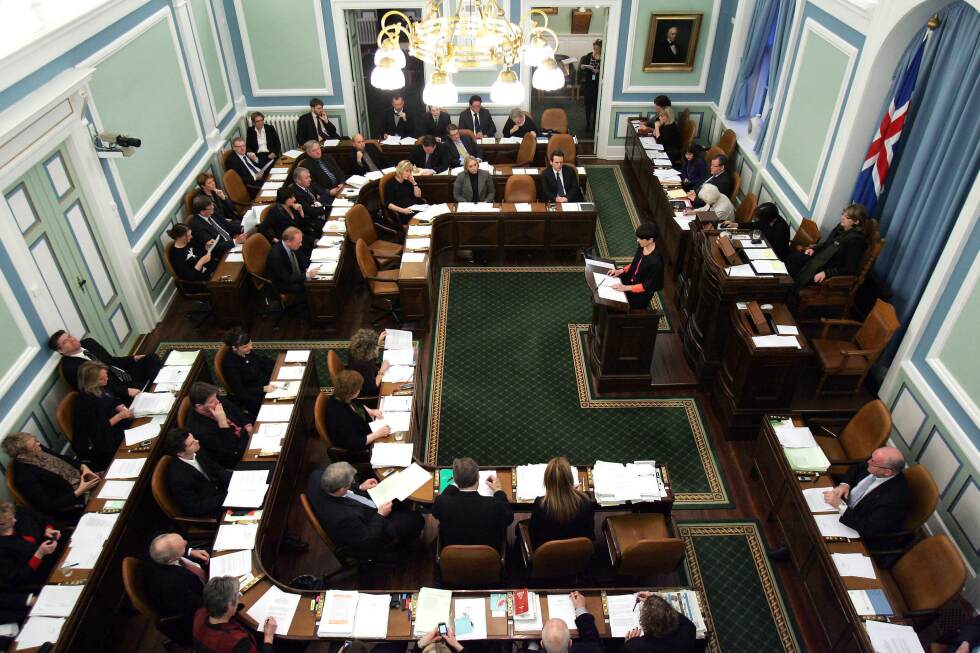
On Friday, Iceland’s Cabinet approved a resolution calling for an August 29 vote on resuming accession negotiations. The proposal still requires approval from Iceland’s parliament, the Althingi, before the referendum can proceed.
The decision marks a potential turning point for the fiercely independent Arctic island nation of approximately 400,000 people, as concerns grow about geopolitical instability and mounting economic pressures in the region.
Prime Minister Kristrun Frostadottir’s center-left coalition government, which took office earlier this year, had initially planned to hold such a vote by 2027. However, recent geopolitical tensions appear to have accelerated this timeline, including controversial statements by U.S. President Donald Trump regarding neighboring Greenland, which he reportedly confused with Iceland during discussions about acquiring Arctic territory.
Several factors have contributed to Iceland’s renewed interest in EU membership. Rising living costs have put pressure on households, while Russia’s ongoing war in Ukraine has heightened security concerns throughout Europe. As a country without a standing army, Iceland relies on NATO collective defense and a bilateral security agreement with the United States for its protection.
Iceland’s relationship with the EU has been complicated by its economic interests. For decades, the country resisted pursuing membership primarily due to concerns about sharing its valuable North Atlantic fishing grounds with other European nations. The fishing industry remains a cornerstone of Iceland’s economy and national identity.
The nation’s first serious move toward EU membership came in 2009, following the catastrophic collapse of its banking sector during the 2008 global financial crisis. However, those membership talks were suspended in 2013 when a center-right government took power, and formally terminated in 2015.
Despite not being an EU member, Iceland already maintains close ties with the bloc. The country participates in the EU’s single market through the European Economic Area agreement and is part of the Schengen free-travel zone, which allows border-free movement between participating nations.
If Iceland decides to resume negotiations, it would join ten other countries currently in various stages of EU accession talks. Albania, Moldova, Montenegro, and Ukraine are considered the most advanced in this process, though each faces its own challenges.
The accession process itself is rigorous and time-consuming. Applicants must meet criteria across 35 different policy areas, ranging from financial systems and transparency to fisheries management, transportation infrastructure, agricultural regulations, and fundamental freedoms such as speech and religion. The European Commission oversees this comprehensive assessment.
Even after meeting all requirements, admission to the EU requires unanimous approval from all current member states. This presents another potential hurdle, as demonstrated by Hungary’s threatened veto of Ukraine’s application.
EU Enlargement Commissioner Marta Kos acknowledged the significance of Iceland’s potential return to accession talks. “A significant decision now lies ahead for the Icelandic people,” Kos wrote on social media platform X. “Iceland is already a strong and trusted partner. In a world that is changing fast, the European Union offers an anchor in a community of values, prosperity and security.”
Kos also emphasized that accession negotiations would take into account Iceland’s unique circumstances, noting that the process “always reflects the specific realities of each candidate country.”
The August referendum, if approved by parliament, will give Icelanders an opportunity to reconsider their relationship with the EU at a time of increasing global uncertainty, potentially charting a new course for the island nation’s future.
Fact Checker
Verify the accuracy of this article using The Disinformation Commission analysis and real-time sources.

18 Comments
Iceland’s potential EU membership has implications beyond its own borders. As an Arctic state, its alignment with European institutions could impact the balance of power and economic interests in the region.
I’m curious to see how this referendum campaign shapes public opinion in Iceland. The outcome could have far-reaching consequences for the country and the surrounding region.
As an Arctic nation, Iceland’s decision on EU membership will have broader geopolitical implications. This vote could signal a shift in the region’s dynamics and power structures.
I wonder how neighboring countries like Greenland and Norway will view Iceland’s potential EU accession. Their interests may not fully align on this issue.
The proposed referendum on EU membership talks is a significant development for Iceland. As an Arctic nation, its strategic position and natural resources make it an important player in regional geopolitics.
It will be interesting to see how this referendum campaign plays out and whether Iceland ultimately decides to restart accession negotiations with the EU.
The decision to restart EU membership talks is a significant strategic move for Iceland. It will be fascinating to see how the public debate and eventual referendum vote unfold in this fiercely independent nation.
Iceland’s location and resources make it a geopolitically important player in the Arctic region. This referendum could reshape the dynamics of power and influence in the High North.
Iceland’s consideration of EU membership is a complex issue with far-reaching implications. The upcoming referendum will be closely watched, as it could signal a shift in the power dynamics of the Nordic and Arctic regions.
Given the sensitivity of this topic, I hope Iceland’s government approaches the referendum process in a transparent and democratic manner, allowing for robust public debate and input.
Iceland’s proposed referendum highlights the complex calculus countries face when evaluating economic and security alliances in an increasingly unstable global environment. This will be an interesting case study to follow.
Given the sensitivity of the topic, it’s critical that Iceland’s government ensures a fair and inclusive democratic process leading up to the referendum.
The timing of this referendum is intriguing, coming amidst concerns about regional instability and economic pressures. Iceland will need to carefully weigh the tradeoffs between sovereignty and potential economic/security advantages of EU membership.
It will be important for Iceland to engage its citizens in a transparent and thoughtful debate on this issue. Rushing into a referendum without a robust public dialogue could backfire.
This referendum represents a major foreign policy shift for Iceland. It will be important to understand the domestic and international factors driving this decision, as well as the potential ramifications for the Nordic and Arctic states.
Given the complexities involved, I hope Iceland’s government conducts a thorough public consultation process before the referendum vote. Transparency and inclusive dialogue will be key.
Interesting move by Iceland to revisit EU membership talks. With geopolitical tensions rising in the region, it makes sense to evaluate the potential benefits and drawbacks for this fiercely independent nation.
I’m curious to see how the referendum plays out. Iceland has been hesitant about EU membership in the past, so this represents a significant policy shift.