


Listen to the article
The cold, hard reality facing any U.S., NATO or European plans for Greenland is the ice. It chokes harbors, entombs minerals, and freezes shorelines into minefields of white and blue shards that threaten ships all year.
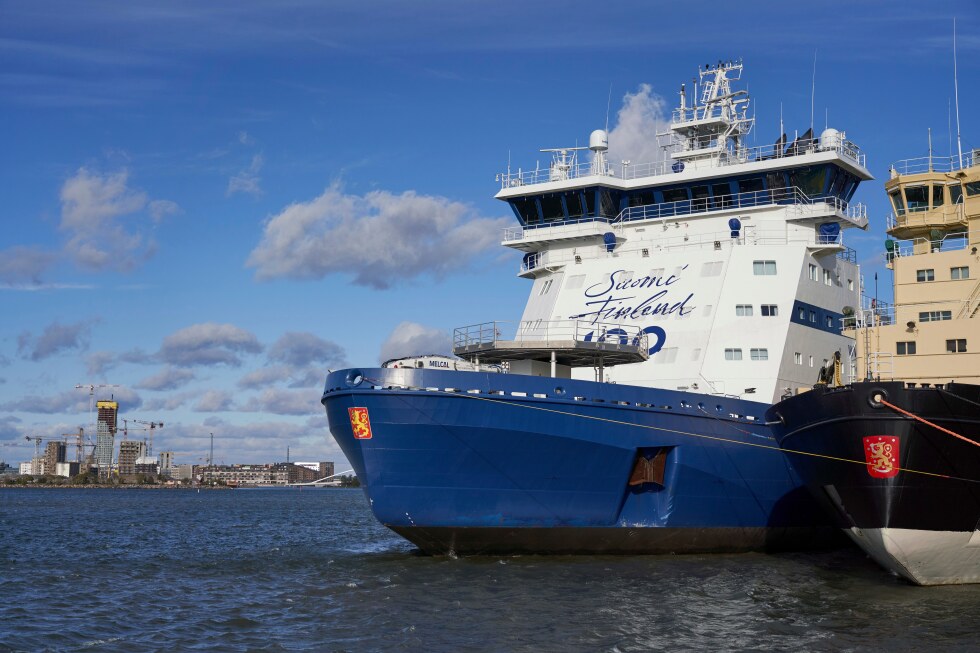
And the only way to break through all that is with icebreakers: enormous ships with reinforced hulls and heavy bows that can crush and cleave ice. But the United States has only three such vessels, one of which is so decrepit as to be barely usable. While the U.S. has entered agreements to obtain 11 more, it can only source additional ships from adversaries or allies it has recently criticized.
Despite toning down his rhetoric, U.S. President Donald Trump remains interested in the U.S. gaining control of Greenland for security and economic reasons. He seeks to keep what he calls “the big, beautiful piece of ice” out of Russian and Chinese hands, secure a strategic Arctic location, and extract the island’s mineral wealth, including rare earth elements.
During the recent World Economic Forum in Davos, Trump told world leaders that “to get to this rare earth you got to go through hundreds of feet of ice.” Yet there is no meaningful way to accomplish this—or anything else in the semiautonomous Danish territory—without icebreakers’ crucial ability to cut trails through frozen seas.
“On a map, Greenland looks surrounded by sea, but the reality is that the sea is full of ice,” said Alberto Rizzi, a fellow at the European Council on Foreign Relations. Even if the U.S. decided to move materials into Greenland immediately, “they would have two or three years gap in which they’re not really able to access the island most of the time,” Rizzi added.
If the U.S. wants more icebreakers, it faces limited options: the shipyards of strategic adversaries China and Russia or longtime allies Canada and Finland. Notably, both allies have recently weathered criticism and threats of tariffs from Trump over Greenland.
Icebreakers require specialized expertise developed in only a few places globally. Finland has built approximately 60% of the world’s fleet of more than 240 icebreakers and designed half the remainder. “It’s very niche capabilities that they developed as a necessity first and then they have been able to turn it into geoeconomic leverage,” Rizzi explained.
Russia currently possesses the world’s largest icebreaker fleet with about 100 vessels, including nuclear-powered ships. Canada ranks second and is set to double its fleet to around 50 vessels, according to a 2024 report by Aker Arctic, a Helsinki-based design firm.
“Our design and engineering work order books are pretty full at the moment and the near future looks promising,” said Jari Hurttia, business manager at Aker Arctic, describing rising interest in the firm’s “unrivalled special competence which is not available anywhere else in the world.”
China currently operates five icebreakers compared to America’s three and is rapidly building more as part of its expanding Arctic ambitions. “China is now in a position to develop indigenous icebreakers, and so the U.S. feels it must do the same,” said Marc Lanteigne, a professor at the University of Tromsø who teaches at the University of Greenland in Nuuk.
Washington needs to catch up quickly, according to Sophie Arts, a fellow at the German Marshall Fund focused on Arctic security. “President Trump has really bemoaned this lack of icebreakers, especially in comparison to Russia,” Arts said, noting that two of the three U.S. icebreakers are “basically past their life cycle already.”
During his first administration, Trump prioritized the U.S. military’s acquisition of ice-capable vessels. The Biden administration followed up by signing the Ice PACT agreement with Helsinki and Ottawa to deliver 11 icebreakers constructed by two corporate consortiums using Finnish designs.
Four vessels will be built in Finland, while seven will be constructed at a Canadian-owned “American Icebreaker Factory” in Texas and a shipyard in Mississippi under joint U.S.-Canadian ownership.
Even with adequate icebreakers, the cost to build and maintain mining or defensive facilities in Greenland would be enormous. Any mineral extraction operations would face high costs in the harsh Arctic conditions, with investments potentially taking years or decades to pay off, according to Lanteigne.
Danish Prime Minister Mette Frederiksen has indicated openness to strengthening Arctic security, including potentially supporting the proposed $175 billion Golden Dome missile defense network, “provided that this is done with respect for our territorial integrity.”
While both the U.S. and the European Union have pledged to increase investment in Greenland, it’s clear who currently possesses the capability to actually reach this vast frozen territory. “It’s kind of absurd because I don’t think Finland would scrap the deal with the U.S. as a response to threatening to invade Greenland,” Rizzi said. “But if Europe wants to exercise significant leverage to the USA, they could say ‘We’re not going to give you any icebreakers and good luck reaching the Arctic, or projecting power there, with those two old ships that you have.'”
European Commission President Ursula von der Leyen emphasized this point at Davos: “Finland — one of the newest NATO members — is selling its first icebreakers to the U.S. This shows that we have the capability right here, in the ice so to speak, that our northern NATO members have Arctic-ready forces right now, and above all, that Arctic security can only be achieved together.”
Fact Checker
Verify the accuracy of this article using The Disinformation Commission analysis and real-time sources.

18 Comments
The US’s reliance on either allies or adversaries for icebreakers underscores the complex web of global relationships at play in the race for Arctic resources. Greenland’s strategic value is undeniable.
This situation highlights the need for the US to develop greater self-sufficiency in icebreaker technology to better safeguard its interests in the region.
This highlights the strategic importance of icebreaker technology and the need for the US to shore up its capabilities in this domain. Securing access to Greenland’s resources is a key priority.
It will be interesting to see how the US navigates these geopolitical tensions to bolster its icebreaker fleet and gain greater control over Greenland.
The limited supply of icebreakers globally, and the US’s dependence on either allies or adversaries to access them, is a significant strategic vulnerability. This issue will likely be a key focus for US policymakers going forward.
Greenland’s mineral wealth is a tantalizing prize, but the US’s lack of icebreaker self-sufficiency could hamper its efforts to fully capitalize on these resources.
This article sheds light on the technological and geopolitical hurdles the US must overcome to gain greater control over Greenland. Icebreaker capabilities are a critical chokepoint that the US will need to address.
The US’s reliance on adversaries or allies for icebreakers highlights the delicate balance it must strike in the Arctic region.
This article underscores the strategic importance of icebreaker technology in the race for Arctic resources. The US’s limited options for obtaining these vessels could hamper its ambitions in Greenland.
The geopolitical dynamics at play in the Arctic will be crucial in determining who ultimately gains control over Greenland’s mineral wealth.
The US’s reliance on either allies or adversaries for icebreakers highlights the complex web of global relationships and power dynamics at play in the Arctic. Securing access to Greenland’s resources will require deft diplomatic and strategic maneuvering.
This situation underscores the need for the US to develop a more robust and self-sufficient icebreaker capability to better safeguard its interests in the Arctic.
Icebreakers are the key to unlocking Greenland’s mineral wealth, but the US’s limited options for obtaining them could constrain its ambitions there. Geopolitics will be crucial in determining who controls this strategic Arctic territory.
The US’s struggle to secure icebreakers underscores the complex challenges it faces in asserting its influence over Greenland’s resources.
Icebreakers are the critical enabling technology for accessing Greenland’s resources, but the US’s options for obtaining them are constrained by geopolitical realities. This highlights the complex trade-offs the US must navigate in the Arctic.
The US’s struggle to secure icebreakers underscores the broader challenge of asserting its interests in the increasingly competitive Arctic region.
Icebreakers are crucial for accessing Greenland’s mineral wealth, but the supply is limited. Reliance on US allies or adversaries poses tricky geopolitical challenges for the US.
The US’s aging icebreaker fleet is a significant constraint on its ability to fully capitalize on Greenland’s resources.