


Listen to the article
In a bold political gambit, Hungary’s Prime Minister Viktor Orbán has pivoted his re-election campaign to focus squarely on Ukraine rather than addressing domestic economic concerns that have fueled his opponent’s rise in the polls.
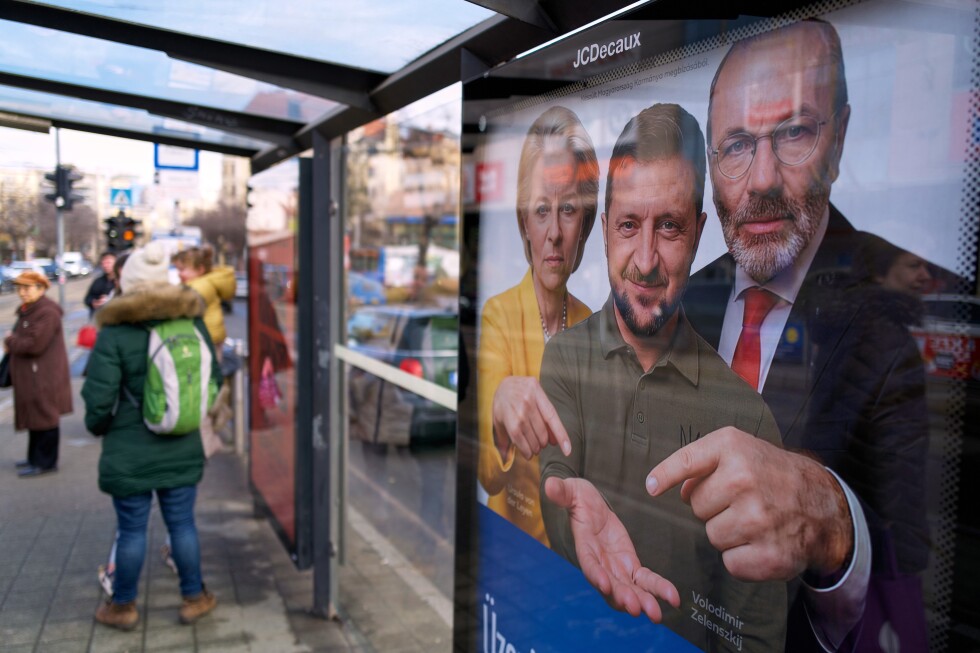
Across Hungary, government-funded billboards display AI-generated images of Ukrainian President Volodymyr Zelenskyy alongside European officials, depicting him with an outstretched hand seemingly demanding money. The message reads bluntly: “Our message to Brussels: We won’t pay!” This visual campaign represents Orbán’s central argument that supporting Ukraine against Russian aggression would bankrupt Hungary and endanger its youth.
The real-world implications of this strategy became evident this week when Hungary blocked a new package of European Union sanctions against Russia. The Hungarian government cited interruptions in Russian oil supplies through Ukraine as justification and vowed to veto any further pro-Ukraine policies until oil flows resume.
Escalating tensions further, Orbán deployed military and police forces around power plants and other critical infrastructure on Wednesday, claiming without evidence that Ukraine was plotting attacks against Hungary’s energy system.
As the EU’s longest-serving leader, Orbán has distinguished himself as the Kremlin’s strongest ally within the bloc. While nearly all other EU members have distanced themselves from Moscow since the February 2022 invasion, Hungary has deepened its cooperation with Russia. Orbán frames his relationship with Russian President Vladimir Putin as pragmatic, citing Hungary’s dependence on Russian energy supplies.
Critics, however, note disturbing parallels between Orbán’s governance style and Putin’s authoritarian approach, pointing to Hungary’s anti-LGBTQ+ policies, media crackdowns, and the labeling of critics as “foreign agents.”
The April 12 election presents Orbán with perhaps his most formidable challenge since returning to power in 2010. Independent polls show his right-wing Fidesz party trailing behind Péter Magyar, a 44-year-old lawyer and former Fidesz insider who broke with the party earlier this year. Magyar’s campaign focuses on economic issues, promising to address rising living costs, improve social services, combat corruption, and restore Hungary’s Western orientation.
Magyar’s rise has been fueled by recent political scandals that damaged Fidesz’s credibility, including a presidential pardon given to an accomplice in a child sexual abuse case that prompted the resignation of both the president and justice minister.
Facing declining support, Orbán’s campaign has intensified its anti-Ukraine messaging through taxpayer-funded billboards and advertisements across all media platforms. A government petition mailed to every eligible voter claims EU financial support for Ukraine would bring economic ruin to Hungary.
Meanwhile, advertisements from pro-government organizations depict Magyar as a puppet of Zelenskyy and the EU who would draw Hungary into the war. State-controlled media and pro-government outlets amplify these messages, suggesting Ukraine wants to prolong the conflict with EU support.
Orbán has gone so far as to claim the EU—not Russia—poses the greatest threat to Hungary. A particularly disturbing AI-generated video released by Fidesz shows a Hungarian soldier being executed on a battlefield, with a narrator warning: “We won’t allow others to decide on the fates of our families. Let’s not take a risk. Fidesz is the safe choice.”
András Rácz, a Russia expert at the German Council on Foreign Relations, notes that despite their false premises, such fear-based campaigns have helped Fidesz win previous elections. “Populists often try to define an enemy, often an imaginary one, and then offer protection to the society from that enemy. Ukraine has been ideal from this perspective,” Rácz explained.
Hungary-Ukraine relations have deteriorated further after Russian oil shipments to Hungary were interrupted—a disruption Ukraine attributes to a Russian drone strike that damaged a pipeline, but which Orbán characterizes as blackmail. In retaliation, his government halted diesel shipments to Ukraine and threatened to veto a €90 billion EU loan destined for Kyiv.
Despite the anti-Ukraine messaging resonating with many Fidesz loyalists, victory is not assured. On Sunday, hundreds of Hungarians and Ukrainians gathered in central Budapest to commemorate the war’s four-year anniversary, marching toward the Russian embassy with Ukrainian and Hungarian flags.
Budapest’s liberal mayor, Gergely Karácsony, described Orbán’s policies as “a betrayal not only of Ukraine, but of Hungary’s national interest,” adding: “I hope that this will go into history as a failed policy, but that history will also remember that there were some who stood up for what is right.”
Fact Checker
Verify the accuracy of this article using The Disinformation Commission analysis and real-time sources.

7 Comments
The use of AI-generated imagery to depict Zelenskyy is a troubling tactic. Orbán should be focused on pragmatic policy, not inflammatory propaganda, during this delicate geopolitical moment.
Orbán’s pivot to the Ukraine conflict for his reelection campaign raises questions about his priorities. Effective leadership requires balancing domestic and international concerns, not exploiting crises for political gain.
While Orbán may be tapping into populist sentiment, his actions around Ukraine could have far-reaching consequences. As a regional leader, he has a responsibility to prioritize pragmatic solutions over political expediency.
Orbán’s focus on domestic politics over Ukraine’s plight is disappointing. As a European leader, he should be working with allies to find constructive solutions, not exploiting the situation for political gain.
Orbán’s rhetoric and tactics raise concerns about democratic backsliding in Hungary. Exploiting crises for political gain, rather than seeking collaborative solutions, is a worrying trend that bears close watching.
Interesting to see Orbán using the Ukraine conflict to rally his base. While his anti-EU stance may resonate with some, it’s concerning to see him potentially block aid for Ukraine during this crisis.
Escalating tensions with claims of Ukrainian attacks seems like a concerning move by Orbán. I hope this doesn’t further destabilize the region or impact energy supplies. Careful diplomacy is needed now more than ever.