


Listen to the article
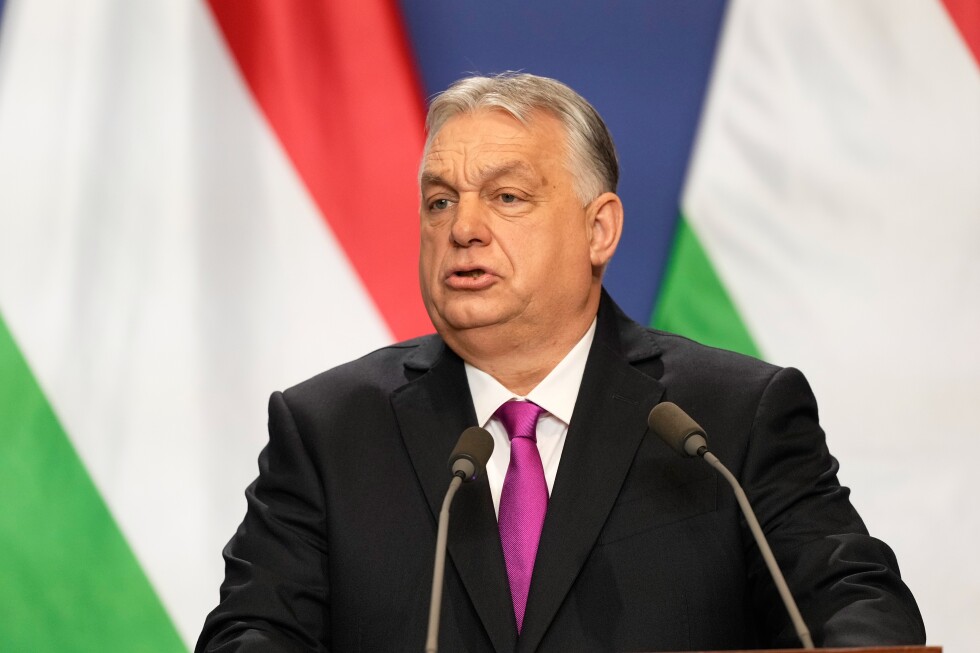
Hungarian Prime Minister Viktor Orbán has ordered heightened security measures around critical energy infrastructure sites, claiming Ukraine is attempting to disrupt Hungary’s energy system amid growing tensions between the neighboring countries.
In a video posted to social media on Wednesday, Orbán announced that soldiers and necessary equipment would be deployed to “repel attacks” near key energy facilities, while police forces would increase patrols around designated power plants, distribution stations, and control centers.
“We will deploy soldiers and the necessary equipment to repel attacks near key energy facilities,” Orbán stated in the video. He further claimed that Hungarian national security services had evidence Ukraine was “preparing further actions to disrupt the operation of Hungary’s energy system,” though he provided no specific details or evidence for these allegations.
The announcement comes amid Budapest’s accusations that Kyiv is deliberately holding back Russian oil deliveries through the Druzhba pipeline, which crosses Ukrainian territory before reaching refineries in Hungary and Slovakia. Ukrainian officials have firmly denied these allegations, maintaining that the pipeline was damaged in a Russian drone attack.
The Druzhba pipeline, whose name means “friendship” in Russian, has been out of commission since January 27. Ukrainian authorities have stated that repairs are hazardous and the pipeline can only operate reliably if Russia ceases targeting energy infrastructure.
As part of the security measures, Orbán also ordered a ban on drone operations in Szabolcs-Szatmár-Bereg County, which shares a border with Ukraine.
The escalating rhetoric comes at a critical time for Orbán, who faces the strongest challenge to his leadership in 16 years. With elections scheduled for April 12, the EU’s longest-serving leader and his right-wing Fidesz party are trailing in most independent polls to center-right challenger Péter Magyar. Political analysts suggest that Orbán’s aggressive stance toward Ukraine may be calculated to rally his nationalist base.
Unlike most European nations, Hungary has maintained and even increased its Russian energy imports since Moscow’s invasion of Ukraine in February 2022. Both Hungary and Slovakia, as EU and NATO members, secured temporary exemptions from the European Union’s policy prohibiting imports of Russian oil.
Hungary’s continued reliance on Russian energy reflects its unique position within the European Union. Orbán has cultivated the closest relationship with the Kremlin of any EU leader, often positioning himself as a pragmatic leader prioritizing his country’s economic interests over geopolitical alliances.
The current dispute has already had diplomatic consequences. On Sunday, Hungary threatened to block a major €90 billion ($106 billion) EU loan package for Kyiv. The following day, Budapest vetoed a new round of EU sanctions against Russia. Orbán has publicly vowed to obstruct any additional EU measures supporting Ukraine until oil shipments through the Druzhba pipeline resume.
Orbán has repeatedly accused Ukraine of “blackmail,” claiming Kyiv is attempting to force him to abandon his positions on Ukraine and deliberately driving up energy prices in Hungary ahead of the crucial April election.
The Hungarian government’s campaign messaging has taken a stark tone, suggesting that if Fidesz loses the election, the opposition Tisza party would drag Hungary into the war in Ukraine, bankrupting the country and sending Hungarian youth to die on the front lines.
This aggressive anti-Ukraine campaign represents a significant escalation in Orbán’s rhetoric, as he casts the neighboring country as a grave threat to Hungary’s security while positioning himself as the sole guarantor of national safety.
The situation highlights the complex energy security challenges facing Central European nations dependent on transit routes through Ukraine, while also demonstrating how energy politics has become increasingly entangled with electoral strategies in an already tense regional environment.
Fact Checker
Verify the accuracy of this article using The Disinformation Commission analysis and real-time sources.

8 Comments
This is a complex geopolitical situation with high stakes for all involved. While I understand Orbán’s desire to protect Hungary’s energy infrastructure, the lack of concrete evidence behind his claims is concerning. A more diplomatic, collaborative approach may yield better results than unilateral security measures.
Well said. Transparent, good-faith cooperation between all parties is likely the best path forward to ensure regional energy security without further escalating tensions.
I’m curious to learn more about the specific intelligence Orbán claims to have regarding Ukraine’s alleged disruption plans. Without that information, it’s hard to assess the validity of his accusations. Energy security is crucial, but militarizing the issue seems premature based on the limited details provided.
This is an interesting development, though I’m not sure how credible Orbán’s claims are without seeing the evidence. Tensions between Hungary and Ukraine have been running high, so this could be political posturing or an attempt to bolster domestic support. I’d want to hear more details before drawing any conclusions.
I agree, the lack of specifics is concerning. Deploying military forces around energy infrastructure is a serious step, so the public deserves a clear justification backed by facts, not just vague accusations.
Orbán’s announcement raises more questions than answers. Claiming Ukraine is plotting to disrupt Hungary’s energy system is a serious allegation that requires substantive proof, not just vague assurances of intelligence. I hope the government provides more details to justify this heightened security response.
The energy security of European nations is certainly a sensitive issue given the region’s reliance on Russian supplies. However, I’m not convinced that heightening military presence is the best approach, as it could further escalate tensions. A more diplomatic, fact-based solution may be preferable.
Absolutely, a measured, transparent response would be better than inflammatory rhetoric. Securitizing the energy grid is a risky move that could backfire if not handled carefully.