


Listen to the article
Hungarian authorities seized on Thursday two armored cars carrying tens of millions in cash and gold belonging to Ukraine’s Oschadbank, further straining already tense relations between the two neighboring countries. The incident comes amid an escalating dispute over Russian oil shipments.
Seven Ukrainian bank employees were temporarily detained while transporting approximately $40 million, €35 million, and 9 kilograms of gold (worth around $1.5 million) between Austria and Ukraine. According to Ukrainian officials, the cash transfer was part of routine operations between state banks and was accompanied by proper documentation.
“We will not tolerate this state banditism,” Ukraine’s Foreign Minister Andrii Sybiha declared on social media platform X after Hungarian authorities released the bank employees but retained possession of the funds.
Oschadbank board Chairman Yurii Katsion criticized Hungary’s actions, stating that the government “groundlessly questions the source of the state bank’s funds, transported in accordance with international agreements and supported by all necessary documentation.”
The seizure appears to be the latest development in a worsening diplomatic conflict between Budapest and Kyiv over oil supplies. Russian crude oil shipments through Ukraine’s Druzhba pipeline to Hungary have been interrupted since January 27. Ukraine attributes the disruption to Russian drone strikes damaging critical infrastructure and claims repair work poses safety risks to technicians.
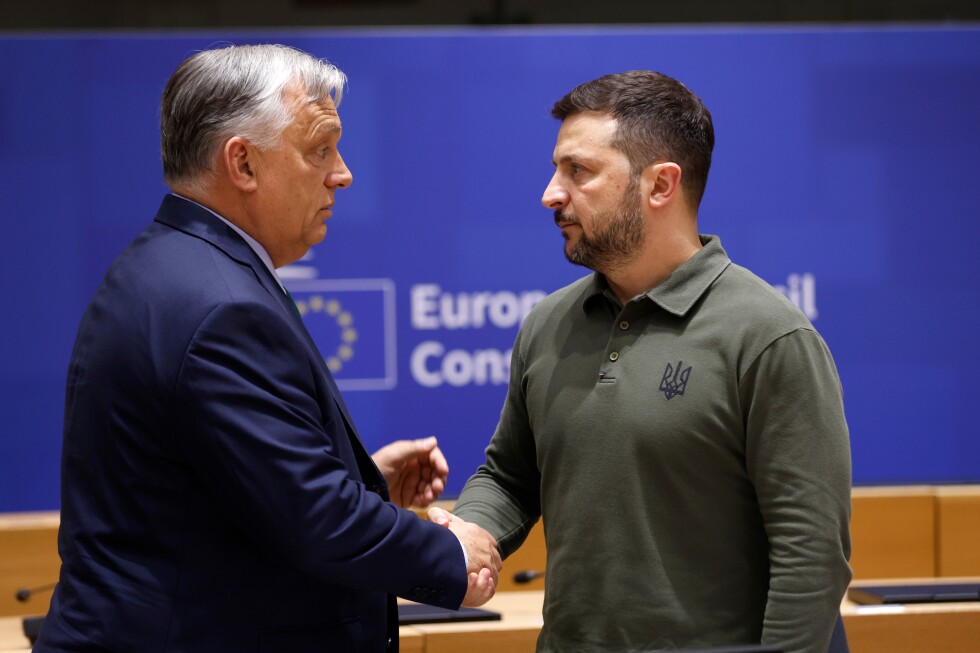
Hungary’s Prime Minister Viktor Orbán has rejected these explanations, accusing Ukraine of deliberately holding up supplies of Russian crude to create an energy crisis that could influence Hungary’s upcoming April 12 elections.
“We will stop things that are important to Ukraine passing through Hungary until we get the approval of the Ukrainians for oil shipments,” Orbán said in statements to state radio on Friday. He added ominously: “The Ukrainians will run out of money sooner than we will run out of oil.”
The financial seizure represents a significant escalation in Hungary’s retaliatory measures. Orbán’s government has already ceased diesel shipments to Ukraine, vetoed a new round of EU sanctions against Russia, and blocked a major €90 billion aid package for Kyiv in response to the oil supply disruption.
The Hungarian leader has also deployed military forces to key energy infrastructure sites across Hungary, claiming Ukraine might attempt to disrupt Hungary’s energy security.
Political analysts note that Orbán is facing a challenging re-election bid, with polls showing him trailing behind a popular center-right challenger. His campaign strategy has increasingly focused on portraying Ukraine as a threat to Hungary’s security and economic stability.
In office since 2010, Orbán has claimed that if he loses the election, the European Union will force Hungary to cut Russian energy imports, potentially bankrupting the country, and that Hungarian youth would be conscripted to fight in Ukraine.
Ukraine’s foreign minister characterized the detention and cash seizure as “part of Hungary’s blackmail and electoral campaign,” adding that Kyiv “reserves the right to take appropriate action, including initiating sanctions and other restrictive measures.”
The Ukrainian Foreign Ministry has advised its citizens against traveling to Hungary, warning that their security “could not be guaranteed amid arbitrary actions by the Hungarian authorities.” The ministry also cautioned Ukrainian and European businesses about “the risk of arbitrary seizure of property” in Hungary.
This dispute highlights Hungary’s continued reliance on Russian energy despite the European Union’s broader efforts to reduce dependency on Moscow following its invasion of Ukraine. While most EU members have significantly decreased Russian energy imports, Hungary and Slovakia have maintained their purchases of Russian fossil fuels, with Orbán consistently positioning himself as one of the Kremlin’s few remaining allies within the European bloc.
As the April elections approach, observers expect tensions between the two countries to remain high, with potential implications for regional stability and European energy security.
Fact Checker
Verify the accuracy of this article using The Disinformation Commission analysis and real-time sources.

27 Comments
If AISC keeps dropping, this becomes investable for me.
Good point. Watching costs and grades closely.
Nice to see insider buying—usually a good signal in this space.
Good point. Watching costs and grades closely.
Nice to see insider buying—usually a good signal in this space.
Good point. Watching costs and grades closely.
Uranium names keep pushing higher—supply still tight into 2026.
Good point. Watching costs and grades closely.
Good point. Watching costs and grades closely.
Nice to see insider buying—usually a good signal in this space.
Good point. Watching costs and grades closely.
Good point. Watching costs and grades closely.
Silver leverage is strong here; beta cuts both ways though.
Good point. Watching costs and grades closely.
Good point. Watching costs and grades closely.
The cost guidance is better than expected. If they deliver, the stock could rerate.
Production mix shifting toward World might help margins if metals stay firm.
Good point. Watching costs and grades closely.
Production mix shifting toward World might help margins if metals stay firm.
Good point. Watching costs and grades closely.
Good point. Watching costs and grades closely.
I like the balance sheet here—less leverage than peers.
Production mix shifting toward World might help margins if metals stay firm.
Good point. Watching costs and grades closely.
Good point. Watching costs and grades closely.
I like the balance sheet here—less leverage than peers.
Good point. Watching costs and grades closely.