


Listen to the article
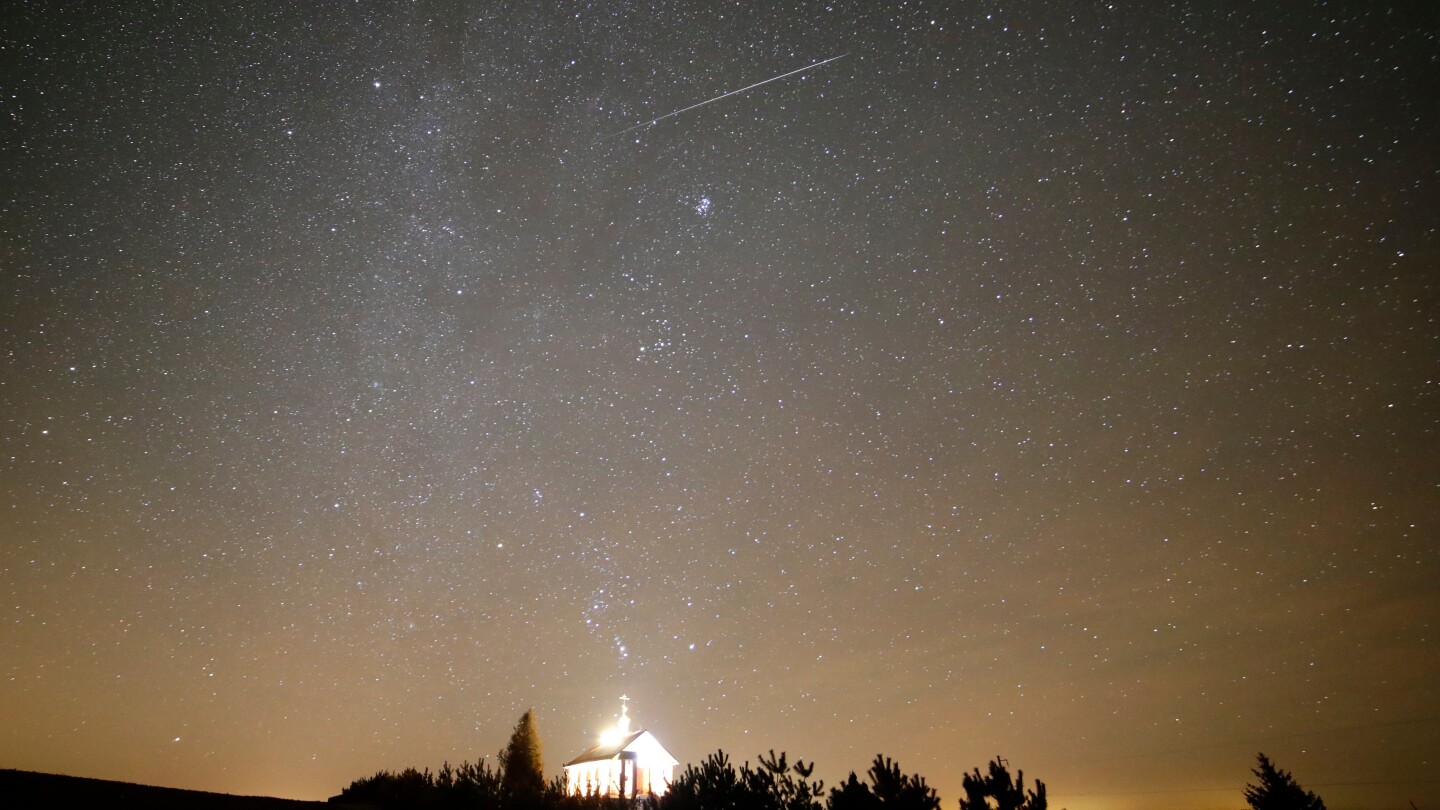
One of the year’s most spectacular celestial events is set to illuminate night skies this weekend as the Geminid meteor shower reaches its peak, offering skywatchers a chance to witness nature’s own fireworks display.
The Geminids, visible through mid-December according to the American Meteor Society, will reach maximum activity Saturday night into Sunday’s early morning hours. During this peak period, observers in areas with minimal light pollution could witness up to 120 meteors per hour streaking across the night sky, NASA reports.
Unlike most meteor showers that originate from comets, the Geminids stem from an unusual source – the asteroid 3200 Phaethon. This unique origin contributes to the shower’s reputation as one of the most reliable and spectacular annual meteor events in the astronomical calendar.
“The Geminids consistently rank among the most impressive meteor showers because of their brightness, frequency, and distinctive yellow coloration,” explains Bethany Cobb Kung, an astronomer with George Washington University. “When you’re watching, you’ll notice these meteors moving across the sky, each leaving a characteristic tail behind it, while the stars remain stationary.”
Though visible worldwide, the shower provides optimal viewing conditions in the Northern Hemisphere. This year’s display is particularly favorable, as the moon will remain below the horizon during prime viewing hours before midnight, ensuring darker skies that won’t overshadow the meteors’ brilliance.
For those hoping to catch this cosmic spectacle, experts recommend finding a location away from urban areas where light pollution can diminish visibility. The ideal viewing spot would offer a wide, unobstructed view of the night sky. While the meteors will appear throughout the sky, they will seem to radiate from the direction of the Gemini constellation – hence the shower’s name.
Meteor showers occur when Earth passes through streams of cosmic debris left behind by comets or, in this rare case, an asteroid. When these space rocks enter Earth’s atmosphere at high speeds – often tens of thousands of miles per hour – they burn up due to friction, creating the luminous trails commonly known as “shooting stars.”
Weather conditions permitting, the Geminids offer one of the year’s best opportunities for amateur astronomy enthusiasts to witness a major celestial event without specialized equipment. The shower is visible to the naked eye, though binoculars can enhance the experience by revealing fainter meteors.
Astronomers recommend dedicating at least an hour to meteor watching, as the frequency of sightings typically increases the longer observers spend under the night sky. Patience is key, as it takes approximately 15 to 20 minutes for human eyes to fully adapt to darkness.
“Comfort is crucial for effective meteor watching,” notes Kung. “Bring a sleeping bag or reclining chair so you can comfortably look upward for extended periods.”
Experts also advise minimizing exposure to artificial light during observation sessions. Even brief glances at smartphone screens can reset the eye’s night vision adaptation, potentially causing observers to miss meteors for several minutes afterward.
The Geminids have grown more prominent over the past century. First observed in the 1860s with just 10-20 meteors per hour, the shower has intensified significantly as Jupiter’s gravity has pulled the stream of debris closer to Earth’s orbit.
For those unable to view the Geminids due to weather or location constraints, several astronomical organizations plan to livestream the event online, providing alternative access to this celestial phenomenon that marks one of the final astronomical highlights of 2023.
Fact Checker
Verify the accuracy of this article using The Disinformation Commission analysis and real-time sources.

12 Comments
Witnessing up to 120 meteors per hour during the Geminid peak must be an incredible sight. I’d love to find a dark sky location to observe this natural fireworks display.
Absolutely, the brightness and frequency of the Geminids make for a truly memorable celestial event. Timing your viewing during the peak is key to maximizing the experience.
The Geminid shower’s reputation as one of the most reliable and spectacular annual meteor events is well-deserved. I look forward to learning more about the unique science behind this phenomenon.
Agreed, the Geminids are truly a must-see event for anyone interested in astronomy and the wonders of our solar system.
While most meteor showers originate from comets, the Geminid’s link to the asteroid 3200 Phaethon is a fascinating point of distinction. I wonder what other unique properties this shower may have.
Yes, the Geminid shower’s unusual celestial origins make it a truly intriguing event to study and observe. I’m sure there are many more interesting details to uncover.
The Geminids’ distinctive yellow coloration sounds fascinating. I wonder what causes this unique hue compared to other meteor showers.
Good question. The yellow tint is likely due to the chemical composition of the asteroid 3200 Phaethon, which is the source of the Geminid meteors.
The Geminid meteor shower is a fascinating celestial event. I’m curious to learn more about the asteroid 3200 Phaethon and how it contributes to the shower’s unique characteristics.
Yes, the Geminid shower’s connection to an asteroid rather than a comet is quite unusual. I wonder what insights this might provide about the origins and composition of meteor showers.
As an amateur astronomer, I’m excited to try and observe the Geminid shower this weekend. Hopefully the weather cooperates and I can witness this celestial display.
Wishing you clear skies and an amazing Geminid viewing experience! It’s one of the annual highlights for many stargazers.