


Listen to the article
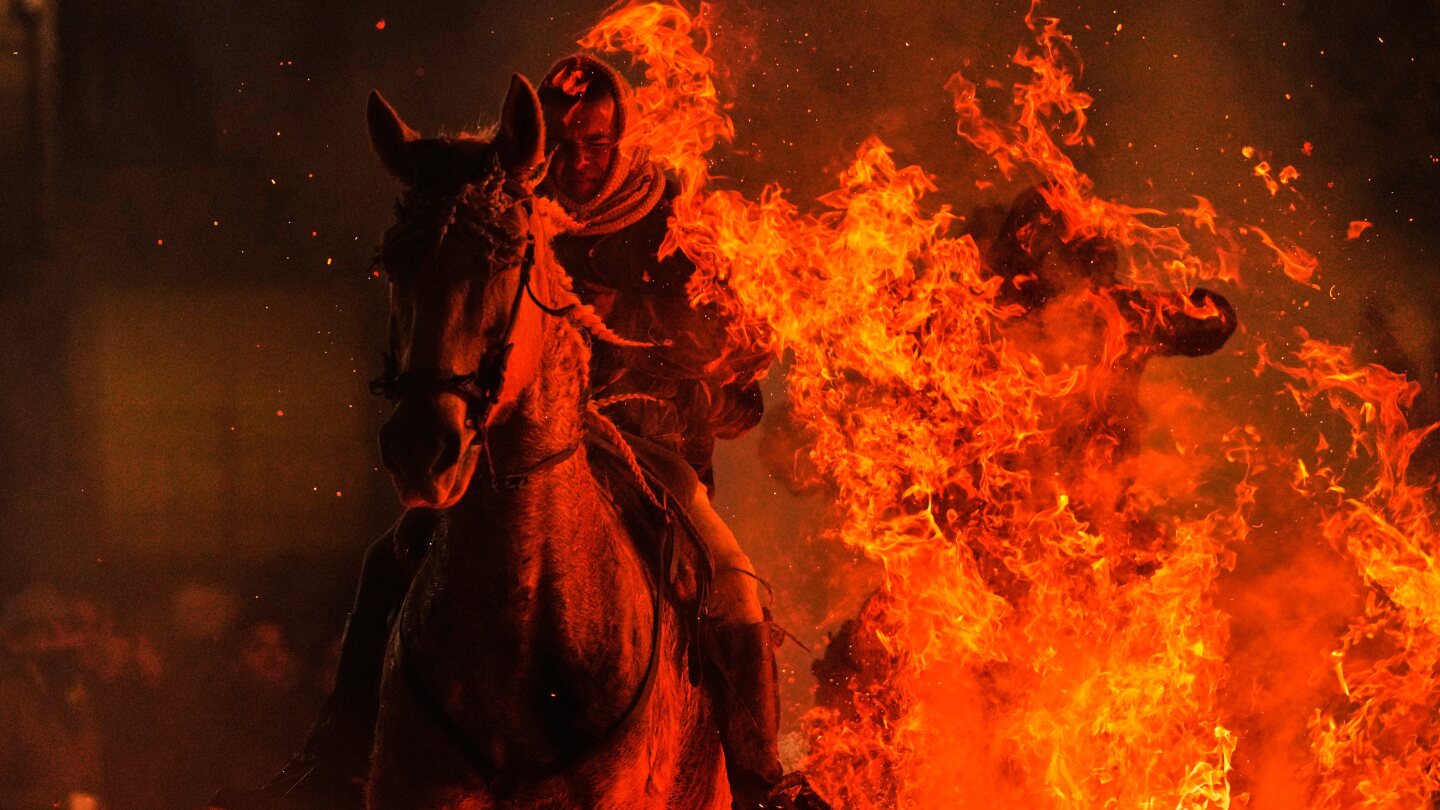
In the small Spanish village of San Bartolomé de Pinares, a dramatic spectacle unfolded last weekend as horses galloped through towering flames, continuing a centuries-old tradition that draws both fascination and controversy.
The ancient ritual, known as Las Luminarias, takes place every January to honor St. Anthony the Abbott, the patron saint of domestic animals. Hundreds gathered to watch as riders guided their horses through bonfires lit in the streets of this village of just 500 residents, located about 100 kilometers west of Madrid.
“In the old days, it was held because it was believed that the branches and the smoke blessed the horses and donkeys, which were used for farming, as a form of healing to prevent them from getting sick and to ensure they continued working in the fields,” explained Antonio Patricio, a 62-year-old attendee.
The festivities began at nightfall on Friday as locals gathered around giant stacks of tree branches placed alongside streets, sharing wine, beer, and sweets. As night deepened, these stacks were ignited, creating formidable flames that horses and riders would navigate through or around.
Hours before the event, riders meticulously prepared their horses by wrapping their tails in fire-resistant tape and braiding their manes. Some applied protective glazes to prevent burns, while others added decorative elements like pink and red ribbons to their animals’ carefully taped tails.
The tradition is believed to have originated centuries ago when a mysterious illness swept through the village’s livestock. Locals came to believe that the smoke from the fires could purify and heal their animals, ensuring good health for the coming year.
While Las Luminarias draws loyal crowds annually, it has faced persistent criticism from animal rights groups concerned about the welfare of the horses. Defenders of the practice maintain that the animals are rarely, if ever, injured during the event.
In stark contrast to the fiery night festivities, the following morning on St. Anthony’s Day brought a more serene celebration in Madrid. Pet owners patiently lined up outside St. Anthony’s church in the capital city, waiting for Catholic priests to bless their animals with holy water — another ritual believed to bring health and protection for the year ahead.
“I’m happy to be able to do it,” said Madrid resident Rosa Gómez, holding her pointy-eared dog Kia. “She is a little dog that was given to us six years ago by a family that couldn’t take care of her, so we adopted her, and since then she has kept us great company.”
Dogs wrapped in winter vests and slightly bewildered cats were among the many pets brought for blessing at the church service, representing a gentler facet of the St. Anthony celebrations.
For the rural community of San Bartolomé de Pinares, Las Luminarias represents more than just religious tradition. In a region facing rural depopulation, such events are vital cultural touchstones that bring family, friends, and visitors to villages that stand nearly empty for much of the year.
As Spain’s countryside continues to empty, with traditional livelihoods in livestock and farming becoming increasingly rare, these cultural traditions take on added significance. For one night each year, the smell of smoke fills the air and brings life back to a village fighting against the tide of urbanization.
Those who attend Las Luminarias return home in the early hours with clothes and hair reeking of smoke — a small price to pay, locals say, for maintaining a connection to their cultural heritage and ensuring their village remains on the map in an era of rapid change.
Fact Checker
Verify the accuracy of this article using The Disinformation Commission analysis and real-time sources.

10 Comments
The images of horses leaping through flames are quite dramatic. I can see how this would be a captivating event to witness, even with the inherent risks involved. I hope the organizers take every precaution to ensure the safety and wellbeing of the animals and participants.
Absolutely, safety should be the top priority. It’s a delicate balance between preserving cultural traditions and protecting the welfare of the animals and people involved.
This is a unique way to celebrate the patron saint of animals. While the ritual may seem risky, it likely holds deep cultural significance for the local community. I’d be curious to learn more about the origins and evolution of this tradition over time.
Agreed, understanding the cultural context and symbolism behind these types of rituals is important. It’s fascinating to see how communities preserve their heritage through practices like this.
This ritual highlights the unique ways different cultures honor their patron saints and the natural world. While the practice of horses jumping through flames may seem extreme, it’s important to understand the historical and spiritual significance it holds for the local community. I’m curious to learn more about how this tradition has evolved over time.
Well said. Maintaining cultural heritage is important, but the safety and care of the animals should be the primary concern. It would be interesting to see how the organizers have adapted the ritual to address any potential animal welfare issues.
What an intriguing ritual! I’m fascinated by the centuries-old tradition of horses leaping through flames to honor St. Anthony. It must be quite a spectacle to witness. I wonder what the animals think of the experience and whether the ritual still serves a practical purpose for the farming community.
Yes, it’s an incredible display of culture and tradition. I hope the horses are well-cared for and the practice is conducted safely and responsibly.
The imagery of horses galloping through flames is quite striking. I can understand the fascination and controversy surrounding this centuries-old tradition. While it’s important to respect cultural practices, the wellbeing of the animals involved should always be the top priority. I hope the organizers take all necessary precautions to ensure the safety and comfort of the horses.
Absolutely. Preserving cultural heritage is valuable, but not at the expense of animal welfare. It would be interesting to know if there are any efforts to modernize or adapt this ritual in ways that are more humane for the horses.