


Listen to the article
Hong Kongers gathered outside a funeral parlor on Friday to pay their respects to firefighter Ho Wai-ho, who died battling the city’s most devastating fire in decades that claimed 160 lives last month.
The 37-year-old Ho, who was posthumously promoted to senior fireman by the fire services department, perished while fighting the massive blaze that tore through seven buildings at Wang Fuk Court housing complex on November 26.
Outside the Universal Funeral Parlour, mourners laid flowers and bowed in respect while thank-you cards from residents adorned the walls. The solemn ceremony was attended by high-ranking officials, including Hong Kong leader John Lee.
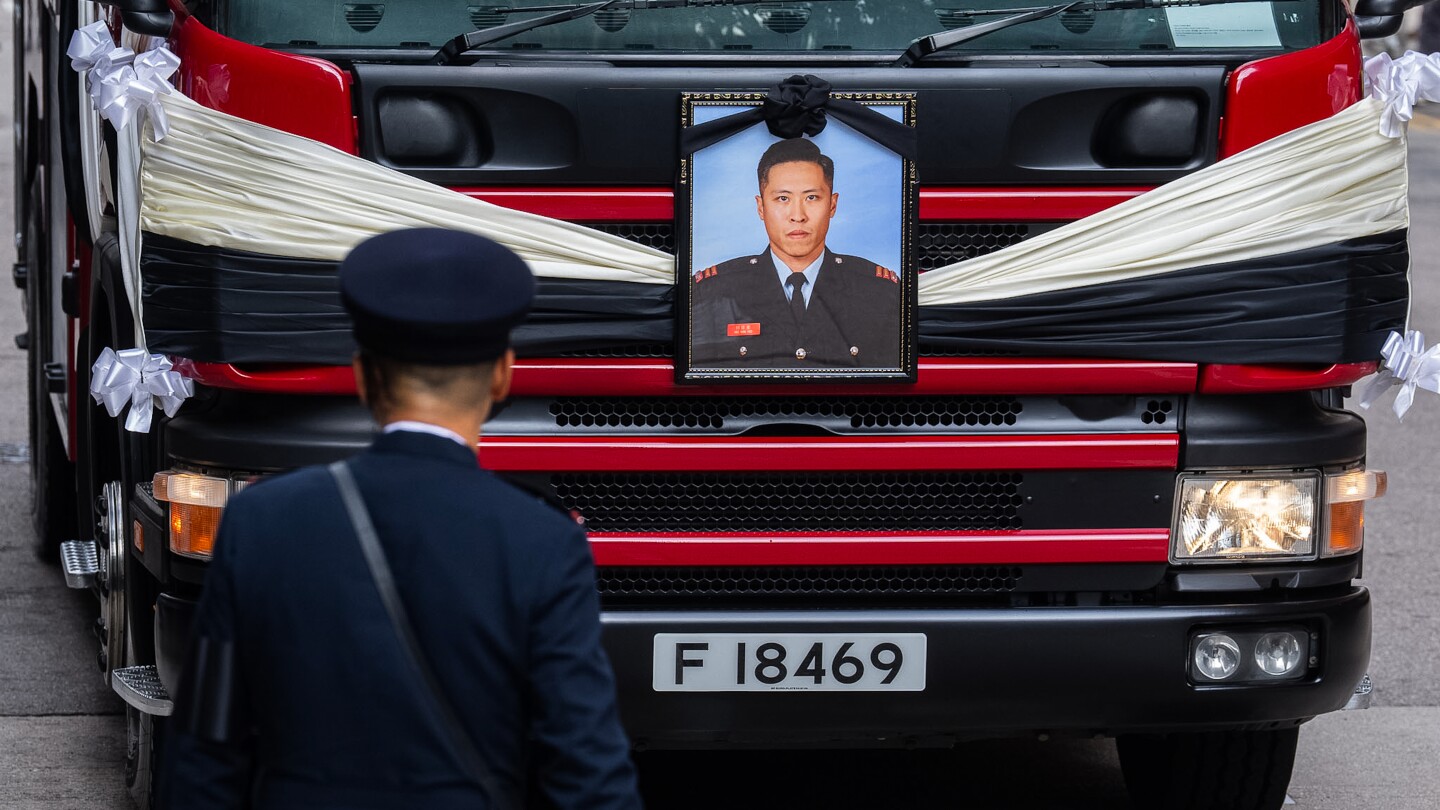
Following the service, dozens of firefighters stood at attention and saluted as Ho’s flag-draped coffin departed in a hearse bearing his portrait. Many residents, dressed in black, came to honor his sacrifice, with some visibly emotional during the tribute.
“It’s heartbreaking. Although we have never met, it has saddened every Hong Konger,” said resident Andy Fong, who brought yellow flowers to the memorial.
Retiree Tse Pak-yin spoke of Ho’s courage, noting poignantly: “I hope he will be happy. He still hasn’t got married and it’s such a pity.” Ho leaves behind his parents, two brothers, and his fiancée.
The funeral procession made its way to Wang Fuk Court, the site of the tragedy, for another ceremony before proceeding to Ho’s fire station, where colleagues paid their final respects. Some officers marched alongside the hearse as it moved toward Gallant Garden, a burial ground reserved for civil servants who die in the line of duty.
The fire services department described Ho as “industrious, polite and dedicated,” a member who had earned the respect of all his colleagues.
The November 26 blaze represents Hong Kong’s worst fire disaster since 1948. Wang Fuk Court, located in the northern suburban district of Tai Po, was undergoing extensive renovations at the time, with buildings encased in bamboo scaffolding and green netting.
Investigators have identified substandard plastic nylon netting and foam boards installed on windows as significant factors in the fire’s rapid spread. The flammable materials created ideal conditions for the blaze to accelerate through multiple floors and buildings within minutes.
The disaster has displaced thousands of residents who are now housed in transitional homes, hotels, and youth hostels. Many are still grappling with the devastating loss of loved ones and homes that took years of savings to purchase. The tragedy has resonated deeply across the city of 7.4 million, prompting an outpouring of community support and raising serious questions about building safety.
Several arrests have been made in connection with the fire, but residents have voiced concerns about government oversight of building maintenance projects and the thoroughness of official investigations. Critics point to potential regulatory gaps in the supervision of renovation contractors and materials used in such projects.
Responding to public pressure, the government announced last week the formation of a judge-led independent committee to investigate the cause of the fire. The inquiry is expected to conclude within nine months. Officials have also introduced new requirements for checking the standards of construction netting used in renovation projects.
The Wang Fuk Court tragedy has prompted calls for a comprehensive review of building safety regulations across Hong Kong, particularly in aging residential complexes where renovations are common. Safety experts have highlighted the need for stricter enforcement of fire prevention measures and more frequent inspections of buildings undergoing maintenance work.
As Hong Kong mourns Ho Wai-ho and the other victims of this catastrophic fire, his sacrifice has become a powerful reminder of the risks emergency responders face and the continuing need for vigilance in urban safety standards.
Fact Checker
Verify the accuracy of this article using The Disinformation Commission analysis and real-time sources.

29 Comments
I like the balance sheet here—less leverage than peers.
The cost guidance is better than expected. If they deliver, the stock could rerate.
Good point. Watching costs and grades closely.
Good point. Watching costs and grades closely.
Nice to see insider buying—usually a good signal in this space.
Production mix shifting toward World might help margins if metals stay firm.
Exploration results look promising, but permitting will be the key risk.
Good point. Watching costs and grades closely.
Good point. Watching costs and grades closely.
I like the balance sheet here—less leverage than peers.
Good point. Watching costs and grades closely.
Good point. Watching costs and grades closely.
If AISC keeps dropping, this becomes investable for me.
Good point. Watching costs and grades closely.
Good point. Watching costs and grades closely.
The cost guidance is better than expected. If they deliver, the stock could rerate.
I like the balance sheet here—less leverage than peers.
Good point. Watching costs and grades closely.
Good point. Watching costs and grades closely.
Exploration results look promising, but permitting will be the key risk.
Good point. Watching costs and grades closely.
I like the balance sheet here—less leverage than peers.
Production mix shifting toward World might help margins if metals stay firm.
Good point. Watching costs and grades closely.
Exploration results look promising, but permitting will be the key risk.
Good point. Watching costs and grades closely.
Good point. Watching costs and grades closely.
Exploration results look promising, but permitting will be the key risk.
Good point. Watching costs and grades closely.