


Listen to the article
Russian Attacks on Ukraine’s Energy Grid Raise Legal Questions Amid Harsh Winter
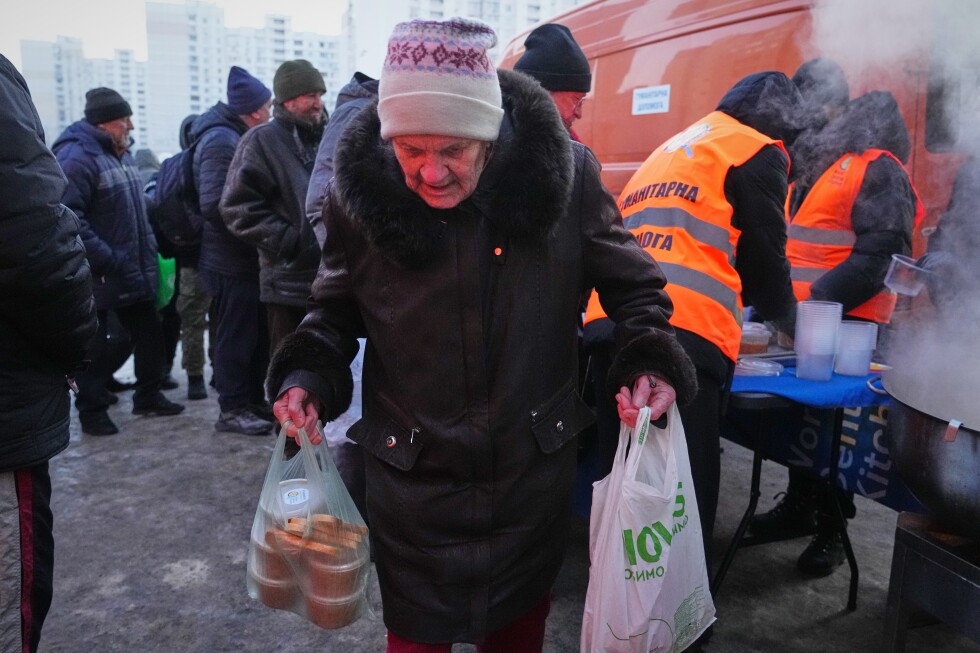
Russian missiles and drones have systematically targeted Ukraine’s energy infrastructure in recent weeks, leaving millions without power during one of the country’s coldest winters on record. As temperatures in Kyiv plummeted to minus 20 degrees Celsius (minus 3 Fahrenheit), Ukrainians have been forced to endure freezing conditions without electricity, heating, or running water.
Ukrainian President Volodymyr Zelenskyy condemned the attacks, stating, “Taking advantage of the coldest days of winter to terrorize people is more important to Russia than diplomacy.” His comments came on the eve of a new round of peace talks, highlighting the stark contrast between diplomatic efforts and ongoing military aggression.
Russia maintains these attacks are legitimate components of its military campaign, despite widespread international condemnation of the invasion itself as an illegal act of aggression. The targeting of civilian infrastructure has raised critical questions about the boundaries of acceptable warfare under international law.
International legal experts note clear restrictions on attacking energy grids during armed conflict. David Crane, former chief prosecutor at the United Nations Special Court for Sierra Leone, explained that while combatants can legally target power infrastructure that directly affects valid military targets, they cannot cause excessive civilian casualties. “The indiscriminate and widespread targeting does not come close to what is legal,” Crane stated regarding Russia’s campaign.
The International Committee of the Red Cross reinforces this position, stating that energy systems providing essential services to civilians “are in principle civilian objects, and as such are protected against direct attack and reprisals as well as incidental harm.”
The International Criminal Court (ICC) has taken concrete action on this issue. In 2024, the court issued arrest warrants for top Russian military officials, including former Defense Minister Sergei Shoigu and Russia’s chief military officer, General Valery Gerasimov. The court determined there were “reasonable grounds to believe that the alleged strikes were directed against civilian objects,” and that even for installations that might qualify as military objectives, “the expected incidental civilian harm and damage would have been clearly excessive to the anticipated military advantage.”
Russia, not a member of the ICC, rejects the court’s jurisdiction and refuses to extradite suspects to face justice at its headquarters in The Hague, Netherlands.
Kremlin spokesman Dmitry Peskov defended the attacks, insisting that Russian forces are only “striking the targets that they believe are associated with the military complex of the Kyiv regime.” This claim contradicts daily evidence of widespread civilian impact.
Ukrainian authorities maintain that Russia’s strategy aims to wear down civilian morale and erode support for the war effort by imposing unbearable living conditions. The systematic targeting of substations, transformers, turbines, and generators appears designed to cripple Ukraine’s electricity network comprehensively. DTEK, Ukraine’s largest private power company, reported that this week’s overnight assault marked the ninth major attack on its thermal power plants since October alone.
The financial toll has been staggering. According to a joint assessment by the World Bank, European Commission, and United Nations, Ukraine’s energy sector has suffered more than $20 billion in direct war damage. This figure does not account for the immense humanitarian costs as Ukrainians struggle to survive without basic services during extreme winter conditions.
As international organizations continue to document these attacks, the question of accountability for potential war crimes remains at the forefront of global concern. Despite clear prohibitions under international humanitarian law, the targeting of civilian infrastructure continues, with Ukrainian civilians bearing the brunt of the suffering during what has become one of the harshest winters in memory.
Fact Checker
Verify the accuracy of this article using The Disinformation Commission analysis and real-time sources.

13 Comments
It’s disheartening to see the continued disregard for international law and human rights in this conflict. All sides should be held to the same standards and face consequences for any violations, no matter their stated justifications.
I agree. Upholding the rule of law is critical, even in the midst of war. The international community must stand firm in condemning these tactics and work to de-escalate the situation through diplomatic channels.
While the legal arguments around this issue are complex, the human impact is clear. Depriving millions of Ukrainians of power, heat, and basic necessities during the winter is a cruel tactic that appears to violate international laws and norms. The international community must hold all parties accountable.
I agree. Upholding human rights and the rule of law should be the top priorities, even in the midst of armed conflict. The long-term consequences of these tactics could be devastating for the region and undermine efforts to achieve a lasting peace.
This is a complex issue without easy answers. International laws regarding attacks on civilian infrastructure during wartime are nuanced and open to interpretation. It’s crucial that all sides respect human rights and avoid needless suffering.
Agreed. The targeting of energy grids that leave millions without power in freezing conditions seems especially cruel and disproportionate. Diplomacy and de-escalation should be the priority here.
This is a complex and evolving situation, with valid arguments on both sides. However, the targeting of civilian infrastructure that leaves millions without power in freezing conditions is extremely concerning and appears to cross ethical and legal boundaries.
Striking energy facilities is a troubling tactic, but Russia seems to view it as a legitimate military strategy despite international condemnation. The legal boundaries here are murky and will likely be debated for years to come.
You raise a good point. Russia is clearly exploiting legal grey areas to inflict maximum hardship on the Ukrainian people. The international community must hold all parties accountable to existing laws and norms.
The legal implications here are murky, but the human toll is clear. Attacking energy grids that deprive civilians of basic needs like heat and electricity during winter is a callous tactic that should be condemned by the international community.
Absolutely. This seems to be a deliberate strategy to demoralize and terrorize the Ukrainian population. The international laws governing armed conflicts need to be strengthened and enforced to prevent such egregious violations of human rights.
This is a troubling escalation in the conflict, with Russia seemingly willing to sacrifice civilian lives and infrastructure to achieve its military aims. The human cost is staggering and the long-term implications for regional stability are deeply concerning.
This is a concerning escalation in the conflict, with Russia seemingly willing to inflict enormous hardship on Ukrainian civilians to achieve its military objectives. The legal and ethical boundaries around such tactics are highly contentious and will likely be debated for years.