


Listen to the article
Hamas Consolidates Power in Gaza as Regional Focus Shifts to Iran
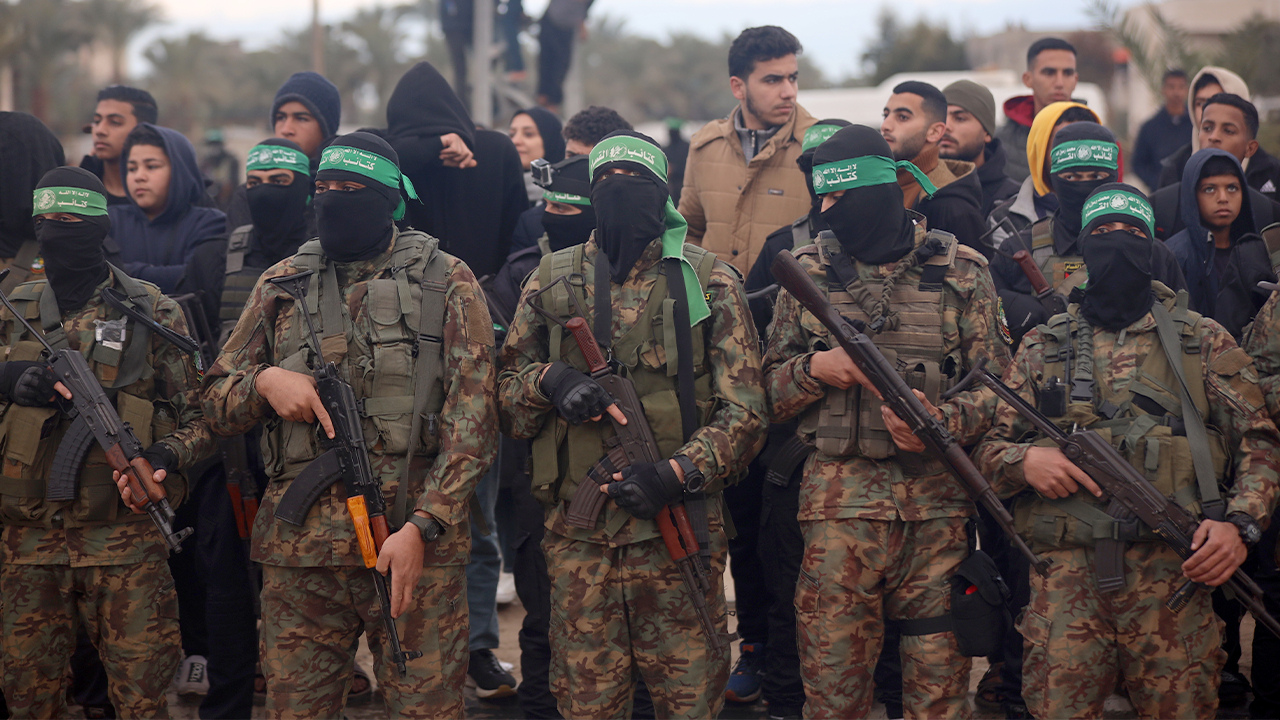
As the Middle East’s attention remains fixed on the war with Iran, Hamas is quietly but steadily reasserting control inside Gaza, according to evidence circulating on social media and analysis from regional experts. This development raises significant questions about the viability of postwar plans for the Palestinian enclave.
Michael Milshtein, a senior analyst at the Dayan Center at Tel Aviv University, notes that Hamas has strategically used the last two and a half weeks to not only rebuild militarily but also to establish visible control over public life in Gaza.
“They are really making good use of them to establish their power in the public sphere, not just for military rehabilitation,” Milshtein explained, describing new recruits, police deployments and even parades taking place in central Gaza. “Hamas is here to stay.”
According to Milshtein, Hamas is rebuilding governance infrastructure throughout Gaza. “Their police are everywhere,” he said. “They are also improving their taxation system.” During the recent Ramadan period, Hamas personnel were reportedly monitoring markets and mosques while beginning to reconstruct education systems.
Mukhaimer Abu Saada, a political analyst based in Gaza, confirms this assessment, noting that momentum around postwar planning for Gaza has largely stalled since regional tensions escalated with Iran.
“Everything with regard to Gaza has been put on hold,” Abu Saada told Fox News Digital. He observed that before the regional conflict intensified, developments had been “moving in the right direction,” including progress on the Board of Peace, the Gaza Technical Committee, and discussions about a possible international stabilization force.
“Yes, Hamas has taken advantage of the current situation,” Abu Saada acknowledged. “They are not under the pressure that they were before.”
Both analysts point to a clear dynamic: as international focus shifted toward Iran, pressure on Hamas has significantly eased. Abu Saada noted that before the war, there were serious discussions about disarmament, international forces, and Gaza’s political future. However, “the enthusiasm that preceded the war has come down,” he said, adding that Gaza has been pushed to the “back burner” of international priorities.
The prospect of an international stabilization force entering Gaza remains central to postwar planning discussions. However, both analysts suggest Hamas may not view such a deployment as threatening to their interests.
Abu Saada explained that Hamas has actually “welcomed the deployment” of an international force, seeing it potentially as a restraint on Israeli military operations rather than a mechanism to disarm the group. The possibility that troops could come from countries such as Indonesia might make such a deployment appear less threatening to Hamas, potentially providing a buffer against continued Israeli military actions.
Milshtein takes this analysis further, suggesting Hamas sees the model less as a traditional peacekeeping mission and more as a version of the Hezbollah-UNIFIL arrangement in Lebanon, which has been criticized for its ineffectiveness in preventing Hezbollah’s military buildup.
“Hamas says, ‘I have no problem, it will be like UNIFIL in Lebanon,'” Milshtein said. “Don’t even dream about starting to chase us, taking our weapons, and entering the tunnels. You need to protect us from Israel as well.”
The political situation in Gaza appears increasingly tied to broader regional dynamics, particularly the outcome of the conflict with Iran. Abu Saada emphasized that the next phase heavily depends on how the Iran war concludes. If the Iranian regime survives without collapse, Hamas will likely draw encouragement and support from that outcome.
“If Iran is not defeated, if the Iranian regime is not collapsing, that’s going to be some kind of moral support for Hamas,” he explained.
Meanwhile, some Palestinians in Gaza appear to be looking beyond current circumstances toward eventual political resolution. “When I talk to Palestinians, they tell me, ‘Listen, we are actually already waiting for the day after the war,'” Milshtein said, noting speculation that Israeli Prime Minister Netanyahu might become “very indebted to Trump because of the war in Iran, and he will have to accept whatever dictates he has regarding Gaza.”
As regional attention remains diverted, Hamas continues to strengthen its position, potentially complicating future efforts to implement sustainable postwar arrangements for Gaza.
Fact Checker
Verify the accuracy of this article using The Disinformation Commission analysis and real-time sources.

25 Comments
Production mix shifting toward World might help margins if metals stay firm.
Good point. Watching costs and grades closely.
The cost guidance is better than expected. If they deliver, the stock could rerate.
Silver leverage is strong here; beta cuts both ways though.
Silver leverage is strong here; beta cuts both ways though.
Good point. Watching costs and grades closely.
Good point. Watching costs and grades closely.
Interesting update on Hamas Reasserts Control in Gaza Amid Regional Focus on Iran Conflict. Curious how the grades will trend next quarter.
I like the balance sheet here—less leverage than peers.
Nice to see insider buying—usually a good signal in this space.
Good point. Watching costs and grades closely.
Good point. Watching costs and grades closely.
Production mix shifting toward World might help margins if metals stay firm.
Silver leverage is strong here; beta cuts both ways though.
Good point. Watching costs and grades closely.
Exploration results look promising, but permitting will be the key risk.
Good point. Watching costs and grades closely.
Good point. Watching costs and grades closely.
Silver leverage is strong here; beta cuts both ways though.
Good point. Watching costs and grades closely.
Interesting update on Hamas Reasserts Control in Gaza Amid Regional Focus on Iran Conflict. Curious how the grades will trend next quarter.
If AISC keeps dropping, this becomes investable for me.
Good point. Watching costs and grades closely.
The cost guidance is better than expected. If they deliver, the stock could rerate.
Good point. Watching costs and grades closely.