


Listen to the article
Gulf States Resist Joining Fight Against Iran Despite Direct Attacks
Despite facing direct attacks from Iran, several Persian Gulf states are refusing to join military action against Tehran, prioritizing regional stability and defensive measures over retaliation. These countries are walking a diplomatic tightrope as they attempt to protect their territories while avoiding a wider conflict that could destabilize the region and disrupt global energy markets.
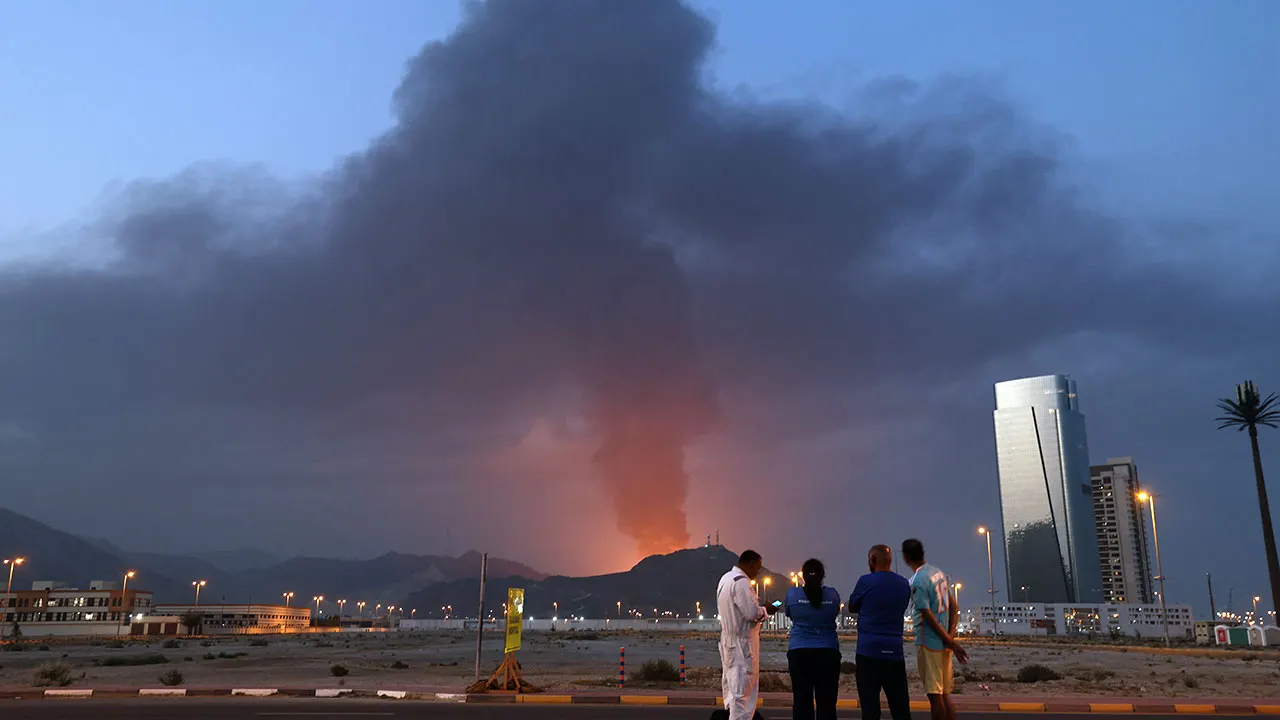
Tehran has significantly escalated tensions by targeting Gulf energy infrastructure and shipping routes following U.S.-Israeli strikes on Iranian oil facilities earlier this month. According to the Armed Conflict Location & Event Data Project (ACLED), Iran has conducted at least 25 attacks against shipping in the Gulf and the Strait of Hormuz since February 28, along with strikes on energy infrastructure across multiple Gulf states.
“Tehran targeted Gulf energy infrastructure and shipping in the Strait of Hormuz seeking to raise the costs of the war for the U.S. and its regional partners,” explained Luca Nevola, ACLED’s senior analyst for Yemen and the Gulf.
The attacks have affected Qatar, Saudi Arabia, the United Arab Emirates, Bahrain and Kuwait—a development that even caught seasoned observers by surprise. When questioned about Iran’s strikes on Gulf states, former President Donald Trump acknowledged the unexpected nature of the attacks, stating, “Nobody. Nobody. The greatest experts—nobody thought they were going to hit.”
Gulf countries have responded with a unified defensive posture rather than joining offensive operations. Jacob Olidort, chief research officer at the America First Policy Institute, noted that Gulf partners have presented “an unprecedented unified front against threats posed by the Iranian regime,” with actions focused on stopping attacks rather than expanding the conflict.
Saudi Arabia, historically wary of Iranian influence in the region, has maintained notable restraint. Salman Al-Ansari, a Saudi geopolitical researcher, told Fox News Digital that “Riyadh is exercising maximum restraint at the moment, but the real question is how long that restraint can last.” Al-Ansari referenced a philosophical approach dating back to Saudi Arabia’s founder, King Abdulaziz Al Saud: “The living do not fight the dead,” suggesting Riyadh is following this doctrine, at least temporarily.
Qatar has adopted a similar stance of strategic caution. “The State of Qatar’s policies always seek to de-escalate conflicts,” a Qatari official stated. “Qatar is not a party to this war, and we strongly believe that the violence must end through negotiations. At the same time, Qatar continues to defend its country and sovereignty following the Iranian attacks.”
Several factors are driving this collective restraint. Many Gulf states have established policies prohibiting the use of their territory for attacks against Iran. Additionally, analysts point to concerns about U.S. reliability in the region as another factor shaping their response.
Vice Admiral Robert S. Harward, former deputy commander of U.S. Central Command, highlighted the trust deficit: “Our policies in the Middle East have been more cyclical than a revolving door. We have failed to earn the trust and confidence of our Gulf partners over the last decade and a half. And that lack of trust and confidence has only exacerbated the threat from Iran to the region.”
Gulf leaders are also acutely aware that involvement by even one Gulf Cooperation Council (GCC) member could trigger a domino effect. “If any member of the GCC decided to join this offensive, it would obligate the rest of the GCC countries to join at the same time,” explained Bahraini analyst Abdullah Aljunaid. The economic implications would be severe, with oil prices potentially exceeding $150 per barrel.
Past military interventions in the region have rarely unfolded as planned, further contributing to Gulf leaders’ caution. Instead, these countries are strengthening defensive measures while quietly supporting diplomatic channels, including Omani mediation efforts.
However, some military experts believe Iran made a strategic miscalculation by targeting its Gulf neighbors. Lt. Gen. Richard Y. Newton III suggested that attacks on critical infrastructure such as oil fields or desalination plants could eventually push Gulf states toward a more aggressive response. “I’m inclined to believe there may potentially be one or two nations in the region inclined to join with the U.S. by going offensive against Iran,” Newton said. “That is certainly within the realm of possibility in the coming weeks.”
For now, Gulf leaders remain committed to containing rather than escalating the conflict, even as they defend against Iranian strikes on their territory.
Fact Checker
Verify the accuracy of this article using The Disinformation Commission analysis and real-time sources.

12 Comments
Maintaining neutrality in this volatile situation is a delicate balancing act for the Gulf States. They must weigh protecting their territories against the risks of escalating the conflict with Iran.
Prioritizing regional stability is prudent, but addressing the direct attacks on their energy infrastructure will also be crucial.
The Gulf States’ reluctance to join the fight against Iran is pragmatic, but the ongoing attacks on their territory are a serious concern. Finding the right diplomatic balance will be crucial.
Protecting their energy infrastructure and shipping routes is a top priority, but they’ll need to tread carefully to maintain regional stability.
The Gulf States’ neutral stance is understandable given the complex geopolitical dynamics, but the direct attacks on their territory are a significant challenge. Navigating this situation will require deft diplomacy.
Avoiding a wider conflict is prudent, but the Gulf States may need to consider more assertive defensive measures to protect their critical assets.
It’s an understandable yet challenging position for the Gulf States. They’re caught between a rock and a hard place, trying to safeguard their interests without inflaming tensions further.
Defensive measures may be necessary, but they’ll have to be strategic to avoid being drawn into the broader conflict.
The Gulf States’ decision to remain neutral despite the direct attacks on their territory is a bold and strategic move. They’re clearly prioritizing regional stability over retaliation.
It will be interesting to see how they navigate this complex situation and balance their defensive needs with the broader geopolitical considerations.
It’s a delicate balancing act for the Gulf States, trying to maintain neutrality while also safeguarding their territories from Iranian aggression. Their diplomatic tightrope walk will be closely watched.
Protecting their energy infrastructure and shipping routes is essential, but they’ll have to do so in a way that doesn’t escalate the broader conflict.