


Listen to the article
Guinea Heads to Presidential Polls Amid Concerns Over Military Rule
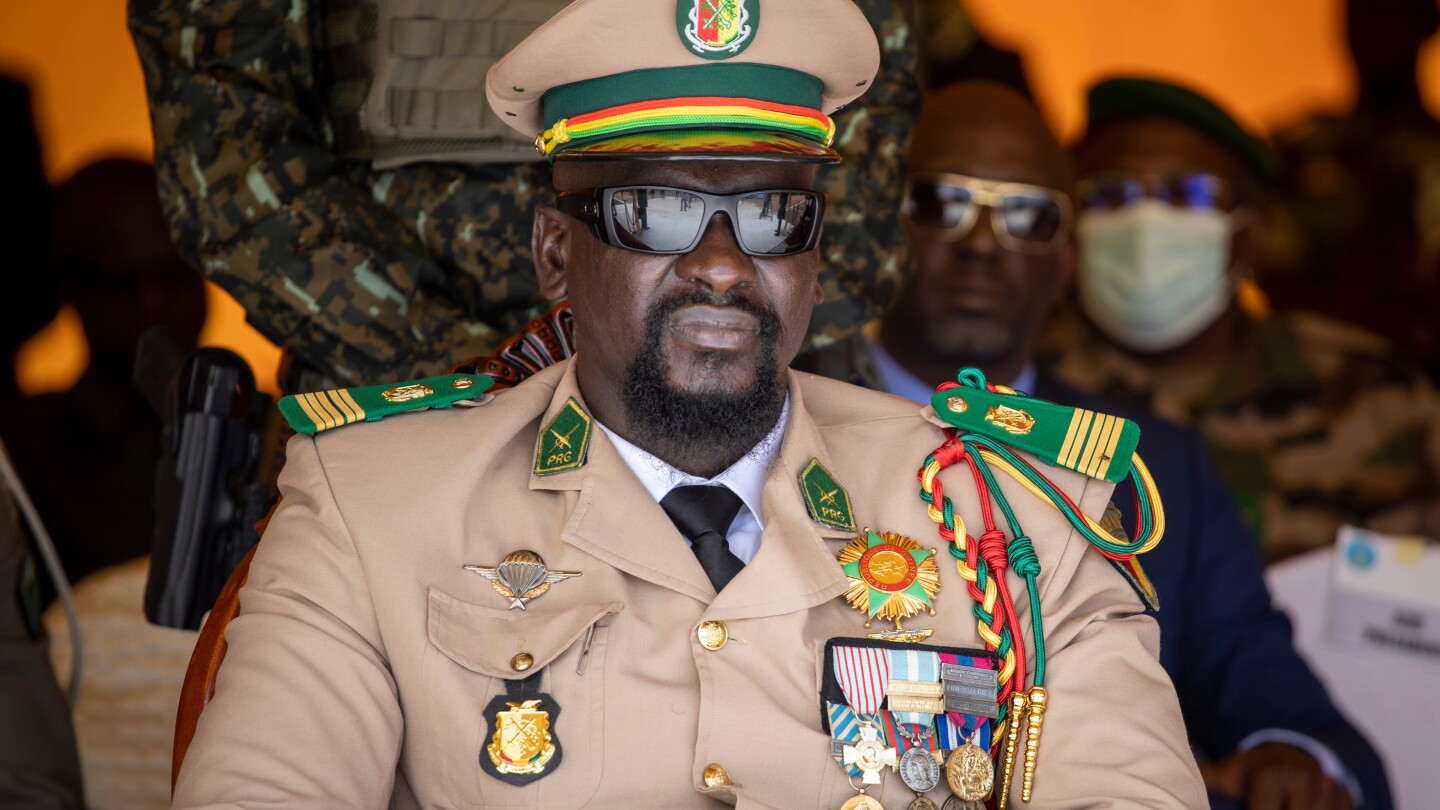
Voters in Guinea will cast their ballots Sunday in the country’s first presidential election since a military coup in 2021, with junta leader General Mamadi Doumbouya widely expected to secure victory amid limited opposition.
The West African nation joins a concerning regional trend, becoming one of ten African countries where military leaders have seized power since 2020, with many subsequently establishing themselves as elected officials after delaying promised returns to civilian rule.
Since overthrowing former President Alpha Condé four years ago, Doumbouya has systematically restricted political opposition and suppressed dissent, critics say. These actions have effectively eliminated any substantial challenges to his bid for a seven-year presidential term.
The election comes at a critical time for Guinea, a country of stark contrasts. Despite being the world’s largest exporter of bauxite, essential for aluminum production, and possessing substantial mineral wealth, more than half of Guinea’s 15 million citizens face what the World Food Program describes as “unprecedented levels of poverty and food insecurity.”
Approximately 6.7 million registered voters are expected to participate at 24,000 polling stations across the country. Results should be announced within 48 hours of voting, with a runoff scheduled if no candidate secures a majority. The Economic Community of West African States (ECOWAS) has deployed election observers to monitor the process.
The electoral field appears heavily tilted in Doumbouya’s favor. While nine candidates are running, his most significant challenger is Yero Baldé of the Democratic Front of Guinea party, a former education minister under Condé who lacks widespread recognition. Baldé’s campaign focuses on governance reforms, anti-corruption initiatives, and economic development.
Two opposition candidates—former Prime Minister Lansana Kouyaté and former government minister Ousmane Kaba—were disqualified on technical grounds. Meanwhile, prominent opposition figures Cellou Dalein Diallo and Sidya Toure have been forced into exile, further weakening potential resistance to Doumbouya’s candidacy.
The electoral framework itself has raised concerns. A new constitution, approved in a September referendum that opposition parties urged voters to boycott, removed the prohibition on military leaders running for office and extended presidential terms from five to seven years.
“It’s an election without the main opposition leaders and that is taking place in a context where civic space is heavily restricted,” said Alioune Tine, founder of West African political think tank Afrikajom Center. “The vote is mostly designed to legitimize Doumbouya’s grip on power.”
Some Conakry residents share this skepticism. Restaurant owner Mamadou Bhoye Diallo called the election a “farce,” questioning how fair a contest could be when “a candidate is also the referee.” He pointed to sidelined political parties and exiled opposition leaders as evidence of democratic backsliding.
Human rights groups report that Guinea’s civic space has deteriorated significantly since the coup, with civil society leaders silenced, critics abducted, and press freedoms curtailed. Last year, authorities dissolved more than 50 political parties, claiming the move would “clean up the political chessboard”—a decision that drew widespread international criticism.
Despite these concerns, Doumbouya maintains substantial support among segments of the population impressed by his infrastructure projects and reform promises. His campaign has emphasized developments initiated during his four years in power.
Among these initiatives is the Simandou project, a massive 75% Chinese-owned iron ore mining operation at the world’s largest deposit, which began production last month after decades of delays. The junta presents this as a cornerstone of economic transformation that will create thousands of jobs and diversify the economy through investments across multiple sectors.
Doumbouya’s campaign has dominated the political landscape with large rallies and extensive media coverage, while his rivals struggle with limited resources and restricted access to state media platforms.
As Guinea approaches this pivotal election, the international community watches closely to see whether the vote will represent a genuine democratic expression or merely serve to formalize military rule through electoral means.
Fact Checker
Verify the accuracy of this article using The Disinformation Commission analysis and real-time sources.

7 Comments
Guinea’s struggle to transition to democracy after years of authoritarian rule is troubling. While junta leaders often promise reform, they rarely deliver on true power-sharing or free and fair elections. I worry this election will be just another step in cementing military control.
It’s disappointing to see Guinea’s democratic progress derailed by another military takeover. The country’s mineral riches could be a great asset, but only if they are managed transparently and for the benefit of all Guineans, not just the political elite.
As a major supplier of bauxite and other critical minerals, Guinea’s political stability is important for global supply chains. However, the lack of opposition and suppression of dissent is deeply worrying. I hope the international community can pressure for real democratic reforms.
Coups and military rule rarely end well for the people of a country. Guinea’s vast mineral wealth should be lifting its citizens out of poverty, not lining the pockets of a junta. I’m skeptical this election will bring meaningful change.
While Guinea’s junta leader may be expected to win the upcoming election, that doesn’t mean it will be free or fair. Restricting political opposition and suppressing dissent are hallmarks of authoritarian regimes, not true democracies. I hope the international community is watching closely.
The trend of military coups in West Africa is deeply troubling. Guinea’s mineral wealth should be lifting its people out of poverty, not enriching a junta. I worry this election will only cement the military’s grip on power, not restore genuine democracy.
It’s concerning to see another military coup lead to a consolidated power grab in Guinea. The country’s mineral wealth should be benefiting its citizens, not enriching a few at the top. I hope fair and transparent elections can be achieved, with a return to civilian rule.