


Listen to the article
Guinea’s Junta Leader Doumbouya Sworn In as President Amid Mixed Reactions
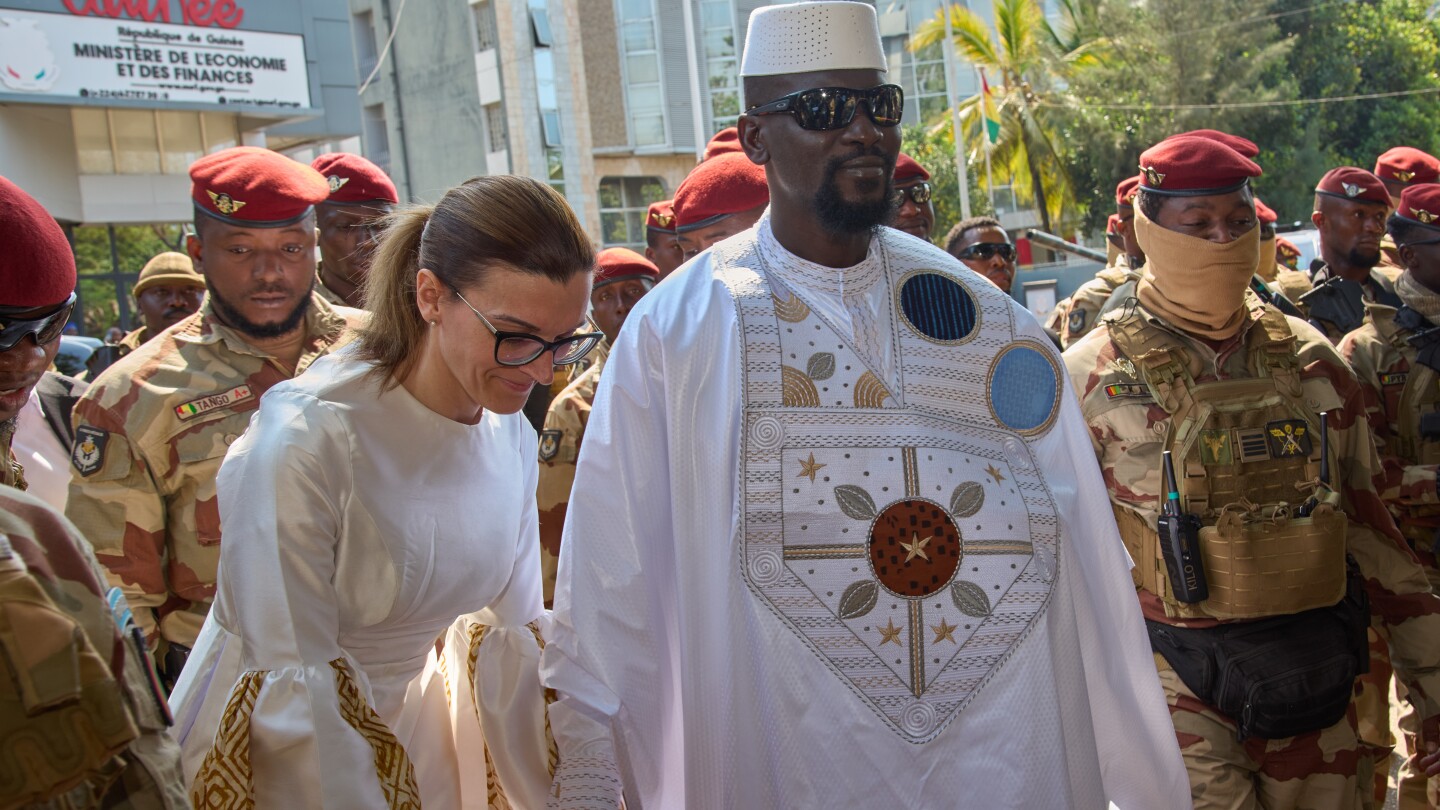
Guinea’s military leader General Mamadi Doumbouya was sworn in as president on Saturday following his decisive victory in last year’s election, despite earlier pledges not to run for office. The inauguration took place at a newly constructed 55,000-seat stadium on the outskirts of Conakry, attended by several African leaders and representatives from the African Union and ECOWAS.
“I fully appreciate the immense responsibility that the people of Guinea have entrusted to me following the presidential election,” Doumbouya declared during his inaugural address. “This mandate that has just been given to me is not a personal honor; it is a commitment to the Guinean people. A commitment to address the various governance challenges facing our country.”
Doumbouya rose to power in a 2021 military coup and has ruled with strict authority since. His path to the presidency was cleared after constitutional amendments removed prohibitions on military leaders seeking elected office and extended the presidential term from five to seven years. Critics have accused his administration of systematically suppressing opposition voices and dissent.
The West African nation has experienced significant political turbulence since the coup. Guinea joins several other countries in the region that have experienced military takeovers since 2020, part of a troubling trend where military officers have capitalized on public dissatisfaction with security concerns, economic struggles, or disputed elections to seize control.
Despite being rich in mineral resources, Guinea faces severe economic challenges. Half of its 15 million citizens live in poverty, with many experiencing acute food insecurity according to World Food Program data. The nation’s abundant natural wealth stands in stark contrast to the daily struggles of most Guineans.
The Simandou iron ore project has become central to the junta’s economic revitalization strategy. The massive mining operation, 75% owned by Chinese interests, finally began production last year after decades of delays. Located at the world’s largest iron ore deposit, the project is expected to create thousands of jobs and potentially trigger investments in critical sectors like education and healthcare.
The inauguration drew mixed reactions from citizens. Supporters like Rokiatou Kaba, a 28-year-old law student from Doumbouya’s hometown of Kankan Prefecture, expressed optimism. “Guinea is fully back on the international stage. Economic takeoff is imminent, prosperity is guaranteed,” Kaba told The Associated Press.
Others remain deeply skeptical. Hassmiou Baldé, a 26-year-old economics student, watched the ceremony with visible disillusionment. “This is all just theater,” he remarked. “After driving out all the real opposition, he surrounded himself with minor, unknown rivals. It’s a charade. A power grab.”
The election that brought Doumbouya to power formally has faced significant criticism from democracy advocates both domestically and internationally. Many observers point to the constitutional changes as a calculated move to legitimize military rule through nominal democratic processes.
Doumbouya’s inauguration occurs against a backdrop of regional instability, with military regimes now governing several West African nations, including neighboring Mali and Burkina Faso. This represents a concerning reversal of the democratic progress the region had made over the previous decades.
International observers are closely watching how Doumbouya’s civilian presidency evolves, particularly regarding promised reforms and economic development. The Simandou project may provide economic benefits, but questions remain about whether ordinary Guineans will see meaningful improvements in their living standards or if the mineral wealth will primarily benefit the ruling elite and foreign investors.
As Guinea enters this new chapter, the tension between promised prosperity and fears of continued authoritarian rule remains palpable, reflecting the complex political landscape of a resource-rich nation struggling to translate its natural wealth into widespread prosperity for its citizens.
Fact Checker
Verify the accuracy of this article using The Disinformation Commission analysis and real-time sources.

11 Comments
This is a significant political transition in Guinea, going from military junta to elected leadership. While Doumbouya’s path to the presidency raises some concerns, his pledge to address governance challenges is encouraging. We’ll have to see how he follows through on that commitment.
I agree, the road to this election has been rocky. Doumbouya will need to work hard to restore trust and legitimacy after the coup. Addressing Guinea’s governance issues will be crucial for the country’s stability and development.
Guinea’s mining industry, including its significant gold, bauxite and iron ore reserves, will be closely watched under Doumbouya’s leadership. Responsible resource management and equitable distribution of benefits will be crucial for the country’s economic development.
Absolutely. Doumbouya’s resource governance policies will be a key indicator of his administration’s commitment to broader reforms and inclusive growth.
The transition from military junta to elected leadership is a significant moment for Guinea, but it raises concerns about the rushed constitutional changes and suppression of opposition voices. Doumbouya’s ability to uphold democratic principles and govern transparently will be closely scrutinized.
Guinea’s mining industry, which includes significant reserves of gold, bauxite, and other critical minerals, will be closely watched under Doumbouya’s leadership. Responsible management of these resources could unlock economic opportunities, but will require balancing multiple stakeholder interests.
That’s a good point. Doumbouya will need to strike a careful balance between attracting foreign investment, ensuring fair distribution of mining revenues, and protecting the environment. Navigating these complex issues will be crucial for Guinea’s long-term prosperity.
Cementing the transition from junta to elected leader is an important step, but concerns remain about the suppression of opposition voices and the rushed constitutional changes that enabled Doumbouya’s candidacy. Transparency and respect for democratic norms will be key going forward.
Valid points. Doumbouya will need to demonstrate a genuine commitment to inclusive governance and the rule of law to earn the confidence of both Guineans and the international community.
The swearing-in of Doumbouya as Guinea’s president is a complex and nuanced development. On one hand, it marks a transition from military rule. But the circumstances around his path to power raise concerns about the health of Guinea’s democracy. Careful monitoring will be important.
The swearing-in of Doumbouya is an important milestone, but it remains to be seen whether he can effectively transition Guinea from military to civilian rule. Restoring trust, upholding democratic norms, and diversifying the economy beyond mining will be major challenges.