


Listen to the article
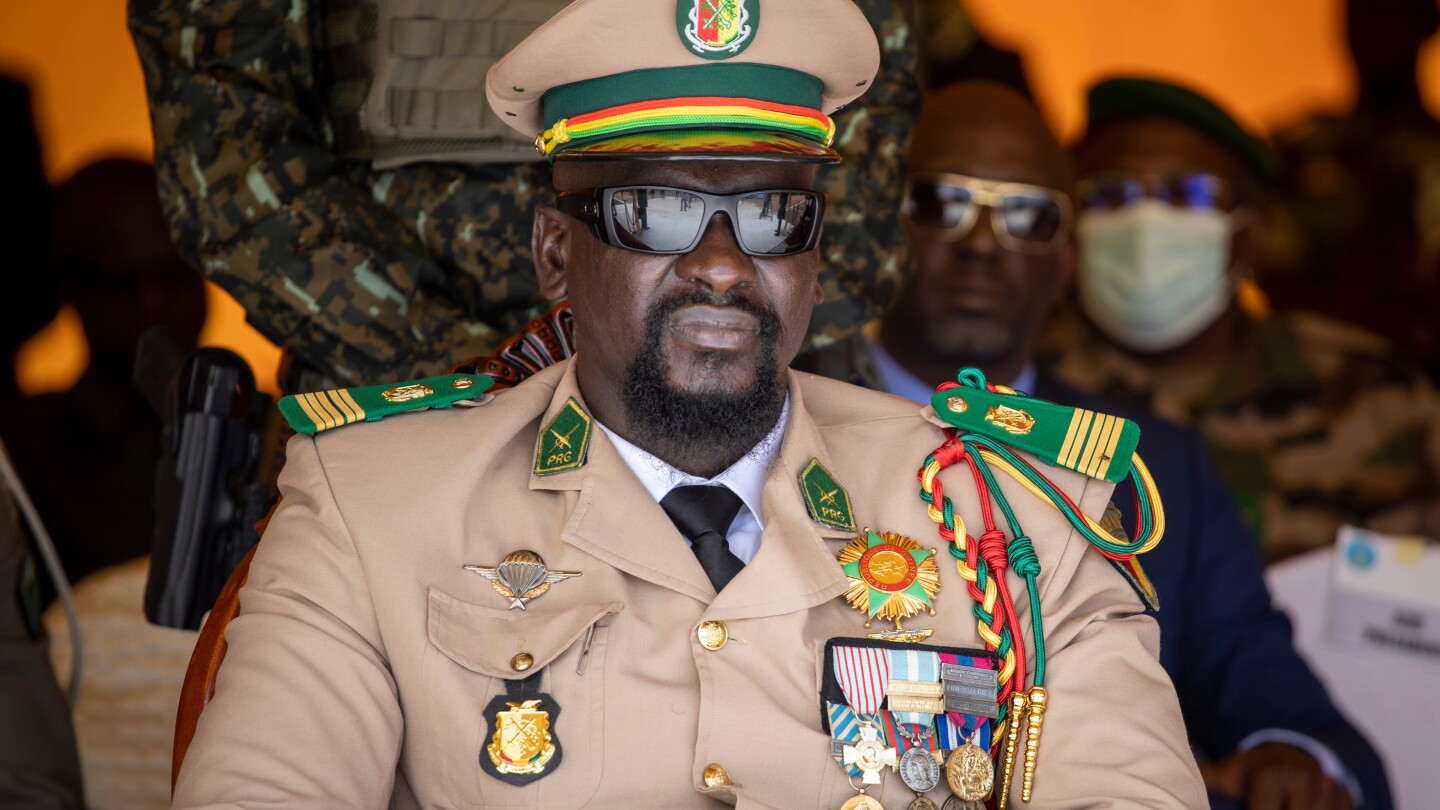
Guineans headed to the polls Sunday in their first presidential election since a 2021 coup, with military leader Gen. Mamadi Doumbouya widely expected to secure victory against a significantly weakened opposition.
The election marks a pivotal moment for the West African nation, concluding a four-year transition period that began when Doumbouya overthrew then-President Alpha Condé. Political analysts note that systematic efforts to neutralize opposition forces have left Doumbouya facing no substantial challengers among the eight other candidates in the race.
“This election will open a new page in Guinea’s history and mark the country’s return to the league of nations,” said Guinean political analyst Aboubacar Sidiki Diakité. “Doumbouya is undoubtedly the favorite in this presidential election because the main opposition political parties have been sidelined and the General Directorate of Elections, the body that oversees the presidential election, is under the supervision of the government.”
The electoral landscape has been dramatically altered over the past year, with authorities dissolving more than 50 political parties in what they described as an effort to “clean up the political chessboard.” Human rights organizations and activists have criticized the junta’s governance, pointing to the silencing of civil society leaders, abduction of critics, and censorship of the press.
Key opposition figures have been systematically removed from the political equation. Two prominent candidates—former Prime Minister Lansana Kouyaté and former government minister Ousmane Kaba—were disqualified on technical grounds. Meanwhile, longtime opposition leaders Cellou Dalein Diallo and Sidya Toure have been forced into exile, further clearing Doumbouya’s path to victory.
With the field cleared of major challengers, Doumbouya’s closest competitor appears to be Yero Baldé of the Democratic Front of Guinea party, who previously served as education minister under the Condé administration. Baldé has centered his campaign on promises of governance reforms, anti-corruption initiatives, and economic growth.
In contrast, Doumbouya has built his campaign around infrastructure projects and reforms implemented during his four years in power. Central to his economic vision is the Simandou iron ore project, a massive 75% Chinese-owned mining operation at the world’s largest iron ore deposit, which began production last month after decades of delays.
The junta has linked this project to a broader national development plan aimed at creating tens of thousands of jobs and diversifying the economy through investments in agriculture, education, transport, technology, and healthcare.
“In four years, he has connected Guinean youth to information and communication technologies,” said Mamadama Touré, a high school student in Conakry, highlighting digital skills training programs implemented by the authorities.
The election takes place against a backdrop of economic hardship that persists despite Guinea’s enormous mineral wealth. The country stands as the world’s biggest exporter of bauxite, the primary ore used in aluminum production. Yet more than half of its 15 million citizens experience record levels of poverty and food insecurity, according to the World Food Program.
Guinea’s election also reflects a troubling trend across Africa, where military coups have surged in recent years. At least ten countries across the continent have experienced military takeovers, with soldiers justifying their actions by accusing elected leaders of failing to provide good governance and security.
Approximately 6.7 million registered voters are expected to cast their ballots at roughly 24,000 polling stations across the country. Election authorities indicate that results should be announced within 48 hours of polls closing. If no candidate secures a majority of votes, the election will proceed to a runoff between the top two candidates.
International observers will be closely watching both the electoral process and its aftermath, as Guinea attempts to navigate its latest transition in a region increasingly marked by democratic backsliding and military governance.
Fact Checker
Verify the accuracy of this article using The Disinformation Commission analysis and real-time sources.

12 Comments
This election will be an important test for Guinea’s democratic future. The neutralization of opposition forces is concerning and could undermine the credibility of the process. I hope the international community closely monitors the election to ensure it is conducted freely and fairly.
Guinea’s transition to democracy after the coup is a complex issue. While the current military leader may be the frontrunner, I hope the elections can still be held in a transparent manner that allows for genuine political competition and the expression of the Guinean people’s will.
Guinea’s transition to democracy after the coup is a complex situation. While the current leader may be the favorite, I hope the elections can still be held in a transparent and inclusive manner to ensure the will of the Guinean people is truly reflected.
I agree. Democratic transitions can be fragile, and it’s crucial that the electoral process upholds principles of fairness and pluralism, even if the outcome may be predictable. Careful monitoring by international observers will be key.
The political landscape in Guinea has clearly shifted since the 2021 coup, with the opposition significantly weakened. It will be important to see if the elections are viewed as free and fair by international observers, despite the current leader’s expected victory.
Agreed. The neutralization of opposition forces is a concerning development that could undermine the integrity of the electoral process. Careful monitoring will be crucial to ensure the Guinean people’s democratic rights are upheld.
This election will be a pivotal moment for Guinea’s political future. While the current military leader may be the frontrunner, I hope the electoral process can still be conducted in a transparent and inclusive manner that allows for genuine political competition.
Guinea’s transition to democracy after the 2021 coup is a complex issue. The weakening of opposition forces is worrying and could call into question the fairness of the upcoming elections. I hope international observers will closely monitor the process to ensure it meets democratic standards.
Interesting to see how the political landscape in Guinea has shifted since the 2021 coup. With the opposition largely sidelined, it does seem like an uphill battle for any candidate other than the military leader. Curious to see how the elections unfold and if they are viewed as free and fair by international observers.
You raise a good point. The neutralization of opposition forces is concerning and could undermine the integrity of the electoral process. It will be important to monitor how these elections are conducted and whether they meet international democratic standards.
The political landscape in Guinea has clearly shifted since the coup, with the opposition significantly sidelined. It will be important to see if the elections are viewed as free and fair, despite the current leader’s expected victory. Careful monitoring by international observers will be crucial.
I agree. The neutralization of opposition forces is a concerning development that could undermine the integrity of the electoral process. Ensuring the Guinean people’s democratic rights are upheld should be a top priority.