


Listen to the article
Belgian Collector Reaches Agreement with Greece Over Nazi Execution Photos
A Belgian collector has reached a preliminary agreement with Greece over a set of rare World War II photographs documenting the final moments of 200 Greek political prisoners executed by Nazi forces. The photographs, which had been listed for online auction, have now been withdrawn from sale following intervention from Greek authorities.
Tim de Craene, the Belgian collector, agreed to the preliminary terms after Greek cultural experts traveled to Belgium on Friday to authenticate the images. Greek Culture Minister Lina Mendoni confirmed the agreement but did not disclose specific details on how the photographs would be transferred to Greece, which has declared them part of its national heritage.
The twelve photographs, which briefly appeared for sale on eBay last Saturday, are historically significant as they provide the only known visual documentation of a mass execution carried out on May 1, 1944, at a shooting range in the Athens suburb of Kaisariani. The images show the prisoners being led through a gateway and down a path toward their execution, with several looking directly at the camera. Another photograph captures them lined up against a wall before facing the Nazi firing squad.
Greek experts who examined the collection discovered that the photographs were part of a much larger archive of 262 images taken by Wehrmacht Lieutenant Hermann Heuer during his deployment in Greece between 1943 and 1944 during the Nazi occupation. The collection also includes documents that further verify their authenticity.
The Kaisariani executions stand as one of the most brutal atrocities committed during the Nazi occupation of Greece. The 200 victims were communist political prisoners, and their execution remains a defining moment in Greece’s wartime experience. The massacre has particular resonance because it foreshadowed the ideological divisions that would later erupt into the Greek Civil War (1946-1949), a bloody conflict between Western-backed government forces and communist fighters that left lasting scars on Greek society.
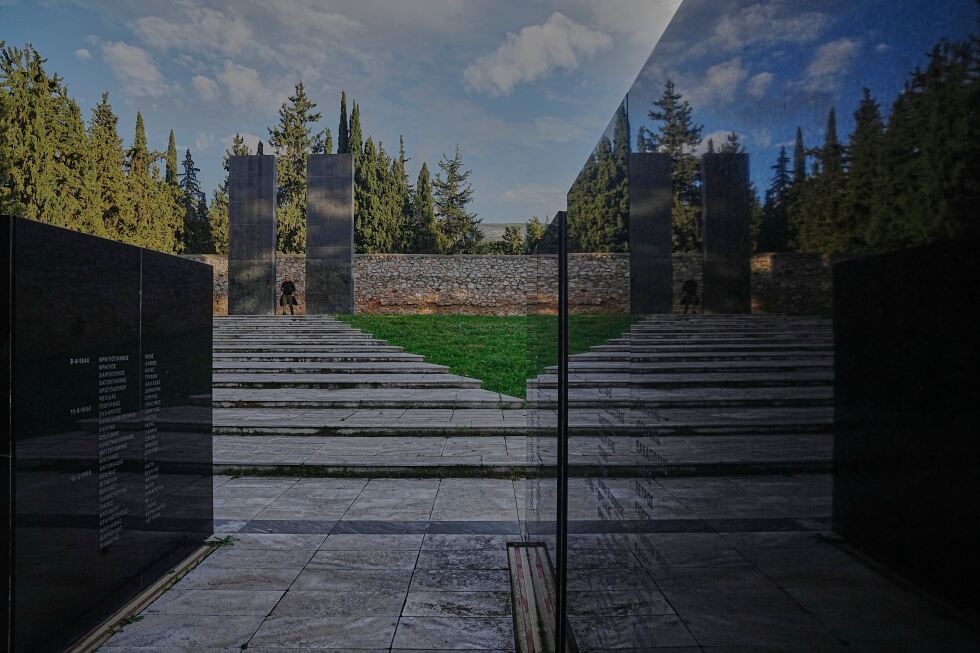
The emergence of these photographs on the auction market sparked controversy and strong emotional reactions in Greece. Shortly after the images appeared online, the memorial at the Kaisariani execution site was vandalized, with perpetrators smashing plaques bearing the names of those killed.
“Historical memory will not be erased, no matter how much it bothers some people,” the Kaisariani municipality stated, announcing plans to repair the damaged monument. The municipality added that the photographs had caused “a chill of emotion for the heroic, valiant stance of the 200 communist heroes who stood up against the firing squad.”
The Greek government’s swift action to secure these photographs reflects a broader trend among European nations to reclaim historical artifacts and documents related to World War II. Many countries view such items not merely as collectibles but as crucial elements of national identity and historical record.
Historians note that photographic evidence of Nazi atrocities is particularly valuable, both for documentation purposes and as educational tools. While many Nazi crimes were meticulously recorded in German military and administrative documents, visual evidence is comparatively rare, especially photographs showing the moments immediately before executions.
The photographs’ journey from a military officer’s camera to an online auction platform spanning nearly eight decades raises questions about the ethics of trading in such sensitive historical materials. Cultural heritage experts increasingly advocate for such artifacts to be housed in public institutions where they can be properly preserved and made accessible for education and remembrance rather than remaining in private collections.
Greek officials expect to finalize arrangements for the photographs’ return in the coming weeks, where they will likely be preserved in national archives or displayed as part of memorial exhibitions.
Fact Checker
Verify the accuracy of this article using The Disinformation Commission analysis and real-time sources.

8 Comments
It’s good to see Greece taking action to retrieve these historically important photographs. Preserving such visual records of Nazi atrocities is crucial for educating future generations.
These photographs must be treated with the utmost care and respect. I’m glad Greece is working to acquire them and ensure their proper preservation and display.
These WWII photographs are an important historical record that should be preserved. I’m glad Greece was able to reach a preliminary deal to acquire them from the Belgian collector.
While disturbing, these photographs have immense historical value. I’m glad Greece is taking the necessary steps to acquire and safeguard them for future generations.
The ability to visually document these events is both chilling and important. I hope Greece is able to secure the photographs and preserve this vital piece of history.
Fascinating to see these photographs that provide a firsthand visual account of such a tragic event. I’m curious to learn more about the context and significance of this mass execution in Athens.
Acquiring these rare WWII photographs is a significant achievement for Greece. Their national heritage and historical record will be strengthened by adding this visual documentation.
Recovering and securing these rare images of Nazi atrocities is crucial. Greece is right to declare them part of its national heritage and work to bring them home.