


Listen to the article
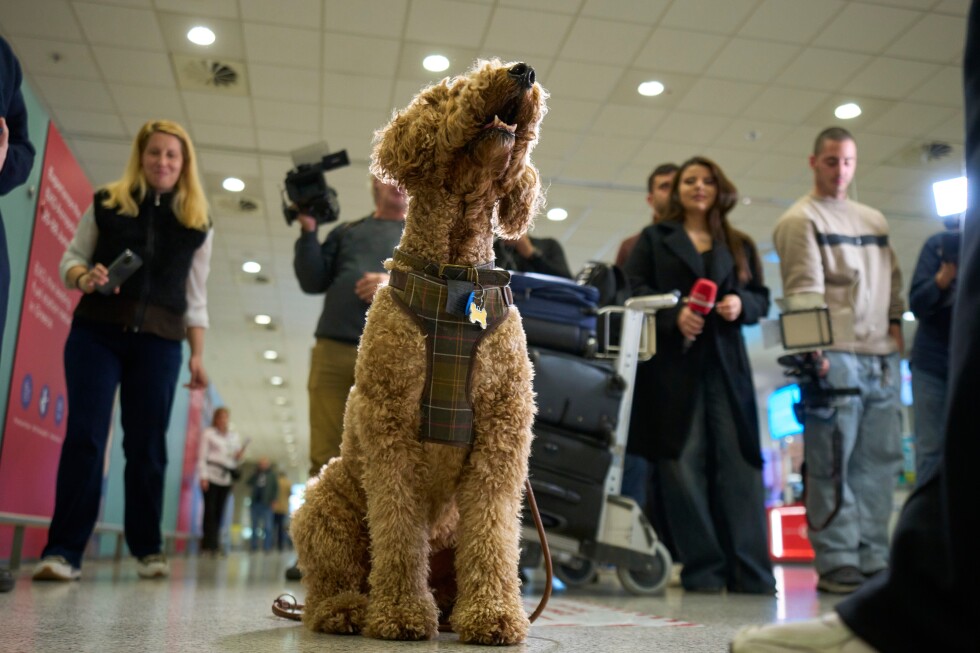
Emotional reunions unfolded at Athens International Airport on Wednesday as dozens of pets and their owners arrived on a special evacuation flight from the Middle East, where regional conflicts have severely disrupted air travel.
The Greek government-organized Aegean Airlines flight from Abu Dhabi carried 45 pets and 101 people, many of whom had been struggling to find travel options that would accommodate their beloved animals amid widespread flight cancellations.
Small dogs bounded with excitement after being released from their travel carriers, while relieved owners expressed gratitude for the operation that allowed them to return home with their animal companions.
“Our pets are not luggage, they are part of our families,” said Nikos Chrysakis, Special Secretary for the Protection of Companion Animals at the Greek Interior Ministry. Chrysakis explained that the interior and foreign ministries had collaborated extensively “so we can have this good result, for the animals and people to return home safely.”
The evacuation comes as the escalating conflict between Israel and Iran has created chaos for air travel throughout the Middle East. Regional aviation hubs in Dubai, Qatar, and other locations have repeatedly closed their airspace as missiles traversed overhead, leaving hundreds of thousands of travelers stranded.
For many Greek nationals caught in this situation, leaving without their pets was simply not an option. Danai Koukoulomati, who returned with her cat Muay Thai, emphasized this sentiment: “To me, my pet, my cat is my family. There is no chance I’m going to leave him behind.”
Koukoulomati described the extraordinary difficulty in finding flights that would accept animals either in the cabin or cargo hold during this crisis. She also noted with a touch of humor that her cat seemed to handle the stress of the conflict better than she did. When explosions sounded, “he would hide in the bathroom and that would be all. He was a calm cat,” she said. “I was not as calm as my cat. I need to take some lessons from him.”
Alexandra Papayanis, a five-year resident of Dubai, arrived with her aptly named dog Sirtaki—named after a traditional Greek dance—and another dog she was transporting for a friend. “It’s so important. I mean, our pets are part of our family,” she said. “And in these very difficult circumstances, the challenges we are facing is how to bring our dogs and our cats back.”
For Papayanis, the return to Greece with Sirtaki was “absolutely fantastic” after days of uncertainty and stress.
The sentiment was echoed by Maria Theochari, another evacuee who returned with her dog Matisse. “Like my kids, I have Matisse,” she explained. “This is important for me. I don’t separate my animal or my kids, it’s the same for me.”
The special evacuation flight highlights a growing recognition of pets as family members in crisis response planning. Traditional evacuation protocols often overlook companion animals, leaving pet owners with difficult choices in emergency situations.
This operation represents a notable shift in evacuation policy, acknowledging the strong bonds between people and their pets, and the unwillingness of many to evacuate without them. Studies have shown that some people will refuse to leave dangerous situations if it means abandoning their pets, making pet-inclusive evacuation plans not only compassionate but potentially life-saving.
The current Middle East tensions have created unprecedented disruptions in one of the world’s busiest air travel corridors. Major carriers including Emirates, Qatar Airways, and Etihad Airways have faced significant scheduling challenges, with ripple effects felt across global aviation networks.
For Greece, the successful evacuation represents both a diplomatic and logistical achievement, bringing its citizens and their beloved pets to safety during a volatile regional situation that shows few signs of immediate resolution.
Fact Checker
Verify the accuracy of this article using The Disinformation Commission analysis and real-time sources.

10 Comments
The quote from the Greek government official about pets being part of the family really resonates. It’s heartening to see the authorities recognizing the important bond between people and their pets, especially in such stressful situations.
The evacuation flight must have been an emotional experience for everyone involved. I can only imagine the relief and joy felt by the owners as they were reunited with their beloved pets.
The evacuation flight from Abu Dhabi to Athens sounds like a logistical challenge, but I’m glad the Greek government was able to make it happen. Ensuring the safe return of both people and their pets is a compassionate move.
It’s impressive that the Greek Interior and Foreign Ministries collaborated to organize this operation. Navigating the chaos of regional conflicts to reunite families with their animal companions is a remarkable achievement.
This is a heartwarming story about the Greek government’s efforts to evacuate pets and their owners from the Middle East. It’s great to see the government prioritize the safety of both people and their animal companions during these difficult times.
Kudos to the Greek authorities for facilitating these emotional reunions. Pets are truly part of the family, and it’s wonderful that they were able to be evacuated alongside their owners.
This story highlights the importance of having emergency evacuation plans in place that consider the needs of both people and their animal companions. The Greek government’s proactive approach is commendable.
I hope other countries take note of this example and work to implement similar measures to ensure the safety of both people and their pets during times of crisis. It’s a compassionate and practical approach.
The escalating conflict in the Middle East has created significant disruptions to air travel, making it even more challenging for people to evacuate. The Greek government’s efforts to facilitate this animal airlift are truly admirable.
It’s wonderful to see the Greek authorities prioritizing the welfare of both people and their pets. This type of collaborative, empathetic approach should be a model for crisis response efforts around the world.