


Listen to the article
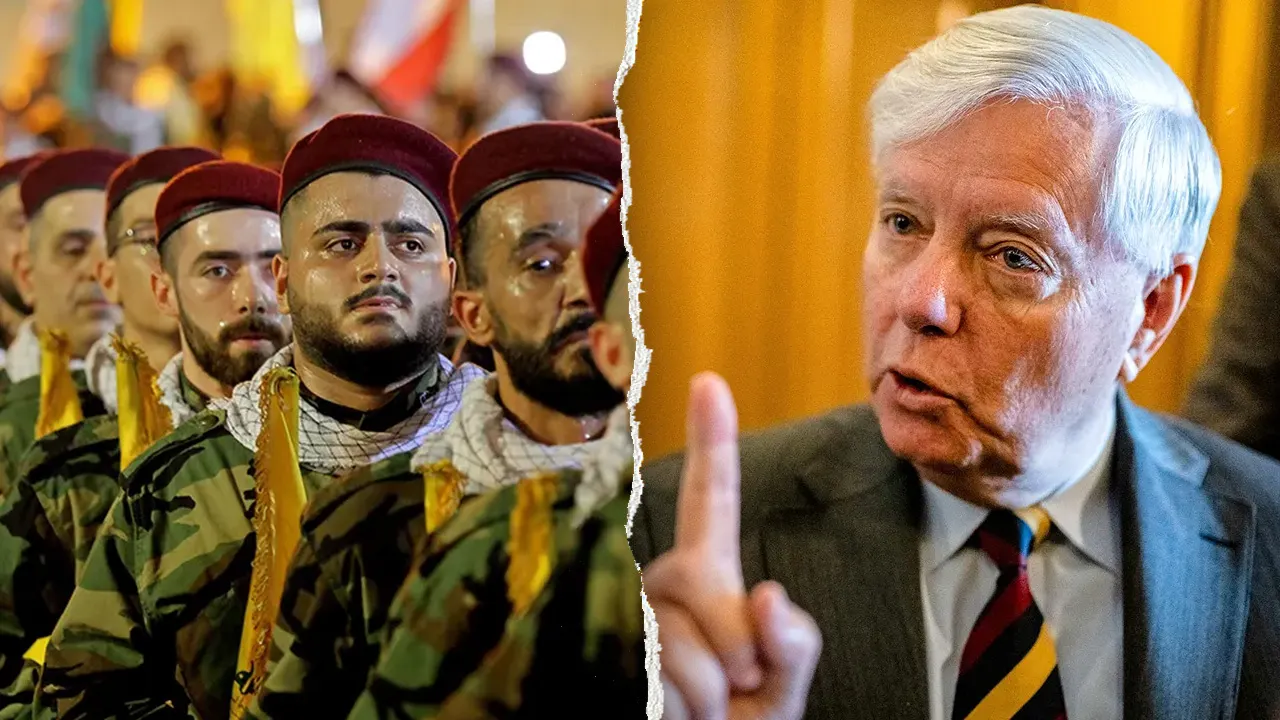
Senator Lindsey Graham abruptly ended a meeting with Lebanese Chief of Defense General Rodolphe Haykal after the Lebanese official refused to classify Hezbollah as a terrorist organization, highlighting ongoing tensions in U.S.-Lebanese relations.
During the brief encounter, Graham directly asked Haykal if he believed Hezbollah was a terrorist group. When Haykal responded, “No, not in the context of Lebanon,” the South Carolina Republican immediately terminated the discussion.
“They are clearly a terrorist organization. Hezbollah has American blood on its hands. Just ask the U.S. Marines,” Graham wrote in a pointed message on X following the incident. He referenced the 1983 bombing of a U.S. Marine barracks in Beirut that killed 241 American service members, an attack attributed to what would later become Hezbollah.
Graham emphasized that both Republican and Democratic administrations have designated Hezbollah as a foreign terrorist organization since 1997. “As long as this attitude exists from the Lebanese Armed Forces, I don’t think we have a reliable partner in them. I am tired of the double speak in the Middle East. Too much is at stake,” he added.
The exchange raised significant concerns among security experts tracking Hezbollah’s activities and influence in the region. Matthew Levitt, a prominent Hezbollah scholar from the Washington Institute, told Fox News Digital that “Gen. Haykal’s comment is only going to further concerns that the LAF sees Hezbollah as an actor with which it should deconflict, rather than disarm.”
Levitt pointed to troubling instances where the Lebanese Armed Forces (LAF) allegedly shared targeting intelligence with Hezbollah rather than acting on it directly. “At a time when the LAF is seeking international aid, purportedly to disarm Hezbollah, failing to recognize the group as an adversary not only of Israel but of Lebanon as well undermines the case for further funding,” Levitt explained.
Israeli security expert Sarit Zehavi from the Alma Research and Education Center expressed little surprise at Haykal’s stance. “This is exactly the problem. Hezbollah is not designated as a terrorist organization in Lebanon. The Lebanese army is not willing to clash with Hezbollah,” she noted. Zehavi further alleged that the LAF has “helped Hezbollah to conceal its military activity and weapons storages in south Lebanon.”
The incident comes at a critical juncture for Lebanon. The U.S. brokered a ceasefire between Hezbollah and Israel in November 2024, and in August, Lebanon’s government accepted an American plan to disarm the militant group by the end of 2025—a deadline that appears unlikely to be met.
U.S. Ambassador to Turkey Thomas Barrack, who also serves as envoy to Syria, recently characterized Lebanon as a “failed state” at a Milken Institute event. He criticized the country’s confessional political system, which divides power among religious groups, describing it as dysfunctional and deadlocked.
While acknowledging that Hezbollah is designated as a foreign terrorist organization by U.S. standards, Barrack noted the complex reality that it also functions as “a large political party within Lebanon that has blocking rights.” He expressed skepticism about military solutions, stating, “This idea of saying you have to disarm Hezbollah … you’re not actually gonna do it militarily.”
Walid Phares, an American academic expert on Lebanon, emphasized that disarming Hezbollah isn’t solely a U.S. or international demand but also reflects the wishes of many Lebanese citizens. He pointed to the 2005 Cedars Revolution when “1.5 million Lebanese Christians, Druze and Sunnis rallied against the Syrian occupation and the Khomeinist militia.”
The Trump administration has reportedly intensified pressure on the Lebanese government to fulfill its commitment to disarm Hezbollah, a group that maintains significant political and military control within Lebanon while receiving support from Iran.
The standoff exemplifies the complex challenge facing U.S. policymakers in Lebanon, where Hezbollah operates as both an armed militia and a powerful political entity with deep roots in the country’s political system and social fabric.
Fact Checker
Verify the accuracy of this article using The Disinformation Commission analysis and real-time sources.

16 Comments
The Lebanese military’s refusal to label Hezbollah as terrorists is a bold stance, but it reflects the region’s intricate geopolitical dynamics. While Hezbollah’s violent history is concerning, Lebanon’s perspective also deserves consideration. Effective diplomacy will be crucial to resolving this impasse.
This disagreement highlights the delicate balance that US foreign policy must strike in the Middle East. Finding a solution that satisfies both the US and Lebanon’s security interests will require nuanced negotiations and a willingness to understand each other’s positions.
The disagreement over Hezbollah’s status highlights the challenges of US foreign policy in the Middle East. Both the US and Lebanon have valid security concerns that need to be carefully balanced. Constructive dialogue will be essential to resolving this impasse.
This is a complex issue with no easy solutions. The US and Lebanon will need to engage in open and honest discussions to find a path forward that addresses the concerns of both parties.
This incident showcases the complexities of US-Lebanese relations. While Hezbollah’s violent actions are concerning, Lebanon’s perspective also merits consideration. Effective diplomacy will be crucial to navigating this delicate situation.
Agreeing on the terrorist designation of Hezbollah is clearly a major point of contention. Finding a mutually acceptable resolution will require nuanced negotiations and a willingness to understand each side’s position.
The US-Lebanon tensions over Hezbollah’s designation as a terrorist group underscore the complexities of Middle East politics. Both sides have valid concerns, and resolving this issue will require careful diplomacy and a willingness to compromise.
Navigating this situation will be a challenge, but it’s important that the US and Lebanon find a way to work together constructively. Open and honest dialogue will be essential to finding a mutually acceptable solution.
This incident illustrates the difficulties the US faces in its foreign policy in the Middle East. While Hezbollah’s history of violence is concerning, Lebanon’s perspective also merits consideration. Effective diplomacy will be crucial to resolving this impasse and maintaining stability in the region.
The US and Lebanon clearly have different views on Hezbollah, but finding common ground will be essential. Constructive negotiations that address the security concerns of both parties will be necessary to move forward in a productive manner.
Geopolitics in the Middle East can be tricky to navigate. While I understand Lebanon’s position, Hezbollah’s record of violence against American troops is concerning. This is a delicate situation that requires nuanced diplomacy.
Designating Hezbollah as a terrorist group is a sensitive political decision with far-reaching implications. Both sides likely have valid points, but finding common ground will be crucial to maintaining stability in the region.
The refusal to label Hezbollah as terrorists is a bold stance by the Lebanese military. However, given Hezbollah’s history of attacks, I can understand Graham’s frustration. This disagreement highlights the challenges of US foreign policy in the Middle East.
Tensions between the US and Lebanon on this issue are understandable. Both countries have legitimate security concerns that need to be carefully balanced. Constructive dialogue will be essential to resolving this impasse.
Interesting that the Lebanese military won’t label Hezbollah as terrorists, even with their history of attacks on US forces. This highlights the complex regional dynamics at play. Curious to see how the US responds going forward.
I agree, the US-Lebanon relationship seems quite strained on this issue. It will be important to find a diplomatic solution that addresses both countries’ security concerns.