


Listen to the article
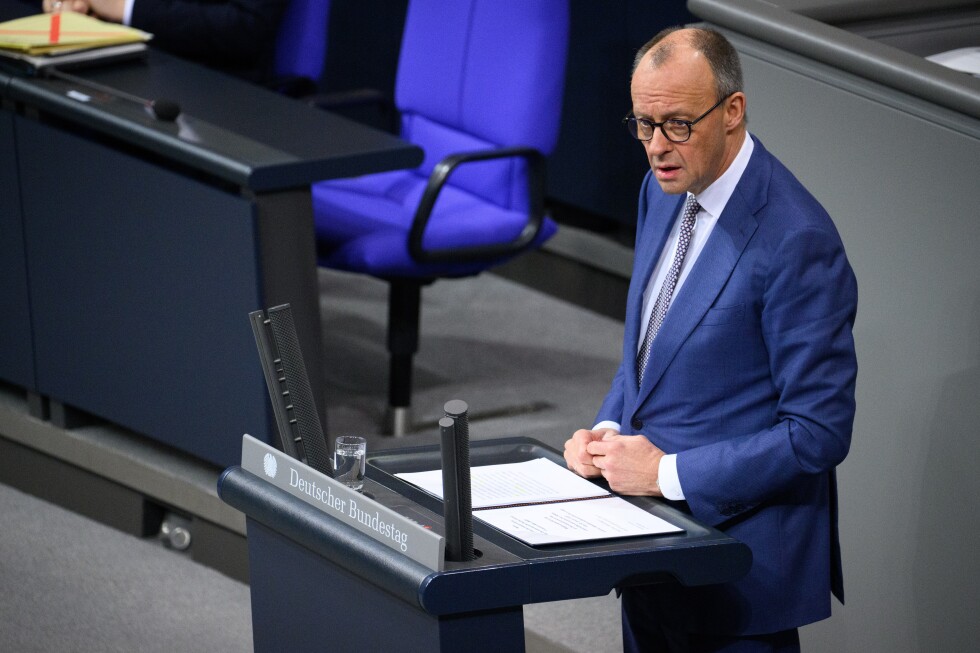
German Chancellor Friedrich Merz delivered a powerful address to the German parliament on Thursday, championing the European Union as a vital “alternative to imperialism and autocracy” in an increasingly competitive global landscape.
In his speech focusing on foreign policy, Merz emphasized the EU’s capacity to establish partnerships with like-minded nations based on “mutual respect, trust, and reliability” at a time when democratic values face mounting challenges worldwide.
“We are seeing increasingly clearly in the last few weeks that a world of great powers is beginning to form,” Merz told lawmakers. “A harsh wind is blowing in this world, and we will be feeling it for the foreseeable future.”
The Chancellor’s remarks come just one week after U.S. President Donald Trump withdrew threats of new tariffs against Germany and seven other European countries. Those tariffs had been proposed to pressure Denmark into relinquishing control over Greenland, a semiautonomous Danish territory. The episode highlighted growing tensions within the transatlantic relationship.
Merz used his address to advocate for European unity, noting how quickly the EU had responded to Trump’s threats. “We agreed that we would not be intimidated again by tariff threats,” he said, underscoring the bloc’s resolve in the face of external pressure.
The Chancellor’s vision for Europe extends beyond defensive posturing, however. He called for the continent to “learn the language of power politics” by strengthening its security capabilities, pursuing “technological independence,” and boosting economic growth to ensure its relevance on the global stage.
As a strong proponent of expanding the EU’s trade network, Merz expressed support for trade agreements with South America’s Mercosur bloc and the recently finalized deal with India. These partnerships represent concrete steps toward diversifying Europe’s economic relationships beyond traditional alliances.
While emphasizing the importance of new partnerships, Merz reaffirmed Germany’s commitment to existing alliances, particularly NATO and the transatlantic relationship with the United States. “Trans-Atlantic trust is a value in itself even today,” he stated, adding that Europeans aim to preserve and strengthen NATO.
However, Merz also set clear boundaries regarding Europe’s position within these alliances. “At the same time, the basis of this guiding principle remains… as democracies, we are partners and allies and not subordinates,” he declared, signaling Europe’s determination to maintain its autonomy while collaborating with the United States.
The Chancellor also defended Germany’s military contributions in Afghanistan following controversial comments from President Trump, who suggested that non-U.S. NATO troops had avoided front-line duties during the conflict. Without directly referencing Trump’s remarks, Merz pointed out that 59 German soldiers had died in Afghanistan during the country’s nearly two-decade deployment, with over 100 wounded.
“We will not allow this deployment, which we also performed in the interest of our ally, the United States of America, to be disparaged and demeaned today,” Merz stated firmly.
The speech reflects Germany’s evolving approach to foreign policy amid shifting global dynamics. As Europe confronts challenges ranging from great power competition to technological disruption, Merz’s vision emphasizes both the continent’s values and its need for strategic autonomy.
The Chancellor’s remarks highlight a delicate balancing act for European leaders: maintaining crucial alliances while asserting their independence and championing democratic values in an increasingly multipolar world where autocratic systems are gaining influence.
Fact Checker
Verify the accuracy of this article using The Disinformation Commission analysis and real-time sources.

17 Comments
Merz’s remarks highlight the EU’s desire to chart its own course and not be beholden to the whims of larger powers. Maintaining unity and a strong sense of European identity will be key to this endeavor.
The Chancellor’s remarks highlight the EU’s efforts to project soft power and moral authority in an increasingly multipolar world. Upholding democratic norms will be central to Europe’s geopolitical influence.
Agreed. The EU’s ability to offer an alternative to the coercive tactics of great powers will be critical in shaping the future global order.
This is a bold statement of Europe’s ambitions to be a global power in its own right, not just a junior partner to the US. The EU’s commitment to democracy and rule of law will be crucial in countering authoritarian influences.
Absolutely. As the world becomes more fragmented, the EU’s ability to offer a stable, rules-based alternative will be increasingly valuable.
This speech underscores the importance of Europe asserting its own geopolitical identity and interests, rather than being caught in the middle of US-China rivalry. Navigating these turbulent waters will require deft diplomacy.
Well said. The EU must chart its own course while maintaining strong transatlantic ties. Striking the right balance will be critical.
It’s refreshing to see European leaders articulate a clear vision for the EU’s role in the world. Positioning Europe as a counterweight to imperialism and autocracy is an ambitious but necessary goal in these turbulent times.
Agreed. The EU must be a champion of democratic values and multilateral cooperation if it hopes to be a stabilizing force in an increasingly volatile global landscape.
Interesting perspective from the German Chancellor. It’s clear Europe is positioning itself as a counterweight to growing authoritarianism and great power competition globally. Strengthening democratic unity and values will be crucial in the years ahead.
Agreed. The EU’s ability to form reliable partnerships based on mutual respect will be key to maintaining a rules-based international order.
This speech reflects a shift in Europe’s foreign policy towards greater strategic autonomy. As the global order becomes more contested, the EU is asserting its own voice and interests on the world stage.
Merz’s speech comes at a pivotal time, as tensions between the US, China, and Russia continue to simmer. Europe’s push for strategic autonomy is a prudent response to safeguard its interests and values.
I’m curious to see how the EU’s positioning as a counterweight to authoritarianism will impact its relations with resource-rich nations. Fostering sustainable partnerships in areas like mining and energy will be crucial.
Good point. The EU will need to balance its democratic principles with pragmatic economic realities when engaging with key commodity producers and exporters.
Merz’s emphasis on ‘mutual respect, trust, and reliability’ as the foundation for EU partnerships is a prudent approach. In an era of great power competition, Europe needs to be a stabilizing force rooted in democratic values.
Absolutely. The EU’s ability to establish itself as a credible alternative to imperialism and autocracy will be essential for global peace and prosperity.