


Listen to the article
Georgian Protesters Find Solidarity with Iranian Demonstrators in Shared Democratic Struggle
While thousands of Iranians take to the streets daily demanding the downfall of the Islamic Republic, citizens in Georgia have maintained their own protest movement for over a year following disputed parliamentary elections in 2024. Both movements, though separated by geography and context, have found common cause in their struggle against governments they view as corrupt and undemocratic.
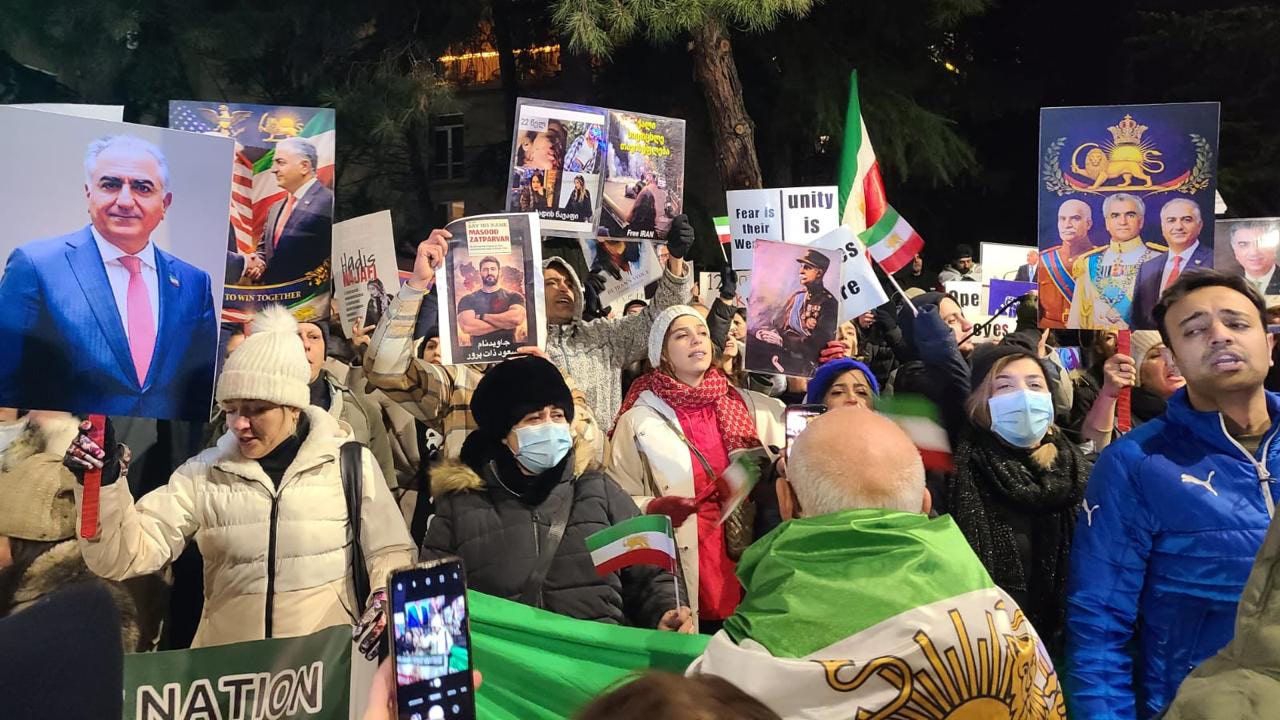
In Tbilisi, Georgia’s capital, demonstrators braving freezing temperatures draw inspiration from their Iranian counterparts fighting against a more entrenched authoritarian regime.
“When you walk through the demonstrations every day in Tbilisi, all people talk about is Iran. The heated debate over it shows how much it matters and how optimism is out on the streets due to developments despite controversies,” Tinatin Khidasheli, Georgia’s former defense minister, told Fox News Digital.
The Georgian protests began in October 2024 after the pro-Russia Georgian Dream party claimed election victory and subsequently halted the country’s efforts to join the European Union. This pivot away from the EU has sparked widespread anger in a nation where polls consistently show overwhelming public support for European integration.
Each day, Tbilisi’s main Rustaveli Avenue fills with protesters chanting and blocking traffic, expressing outrage at what they see as the ruling party pulling Georgia away from Europe and toward a Russian-oriented foreign policy.
Erekle Koplatadze, a 33-year-old Tbilisi resident who has participated in protests almost daily since November 2024, notes the visible solidarity with Iranian demonstrators. “You will see many Lion and Sun flags (Iran’s national flag until the 1979 Islamic Revolution) in front of Georgia’s Parliament. And there have been protests in front of the Iranian Embassy in Tbilisi,” said Koplatadze, who was detained for six days in November 2025 for allegedly blocking a road during a protest.
The Iranian protests, which began in December following economic mismanagement and regime corruption, have resonated deeply with Georgian demonstrators. Koplatadze described how news of the Iranian regime’s violent crackdown has shaken many Georgians, creating a shared sense of empathy. “I don’t remember such a big protest in Tbilisi in support of a foreign nation except for Ukraine,” he added.
Ana Riaboshenko, co-founder of “Initiative Culture For Democracy,” believes developments in Iran directly affect Georgia and the broader region. “Its transformation from a terrorist state to a democratic government will significantly change the situation and indeed contribute substantially to the global power balance and economy. A particularly positive outcome is expected with the collapse of the Russian-Iranian partnership.”
The connections between the two countries extend beyond protest movements. Riaboshenko pointed out that Russian-backed Georgian Dream representatives have positioned themselves as partners with Tehran, with bilateral relations and cooperation increasing since the disputed 2024 elections.
A July 2025 report by Georgian NGO Civic IDEA detailed how Iranian businesses use Georgia as a strategic transit point to evade international sanctions and channel funds back to Iran. The report identified nearly 13,000 Iranian companies registered in Georgia.
As Georgian Dream has consolidated power, it has implemented harsh anti-demonstration laws to suppress dissent, using disproportionate force and other brutal tactics to quell unrest. Human Rights Watch has documented numerous legal restrictions interfering with Georgians’ rights to peacefully assemble, including steep fines for protest-related violations and abusive police tactics.
According to Transparency International Georgia, since Georgian Dream’s election, 600 people have been arbitrarily detained, 300 protesters were tortured or subjected to inhumane treatment, 1,000 citizens received fines for political opinions, and 400 journalists have been arrested, beaten, and harassed.
Marika Mikiashvili, Foreign Secretary of the opposition party Droa, summarized the dual nature of the relationship between the movements: “Many protesters see Iran as a cautionary tale of what happens when a consolidating dictatorship isn’t defeated soon enough,” while also finding profound inspiration in the courage of Iranian demonstrators.
Unlike many Western governments, the Georgian Dream administration has issued no statements supporting the pro-democracy protests in Iran or condemning security force human rights violations against demonstrators.
Fact Checker
Verify the accuracy of this article using The Disinformation Commission analysis and real-time sources.

14 Comments
The Georgian protesters’ solidarity with their Iranian counterparts is a heartening display of international support in the face of authoritarianism. Both movements are driven by a yearning for democratic reforms, despite the unique challenges they confront. This cross-border unity is a powerful testament to the universal human desire for freedom.
It’s striking to see the Georgian and Iranian protest movements finding common ground in their struggle against corrupt, undemocratic governments. Their shared aspirations for greater political freedoms and accountability transcend national borders, showcasing the global nature of the fight for democracy.
Fascinating to see the solidarity between the Georgian and Iranian protesters. Both are fighting for democratic rights against entrenched governments, despite vastly different contexts. It’s inspiring to see people come together across borders in pursuit of freedom and accountability.
The parallels between the two movements are striking. Both are demanding change from governments that have strayed from democratic principles. It’s a powerful reminder that the global struggle for democracy transcends national boundaries.
The article highlights an intriguing dynamic, where protesters in Georgia are drawing inspiration from the ongoing unrest in Iran. While the specific contexts differ, the underlying drive for democratic reforms and accountability seems to resonate across borders. It will be fascinating to see how these parallel movements continue to evolve and potentially influence one another.
The solidarity between the Georgian and Iranian protesters is a powerful reminder that the global struggle for democracy is not confined to any single nation. Their shared commitment to fighting against authoritarian rule and pursuing greater political freedoms is truly inspiring.
The article highlights an important connection between the protest movements in Georgia and Iran. While the specific circumstances differ, they’re united in their opposition to authoritarian rule and desire for a more democratic future. It will be interesting to see how these parallel struggles evolve.
The shared aspirations of the Georgian and Iranian protesters are remarkable. Even as they face vastly different political landscapes, their common cause of fighting for greater freedoms and accountability is truly inspiring.
This article sheds light on an interesting cross-pollination of protest movements, with the Georgian protesters drawing inspiration from the Iranian demonstrations. While the circumstances may differ, the common thread of fighting against entrenched, undemocratic regimes is palpable. It will be fascinating to see how these parallel struggles continue to unfold and potentially influence one another.
The article highlights an intriguing dynamic, where protesters in disparate regions are finding common cause in their fight for democratic rights. The solidarity between the Georgian and Iranian movements, despite their distinct contexts, is a testament to the universal human desire for freedom and accountability.
The article’s examination of the connections between the protest movements in Georgia and Iran is fascinating. Despite the geographical and contextual differences, the shared drive for democratic reforms and accountability against entrenched, undemocratic regimes is palpable. It’s inspiring to see these parallel struggles finding common ground and potentially influencing one another in their pursuit of a more just and equitable future.
The article’s insights into the solidarity between the Georgian and Iranian protesters are thought-provoking. While the specific circumstances may differ, their united front against corrupt, authoritarian governments is a powerful display of the global nature of the fight for democracy. It will be intriguing to see how these parallel movements continue to evolve and potentially strengthen one another’s resolve.
The article provides an insightful look into the interconnectedness of protest movements, even across vast geographic distances. The shared aspirations of the Georgian and Iranian protesters, despite their unique circumstances, are a powerful reminder that the global struggle for democracy knows no borders. It will be interesting to see how these parallel movements continue to evolve and potentially influence one another.
The article’s exploration of the solidarity between the Georgian and Iranian protesters is thought-provoking. While the specific political landscapes differ, their common cause of fighting against authoritarian rule and pursuing greater democratic freedoms is truly inspiring. This cross-border unity is a testament to the universal human desire for a more just and accountable system of governance.