


Listen to the article
U.S. Southern Command Nominee Faces Questions Amid Venezuelan Operations
The Marine Corps general nominated to lead U.S. military operations in Latin America told senators Thursday he’s prepared to oversee an expanded military presence in the region that began prior to Venezuelan President Nicolás Maduro’s capture, though he acknowledged uncertainty about the long-term strategy.
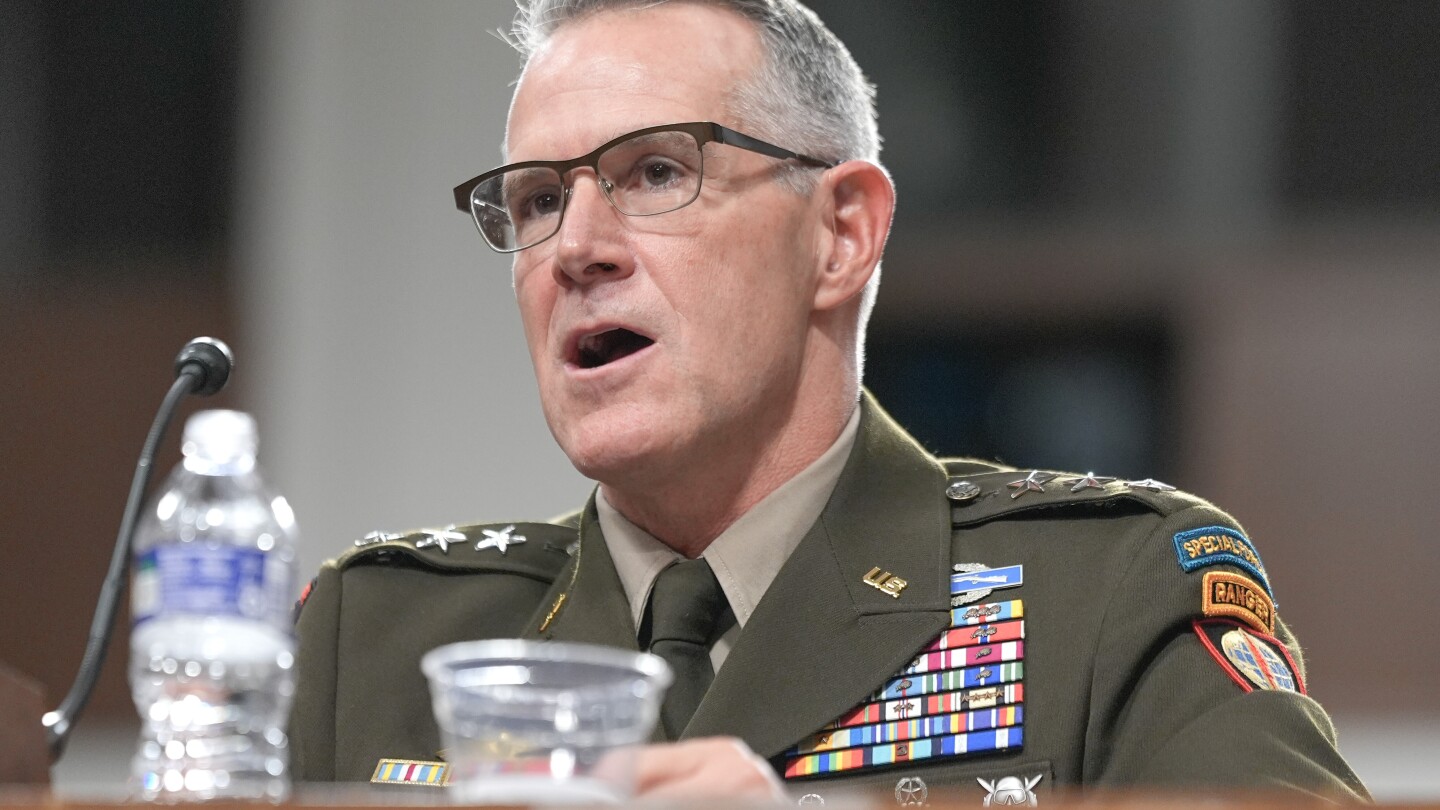
Lt. Gen. Francis Donovan, currently serving as vice commander of U.S. Special Operations Command, appeared before the Senate Armed Services Committee for his confirmation hearing to lead the U.S. Southern Command. If confirmed, Donovan would replace Navy Adm. Alvin Holsey, who retired last year amid growing scrutiny over the Trump administration’s operations against alleged drug trafficking vessels in the region.
The hearing comes at a pivotal moment for U.S. military engagement in Latin America. Earlier this month, U.S. forces deposed and detained Maduro, marking the culmination of a pressure campaign that included the largest military buildup in the region in generations. This expanded operation has involved numerous strikes on vessels suspected of drug smuggling and the seizure of oil tankers linked to Venezuela’s sanctioned petroleum industry.
Several lawmakers, including Democrats and Independent Sen. Angus King of Maine, pressed Donovan for details about his vision for Southern Command and the administration’s broader regional strategy.
“So you don’t know what the plan is now? You don’t know why all those ships and aircraft and soldiers are there?” King asked directly.
“Senator, I do not,” Donovan responded, explaining that his current role doesn’t involve him in operational planning for Latin America.
Despite this admission, Donovan recognized that the administration’s renewed focus on the Western Hemisphere would likely transform Southern Command’s operational priorities. When Arizona Democrat Sen. Mark Kelly asked if Southern Command would need to function differently than in previous years, Donovan replied, “Yes I do.”
Southern Command, headquartered in Doral, Florida, oversees U.S. military operations throughout Latin America and the Caribbean. The command has historically operated with fewer resources than other geographic combatant commands, but recent developments in Venezuela appear to have elevated its strategic importance.
The hearing also reflected growing congressional concern about the legal justification for U.S. military strikes on vessels in international waters. Some lawmakers have questioned whether these operations comply with international law and appropriate use of force standards.
The committee simultaneously considered the nomination of Lt. Gen. Joshua Rudd to lead the National Security Agency (NSA), which has been without permanent leadership since President Trump dismissed Gen. Tim Haugh last year. The NSA director also commands the Pentagon’s Cyber Command, placing the role at the center of America’s digital security apparatus.
Michigan Sen. Elissa Slotkin, a former CIA analyst, raised concerns about potential political misuse of surveillance capabilities. Slotkin, who is reportedly among several Democratic lawmakers facing criminal investigation after appearing in a video urging military personnel to resist illegal orders, pressed Rudd on his commitment to following legal restrictions on domestic surveillance.
“Will you reject that?” Slotkin asked, referring to the possibility of politically motivated surveillance.
“Senator, if confirmed, I will execute my responsibilities in accordance with the Constitution and all applicable laws,” Rudd responded.
Lawmakers from both parties expressed confidence that the nominations would ultimately be approved, though no date for a confirmation vote has been announced.
The hearings highlight the complex intersection of military operations, foreign policy, and domestic politics as the United States recalibrates its approach to Latin America amid ongoing regional instability. For Southern Command, this shift represents both an opportunity for increased relevance and the challenge of operating under heightened congressional scrutiny.
Fact Checker
Verify the accuracy of this article using The Disinformation Commission analysis and real-time sources.

18 Comments
The expanded US military presence in Latin America, including the seizure of oil tankers, raises concerns about unintended consequences for legitimate trade and economic activity in the region. Ensuring these efforts don’t disrupt supply chains and commerce will be important.
Absolutely, the economic impacts on the region must be carefully assessed. Balancing security objectives with economic realities will be a delicate challenge.
The capture of Venezuela’s president is a dramatic development that will undoubtedly have far-reaching implications. I’m curious to hear more about the legal justifications and long-term plans for restoring stability and democracy in the country.
Absolutely, the political and humanitarian fallout from this intervention will need to be carefully managed. Rebuilding trust and legitimacy in the region will be a significant challenge.
Expanding the US military presence in Latin America is a significant geopolitical shift that merits close scrutiny. Ensuring these efforts align with international law, human rights, and the principles of self-determination will be crucial.
Agreed, the potential for overreach and unintended consequences is high. Careful diplomacy, regional cooperation, and a commitment to democratic values must guide this initiative.
Interesting to see the US shifting its military focus to Latin America after years of emphasis on the Middle East and Asia. I’m curious to learn more about the strategic rationale and how this aligns with broader foreign policy goals in the Western Hemisphere.
A shift of this magnitude warrants close scrutiny. Maintaining regional cooperation and avoiding unilateral actions will be key to ensuring the success and sustainability of this initiative.
The nomination of Lt. Gen. Donovan to lead US Southern Command raises important questions about the scope and transparency of military operations in the region. Oversight and accountability will be crucial as the US expands its footprint.
Agreed, there needs to be robust congressional scrutiny to ensure these efforts align with US foreign policy goals and respect regional sovereignty.
The nomination of Lt. Gen. Donovan raises valid questions about the scope and direction of US military operations in Latin America. Ensuring transparency, rule of law, and respect for national sovereignty should be top priorities as this initiative moves forward.
Agreed, the US must tread carefully and work closely with regional partners to address shared security concerns without overstepping its bounds or provoking backlash.
Deposing Maduro and detaining him is a major escalation of US involvement in Venezuela. I’m curious to hear more about the legal and diplomatic justifications for these actions, and how they might impact regional dynamics and stability in the long run.
The legality and sustainability of this intervention will certainly be debated. Careful diplomacy and consideration of all stakeholder interests will be crucial going forward.
Interesting to see the US military expanding its presence in Latin America, especially amid the dramatic events surrounding the capture of Venezuela’s president. I’m curious to learn more about the long-term strategy and potential impacts on regional stability and trade flows.
Absolutely, the geopolitical implications of this move will be significant. It’s important the US military provide clarity on its objectives and plans to work cooperatively with Latin American partners.
The nomination of Lt. Gen. Donovan to lead US Southern Command is an important development that deserves close attention. I’m curious to learn more about his vision for the region and how he plans to balance security priorities with respect for national sovereignty and human rights.
Absolutely, the general’s testimony will be crucial in understanding the scope and objectives of this expanded military presence. Transparency and accountability must be top priorities.