


Listen to the article
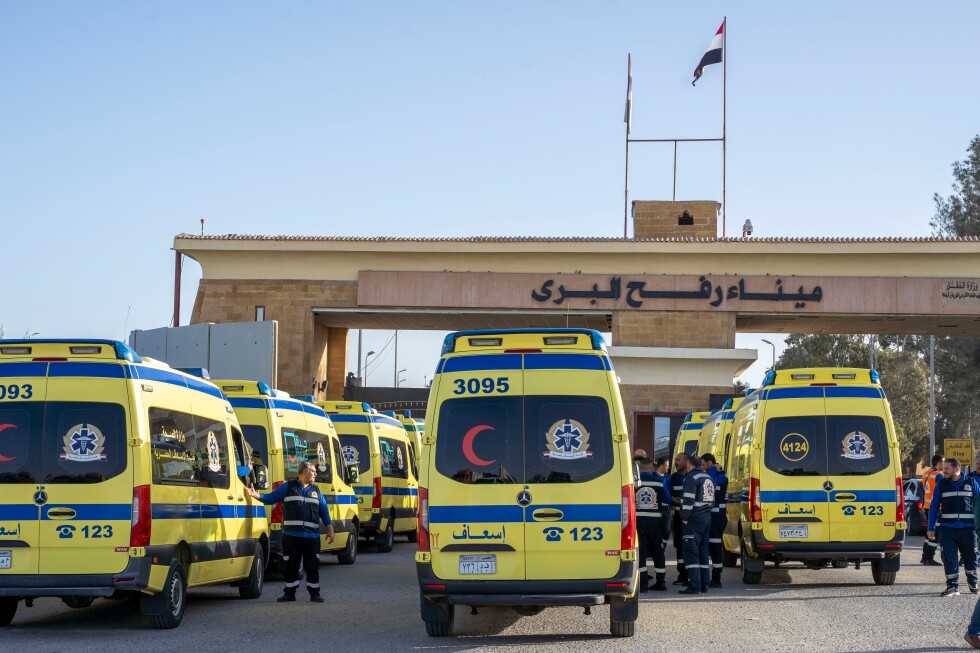
Palestinians in Gaza watched with renewed hope Sunday as preparations began for the reopening of the critical Rafah border crossing with Egypt, scheduled to resume operations Monday as the ceasefire between Israel and Hamas progresses. The crossing has been largely closed since Israel seized control of it in May 2024.
“Opening the crossing is a good step, but they set a limit on the number of people allowed to cross, and this is a problem,” said Ghalia Abu Mustafa from Khan Younis, reflecting the mixed feelings among Gaza residents.
The Israeli military announced that the crossing had opened for testing and that limited movement of people would begin Monday. Initially, only a small number will be permitted to cross, raising concerns among those desperate to leave.
Suhaila Al-Astal, displaced from Rafah, expressed frustration about the restrictions: “We want a large number of people to leave, for it to be open so that sick people can go and return. We want the crossing to be open permanently.” Her daughter requires medical treatment abroad, highlighting the urgent humanitarian needs driving demand for border access.
The announcement came just a day after Israeli strikes killed at least 30 Palestinians, including several children, according to hospital officials—one of the deadliest incidents since the ceasefire began on October 10. Israel had accused Hamas of violating the truce agreement.
Approximately 20,000 Palestinians requiring medical care are hoping to exit through the crossing, while thousands of others currently outside the territory wish to return home. Prime Minister Benjamin Netanyahu has stated that Israel will initially permit 50 patients needing medical evacuation to leave daily, with each patient allowed to travel with two relatives. Additionally, 50 people who left Gaza during the war can return each day.
Zaher al-Wahidi, head of the Gaza Health Ministry’s documentation department, told The Associated Press that the ministry had not received official notification about the commencement of medical evacuations.
According to Israeli officials, Israel and Egypt will vet individuals entering and exiting through the crossing, which will be supervised by European Union border patrol agents. The number of travelers is expected to gradually increase if the system proves successful.
In a separate development affecting Gaza’s struggling healthcare system, Israel’s Diaspora Ministry announced it was “moving to terminate” the operations of Doctors Without Borders in Gaza by February 28. Israel suspended the organization’s operations in December after it refused to comply with new registration requirements demanding lists of local employees. The medical charity expressed concerns that such regulations could endanger their Palestinian staff.
Doctors Without Borders has played a crucial role in Gaza’s healthcare landscape, providing funding and international staff for six hospitals, running two field hospitals, and operating eight primary health centers and clinics. The organization also manages two of Gaza’s five stabilization centers for children with severe malnutrition.
Over two dozen humanitarian organizations have been suspended from operating in Gaza due to failure or refusal to comply with these new requirements, which Israel says aim to prevent Hamas infiltration of aid groups. However, the organizations describe the rules as arbitrary and warn that the bans severely impact the civilian population that desperately needs assistance.
Prior to the war, Rafah served as Gaza’s main crossing for people movement. The territory has four other border crossings with Israel. Israel captured the Rafah crossing in 2024, citing efforts to combat Hamas arms smuggling. The crossing briefly reopened for medical evacuations during a ceasefire in early 2025.
Under the current ceasefire terms, Israel’s military controls the area between the Rafah crossing and the zone where most Palestinians reside. Egypt has consistently emphasized that the crossing must allow movement in both directions, amid concerns that Israel might use it to push Palestinians out of Gaza.
The ceasefire halted more than two years of war that began with Hamas’s attack on southern Israel on October 7, 2023, which killed approximately 1,200 people and took 251 hostages. Israel’s retaliatory campaign has resulted in 71,795 Palestinian deaths, including 523 since the current ceasefire began, according to Gaza’s Health Ministry.
While the first phase of the ceasefire focused on hostage exchanges, humanitarian aid increases, and partial Israeli troop withdrawals, the second phase presents more complex challenges, including establishing a new Palestinian governing committee in Gaza, deploying an international security force, disarming Hamas, and initiating reconstruction efforts.
Fact Checker
Verify the accuracy of this article using The Disinformation Commission analysis and real-time sources.

8 Comments
It’s good to see the Rafah crossing reopening, even if only on a limited basis initially. Hopefully this is just the first step towards restoring full freedom of movement for the people of Gaza.
Agreed. The residents of Gaza have suffered greatly and deserve to have their basic rights and needs met, including unhindered access to medical care and other essential services.
The ongoing conflict in the region has had a devastating impact on the people of Gaza. While the Rafah crossing reopening is a small step, much more needs to be done to address the urgent humanitarian crisis there.
The reopening of the Rafah crossing is a positive step, but the restrictions on the number of people allowed to cross are a concern. Residents in Gaza desperately need access for medical treatment and other urgent needs.
I agree, the limited access is frustrating for those who have been separated from family or need critical medical care. Hopefully the crossing can be opened more fully in the near future.
The political situation in Gaza is complex, but the humanitarian needs of the people should be the top priority. Allowing more freedom of movement at the Rafah crossing is an important part of addressing those needs.
Well said. The residents of Gaza have endured so much hardship, and easing restrictions on the Rafah crossing could provide some much-needed relief.
While the ceasefire is a positive development, the limited reopening of the Rafah crossing raises concerns about whether the humanitarian situation in Gaza will truly improve. More must be done to ensure free and open access for the people.