


Listen to the article
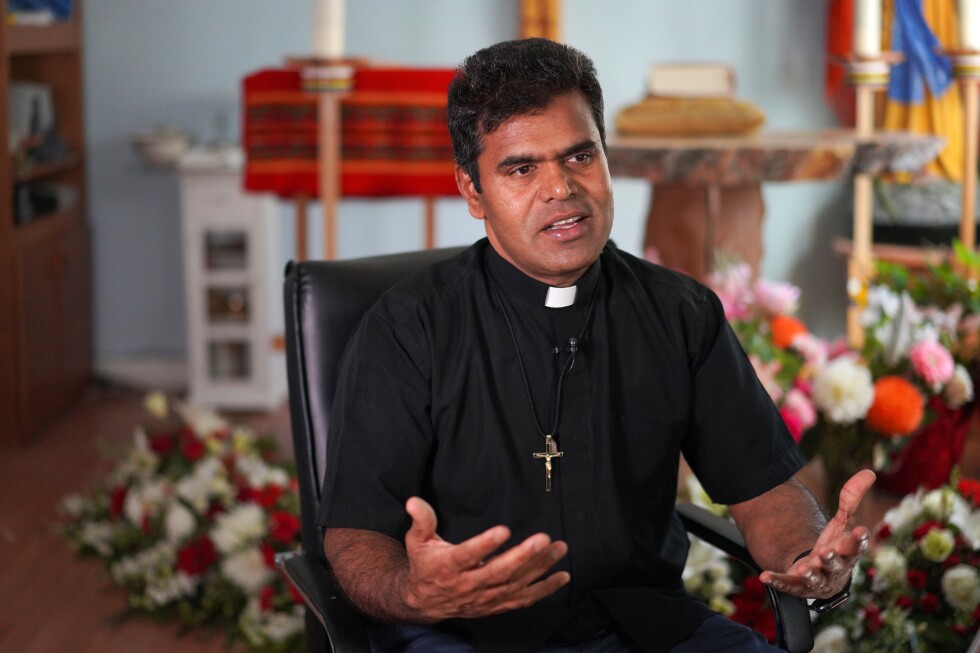
In a remarkable journey of faith and service, Susai Jesu has transitioned from leading dawn prayer services in a small Catholic village in southern India to becoming the Archbishop of Keewatin-Le Pas, overseeing ministry to approximately 49,000 predominantly Indigenous Catholics across a vast region of northern Manitoba and Saskatchewan larger than Texas.
On January 26, Jesu was consecrated as archbishop in a ceremony that blended cultural traditions, featuring drumming and prayers in an extraordinary multilingual combination of Cree, Dene, English, French, Oji-Cree, and his native Tamil. This appointment by Pope Leo XIV in November marks a significant milestone, as Jesu becomes the first Indian-born bishop to oversee a North American diocese primarily serving non-Indian diaspora communities.
The 54-year-old archbishop’s immediate priority focuses on relationship building with his geographically dispersed congregation. “For the first year, let us build a relationship,” Jesu explained in a recent interview. His approach stems from witnessing disappointment in his native India when priests would visit remote villages only briefly. “I told myself, if I ever become a priest, I will always be available to the people,” he recalled.
This commitment to presence resonates deeply in a region where historical wounds from the residential school system continue to affect Indigenous communities. In 2022, Jesu hosted Pope Francis at Edmonton’s Sacred Heart Church of the First Peoples when the pontiff visited Canada to apologize for the Catholic Church’s role in what he called the “catastrophic” residential school system.
Fernie Marty, one of Jesu’s former parishioners in Edmonton, praised the priest’s exceptional cultural immersion efforts. “He went above and beyond what I thought any normal priest would do,” said Marty, noting how Jesu enthusiastically learned the Cree language and joined in gathering traditional medicinal plants like sage and sweetgrass.
Born in Tamil Nadu, Jesu credits his mother for nurturing his religious vocation. “She not only prayed for me to become a good priest but also showed me the way,” he said. As a teenager, he joined the Missionary Oblates of Mary Immaculate and was ordained in 2000. His early ministry among Indigenous communities in northern India provided valuable cross-cultural experience before his 2007 transfer to Canada.
Jesu’s Canadian ministry began with challenging assignments to remote Saskatchewan parishes. Despite a near-fatal accident when his car plunged into a river during winter driving—an incident he survived by narrowly escaping the sinking vehicle—he remained committed to serving far-flung communities. “God saved me to continue my ministry,” he reflected.
His work often confronted the harsh realities affecting many Indigenous communities. “I really enjoyed my ministry of being there, but the amount of alcohol, drugs, and all these things, it’s pretty sad,” he said, describing frequent emergency calls about stabbings, suicides, and alcohol-related accidents. The sight of “children who are walking on the street aimlessly, not knowing who they are” particularly troubled him.
In response, Jesu collaborated with local elders on healing workshops and pursued a master’s degree in counseling and spirituality in Ottawa. “I felt I needed special skills to tell them how good they are before the eyes of God,” he explained.
Later, as pastor of Sacred Heart in Edmonton, Jesu ministered to urban Indigenous populations and homeless individuals while overseeing the church’s reconstruction after a devastating fire. The renovated church, featuring culturally significant elements like a tepee-like structure over the altar and Indigenous representations of Jesus, was completed in time for Pope Francis’ historic 2022 visit.
Though reactions to the papal apology for the residential schools’ legacy were mixed across Canada, Jesu observed that many parishioners were deeply moved and accepted it. The multi-generational trauma stemming from these institutions—where children were forcibly separated from their families and cultural heritage—continues to manifest in substance abuse, broken homes, and suicide within Indigenous communities.
As he begins his archiepiscopal ministry, Jesu recognizes he represents an institution with a complex history. He often forgoes his clerical collar in informal settings, acknowledging that “the trigger is still there” for many Indigenous people. For those estranged from the church, his approach is one of accompaniment: “How much can I accompany in your suffering?”
With this compassionate philosophy guiding his leadership, Archbishop Jesu embarks on a challenging mission of healing, reconciliation, and renewed faith across Canada’s northern Indigenous communities.
Fact Checker
Verify the accuracy of this article using The Disinformation Commission analysis and real-time sources.

16 Comments
It’s inspiring to see the Catholic Church embracing such diversity in its leadership, with Archbishop Jesu’s appointment marking a significant milestone. His cultural awareness and language skills will be invaluable in serving the Indigenous communities under his care.
Absolutely. This appointment is a positive step towards better representation and connection between the Church and the communities it serves.
The blending of cultural traditions in Archbishop Jesu’s consecration ceremony is a beautiful testament to the diversity of the Catholic Church. It’s wonderful to see leadership that reflects the Indigenous communities being served.
Fascinating story about the new Archbishop Jesu and his journey from southern India to serving the diverse Indigenous Catholic communities in northern Canada. It’s great to see such cultural and linguistic diversity represented in the Church’s leadership.
Yes, this appointment is a meaningful milestone. Archbishop Jesu’s focus on relationship-building aligns well with the needs of his geographically dispersed congregation.
This is an inspiring story of faith and service. It’s admirable how Archbishop Jesu is embracing the local languages and traditions to better connect with his congregation. Building strong relationships will be crucial in such a vast and remote region.
Agreed. His experience witnessing the disappointment of brief visits in India has shaped his thoughtful approach. This bodes well for his ministry in the years ahead.
This appointment marks an important milestone for the Catholic Church, with Archbishop Jesu becoming the first Indian-born bishop to oversee a North American diocese primarily serving non-Indian communities. It’s a sign of the Church’s evolving diversity.
What a remarkable journey Archbishop Jesu has had, from leading prayers in a small village in India to now overseeing a vast region in northern Canada. His focus on relationship-building is a wise approach given the geography and demographics.
Archbishop Jesu’s background and experience in India will undoubtedly be an asset as he navigates his new role in northern Canada. His focus on relationship-building is a wise approach given the unique challenges of his vast and diverse diocese.
This is an important appointment, as Archbishop Jesu becomes the first Indian-born bishop overseeing a North American diocese primarily serving non-Indian diaspora communities. His background and perspective will be invaluable.
Absolutely. It’s great to see the Church embracing such diversity in its leadership, which can only strengthen its connection to local communities.
The blending of cultural traditions in Archbishop Jesu’s consecration ceremony is a beautiful representation of the diversity within the Catholic Church. It’s wonderful to see leadership that reflects the Indigenous communities being served.
Agreed. This type of cultural inclusivity is crucial for connecting with and serving diverse congregations, especially in remote and geographically dispersed regions.
It’s impressive that Archbishop Jesu will be ministering to approximately 49,000 predominantly Indigenous Catholics across a region larger than Texas. His cultural awareness and language skills will be essential in such a diverse setting.
Yes, this is a significant responsibility. His experience and commitment to connecting with the local communities bodes well for the success of his ministry.