


Listen to the article
French authorities have launched an investigation into an oil tanker suspected of transporting Russian petroleum in violation of international sanctions, marking another escalation in efforts to combat Moscow’s “shadow fleet” operations.
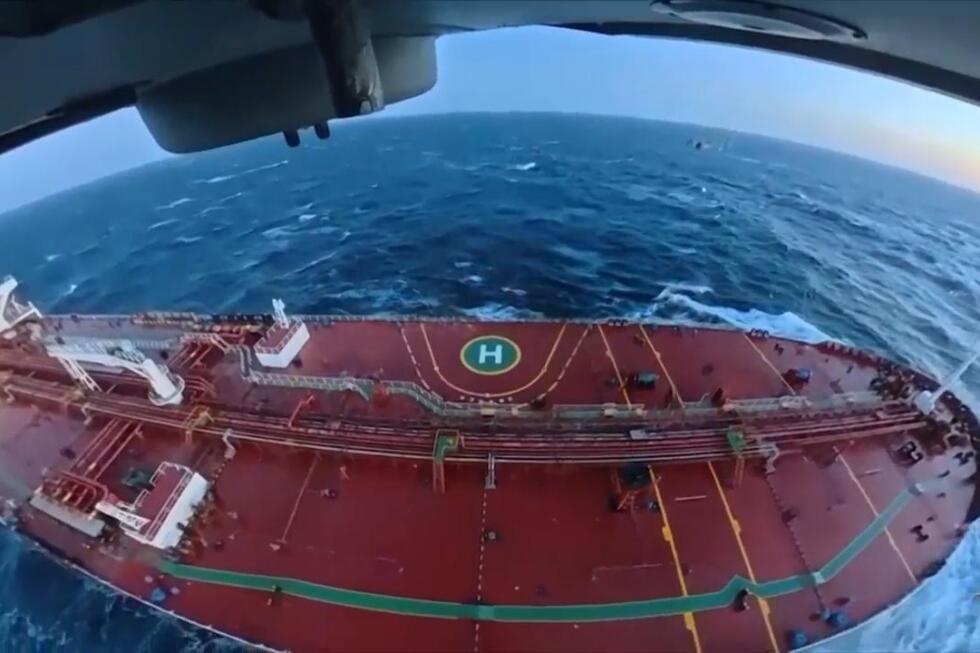
The vessel, identified as “The Grinch,” was intercepted Thursday in the Mediterranean Sea by the French navy after departing from Murmansk in northwestern Russia. Following the operation, the ship was redirected to an anchorage position while prosecutors in Marseille opened an inquiry into the vessel’s alleged failure to confirm its nationality.
Footage released by the French military shows naval personnel boarding the tanker via helicopter in a tactical operation reminiscent of similar enforcement actions that have intensified since Russia’s invasion of Ukraine.
This interception represents the latest attempt to crack down on what experts describe as Russia’s elaborate sanctions-evasion network. Intelligence sources indicate Moscow has assembled a “shadow fleet” of over 400 vessels specifically designed to circumvent international trade restrictions imposed following the Ukraine war.
“These shadow fleets pose a significant challenge to the enforcement of sanctions regimes,” said a maritime security analyst who requested anonymity due to the sensitive nature of ongoing investigations. “They operate in regulatory gray zones and exploit gaps in international maritime oversight.”
The shadow fleet typically consists of aging tankers owned by obscure entities registered in non-sanctioning countries. These vessels frequently sail under flags of convenience from nations with limited maritime enforcement capacity, creating multiple layers of obfuscation that make tracking Russian oil exports increasingly difficult.
Maritime intelligence firms have documented a sharp increase in such operations since 2022, with vessel ownership often concealed through complex corporate structures spanning multiple jurisdictions. Ships frequently disable tracking systems, transfer cargo between vessels at sea, and falsify documentation to mask the origin of petroleum products.
Thursday’s operation wasn’t France’s first encounter with suspected sanctions violators. Last September, French naval forces conducted a similar boarding of an oil tanker off the country’s Atlantic coast, an action that President Emmanuel Macron explicitly linked to countering the shadow fleet. That interception triggered diplomatic tensions, with Russian President Vladimir Putin condemning it as “an act of piracy.”
The captain of that vessel now faces legal proceedings, with a trial scheduled for February on charges related to the crew’s alleged refusal to cooperate with French authorities during the boarding operation.
European Union sanctions prohibit the import, purchase, or transfer of seaborne crude oil and petroleum products from Russia, with limited exceptions. These measures form part of a broader package of economic restrictions designed to pressure Moscow over its military campaign in Ukraine.
Maritime law experts note that enforcing such sanctions presents complex jurisdictional challenges, particularly on the high seas where international legal frameworks can be subject to varying interpretations.
“The legal basis for interdicting vessels suspected of sanctions violations remains contentious,” explained Dr. Elisabeth Malmström, professor of international maritime law at the University of Amsterdam. “Nations must carefully balance enforcement actions against freedom of navigation principles established under the United Nations Convention on the Law of the Sea.”
Industry analysts estimate Russian oil exports via shadow fleet operations may account for millions of barrels daily, potentially undermining the economic impact of Western sanctions. The revenue generated from these exports continues to provide Moscow with critical foreign currency reserves that help sustain its military operations.
As the investigation into The Grinch proceeds, European officials have signaled their determination to intensify coordination on maritime interdiction operations. These efforts reflect growing concern that without robust enforcement, the effectiveness of sanctions will be significantly compromised.
The case highlights the evolving cat-and-mouse game between sanctioning authorities and evasion networks, demonstrating the challenges facing Western nations as they attempt to maintain pressure on Moscow nearly three years into the Ukraine conflict.
Fact Checker
Verify the accuracy of this article using The Disinformation Commission analysis and real-time sources.

13 Comments
The scale of Russia’s ‘shadow fleet’ is quite remarkable. Over 400 vessels specifically designed to circumvent sanctions? That’s an impressive logistical undertaking. It will be critical for the international community to stay vigilant and coordinate their enforcement efforts to counter this type of sophisticated sanctions evasion.
Fascinating to see how Russia is leveraging its maritime capabilities to evade the sanctions. This ‘shadow fleet’ tactic is clearly a sophisticated and coordinated effort. I wonder how other nations will respond to counter these types of evasion tactics going forward.
Good point. Russia’s ability to adapt and find workarounds to the sanctions is a real challenge. Sustained international cooperation and information-sharing will be crucial to stay ahead of their evolving tactics.
The scale of Russia’s efforts to evade sanctions is quite remarkable. Over 400 vessels in a ‘shadow fleet’? That’s an extensive operation. I wonder how they’re able to coordinate and conceal that many ships – it must require significant resources and organization on their part.
Good point. Coordinating a fleet of that size covertly is no easy feat. It speaks to Russia’s determination to maintain its energy exports despite the sanctions. Enforcement will need to be vigilant to stay ahead of their tactics.
This interception by the French navy is an important demonstration of the resolve to enforce sanctions on Russia. While they may have assembled an extensive ‘shadow fleet’, it’s clear that countries are willing to take decisive action to disrupt these sanctions-evasion efforts.
I’m glad to see France taking action on this tanker suspected of sanctions violations. With the global energy market so volatile, it’s critical that all countries strictly enforce the sanctions to avoid undermining the intended economic pressure on Russia.
Kudos to the French authorities for their decisive action in intercepting this suspected sanctions-evading tanker. Russia’s ‘shadow fleet’ operations pose a significant challenge, but determined enforcement efforts like this are crucial to maintaining the effectiveness of the sanctions regime.
France’s actions here represent an important step in maintaining the integrity of the sanctions regime against Russia. Intercepting this tanker and launching an investigation sends a clear signal that attempts to evade the sanctions will be met with firm consequences.
Agreed. Rigorous enforcement like this is essential to ensure the sanctions have the desired impact and don’t get undermined by Russia’s efforts to circumvent them.
Interesting to see the French cracking down on sanctions evasion. Maintaining the integrity of the sanctions regime against Russia is crucial, even as they try to circumvent it through these ‘shadow fleets’. It will be important to closely monitor these situations going forward.
Absolutely. Russia is clearly getting creative in finding ways around the sanctions. Diligent enforcement by countries like France is key to upholding the effectiveness of these measures.
The ‘shadow fleet’ that Russia has assembled to circumvent sanctions is quite remarkable. It really demonstrates their resourcefulness and willingness to go to great lengths to maintain their energy exports. Kudos to France for intercepting this tanker – it’s an important step in upholding the integrity of the sanctions regime.