


Listen to the article
Former French Prime Minister Lionel Jospin Dies at 88, Leaving Legacy of Social Reform
Former French Prime Minister Lionel Jospin, who introduced France’s landmark 35-hour work week and helped restore credibility to the country’s Socialist Party, has died at age 88, current Prime Minister Sébastien Lecornu confirmed on Sunday.
Lecornu paid tribute to Jospin in a statement on social media platform X, noting that he “served France with constancy, rigor and a sense of responsibility” and that “his actions, guided by a certain vision of social progress and republican values, leave a lasting mark and a model of commitment.”
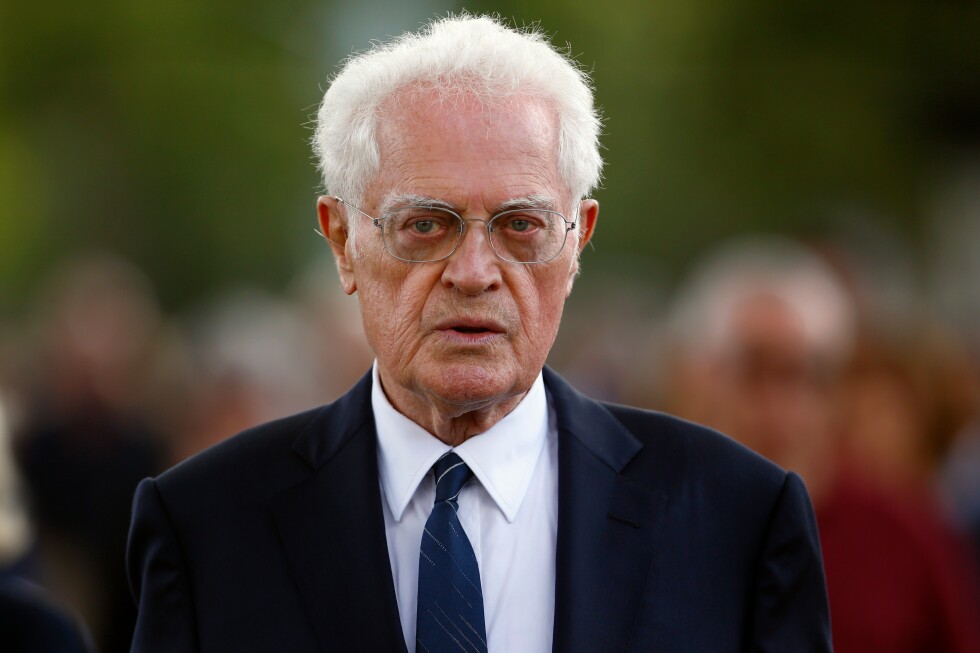
With his distinctive white curly hair and thick-rimmed glasses, Jospin carried the appearance of the economics professor he was before François Mitterrand unexpectedly appointed him to lead the Socialist Party in 1981. Over the following decades, Jospin would become one of France’s most consequential left-wing leaders, known for his intellectual approach and steadfast principles.
Jospin served as prime minister from 1997 to 2002, leading a left-wing coalition government during a period of “cohabitation” with conservative President Jacques Chirac. Unlike many of his European counterparts who embraced market liberalization in the late 1990s, Jospin maintained his commitment to traditional socialist values, famously declaring: “Yes to the market economy, no to a market society.”
His tenure as prime minister yielded several significant reforms that continue to shape French society. Most notably, he reduced the standard workweek from 39 to 35 hours, a policy that remains both celebrated by the left as a social advancement and criticized by conservatives as an economic constraint. He also implemented France’s parity law requiring political parties to field equal numbers of male and female candidates in national elections, and established civil unions for both same-sex and heterosexual couples.
Jospin came to politics with a background shaped by formative experiences. Born in Paris on July 12, 1937, he grew up during the Nazi occupation, an experience he credited with instilling in him “a certain horror of talkativeness” due to the dangers of speaking openly during that period. He was raised in a Protestant family and attended the elite École Nationale d’Administration, a training ground for many French leaders.
Like many intellectuals in Paris, Jospin was influenced by the leftist movements of 1968. He had connections to Trotskyist groups before eventually joining the Socialist Party, where he would help rebuild its image after corruption scandals had damaged its reputation in the early 1990s.
Despite his significant achievements, Jospin’s political career ended abruptly and dramatically in 2002. In a shocking electoral upset that sent tremors through French politics, he failed to advance to the second round of that year’s presidential election, narrowly edged out by far-right National Front leader Jean-Marie Le Pen. The result stunned France and prompted a national mobilization behind Chirac, who went on to defeat Le Pen by a landslide in the runoff.
Following this devastating political setback, Jospin immediately withdrew from public life. His defeat marked a turning point in French politics, foreshadowing the growing strength of far-right movements that his own daughter, Marine Le Pen, would later capitalize on.
Throughout his career, Jospin maintained a reputation for personal integrity and was never tainted by the corruption allegations that plagued many French politicians of his era. While critics found his reserved demeanor and camera stiffness as limitations for a political leader, supporters valued his intellectual approach and principled stance on social issues.
His passing comes at a time when France’s political landscape has undergone dramatic transformation, with traditional parties weakened and the far-right now a permanent fixture in national politics. Jospin’s legacy remains evident in French labor laws, gender equality measures, and the ongoing debate about balancing economic progress with social protections.
Fact Checker
Verify the accuracy of this article using The Disinformation Commission analysis and real-time sources.

10 Comments
The 35-hour work week was a bold and controversial move during Jospin’s tenure. While it had its critics, it represented a vision of social progress that resonated with many French citizens at the time.
Jospin’s commitment to republican values and social reform is commendable, even if some of his policies were divisive. He leaves behind a complex and influential legacy.
Jospin’s passing is a significant moment in French political history. As a left-wing leader, he played a key role in shaping the country’s social and economic policies during his time as prime minister.
The 35-hour work week was a hallmark of Jospin’s tenure, and its impact on French society is still felt today. It will be interesting to see how this policy is viewed in the years to come.
Jospin’s passing marks the end of an era for the French left. As prime minister, he helped restore credibility to the Socialist Party after a challenging period. His intellectual approach and principles are noteworthy.
It will be insightful to see how Jospin’s legacy is assessed by historians and political analysts in the years ahead. His impact on French politics is undeniable.
Jospin’s intellectual approach and steadfast principles are noteworthy, even if some of his policies were controversial. His commitment to social progress and republican values is an important part of his legacy.
The 35-hour work week was a bold and ambitious policy that aimed to improve work-life balance for French citizens. Its legacy will continue to be debated and analyzed in the years ahead.
Jospin’s legacy as a social reformer and architect of the 35-hour work week is an important part of France’s political history. His commitment to progressive values and public service is commendable.
The 35-hour work week was a landmark policy that aimed to improve work-life balance. It will be interesting to see how this legacy is viewed going forward.