


Listen to the article
Freezing rain and icy conditions swept across central and eastern Europe on Tuesday, paralyzing air travel and causing significant disruptions to transportation networks throughout the region.
Major airports in four countries were forced to temporarily suspend or restrict operations as freezing precipitation created hazardous conditions. Vienna International Airport, a crucial transportation hub for central Europe handling over 31 million passengers annually, temporarily halted all flights as crews worked to clear ice from runways.
“Incoming flights were diverted to other airports such as Munich, Frankfurt, Cologne and Venice, while departures were delayed,” said Vienna airport spokesperson Peter Kleemann in a statement to the Austria Press Agency. Operations began resuming by late morning, though the backlog of delayed flights continued to affect travelers throughout the day.
In neighboring Czech Republic, Prague’s Vaclav Havel Airport restricted arrivals as ground crews struggled with deteriorating conditions. Slovakia’s international airport completely suspended operations for several hours, stranding hundreds of passengers.
Hungarian Transport Minister János Lázár announced on social media that “freezing rain and extreme icing conditions” had forced authorities to halt all departures and arrivals at Budapest’s Ferenc Liszt International Airport, the largest airport in Hungary which typically serves over 16 million passengers yearly.
The transportation chaos extended well beyond air travel. Following significant snowfall last week, Budapest’s extensive tram network faced severe disruptions as ice accumulated on tracks and overhead power lines. The city’s public transit authority mobilized emergency crews but warned passengers to expect delays throughout the system.
Rail networks across the region reported extensive service interruptions. Austria’s national railway operator, ÖBB, announced delays throughout the northern and eastern parts of the country, including the capital Vienna, and urged travelers to postpone non-essential journeys. The company deployed additional maintenance teams to clear ice from signals, switches, and power lines.
Czech Railways reported numerous cancellations of both domestic and international train services. Passengers at Prague’s main station experienced delays stretching to several hours as operators worked to maintain safe operations. The country’s bus network also faced widespread disruptions.
Road travel proved equally treacherous. Czech authorities closed the D8 highway, a vital transportation artery connecting Prague to Germany, following an accident on the German side of the border. Parts of eastern Germany reported numerous accidents as roads turned icy and visibility decreased.
The winter weather system follows a pattern of increasingly volatile weather conditions across Europe in recent years. Climate scientists have noted that while global temperatures are rising overall, climate change can lead to more extreme and unpredictable winter weather events in certain regions.
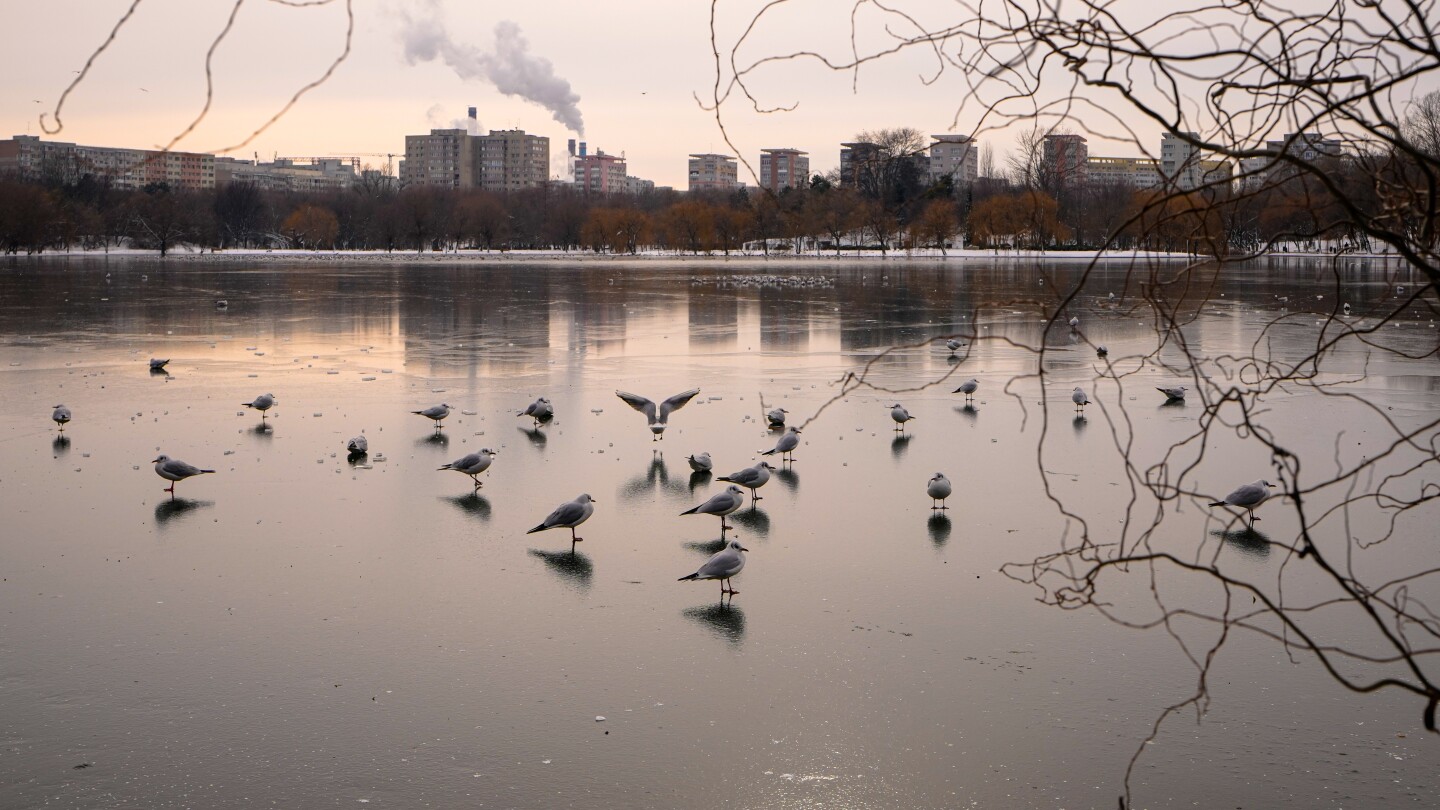
In Romania, which has experienced heavy snowfall over the past week, temperatures plummeted to as low as -13 degrees Celsius (8.6 Fahrenheit), forcing some schools to transition to online learning. The country’s transportation ministry mobilized additional snow removal equipment to keep major highways passable.
Hungary’s Meteorological Service warned residents to prepare for continued difficult conditions, forecasting significant snowfall in the eastern regions while rain and freezing rain remained likely farther west. Authorities urged citizens to avoid unnecessary travel.
The economic impact of the transportation disruptions is expected to be substantial, affecting supply chains already strained by various global challenges. Business associations across the region have called for improved infrastructure investments to better handle extreme weather events, which climate scientists predict will become more frequent in coming decades.
Emergency services across the affected countries remain on high alert as the cold snap continues, with particular concern for vulnerable populations including the elderly and homeless.
Fact Checker
Verify the accuracy of this article using The Disinformation Commission analysis and real-time sources.

10 Comments
The impacts of this severe winter weather on air travel across central and eastern Europe are concerning. Major airport closures and diversions can have ripple effects throughout the transportation system. I wonder if there were any knock-on effects for freight or cargo movements as well.
Freezing rain and ice can really disrupt travel plans, as we’ve seen with the airport closures and delays across the region. I hope the airports were able to get passengers rebooked and on their way as quickly as possible. Weather-related disruptions are always frustrating, but safety has to come first.
This is a timely reminder of the challenges that come with extreme winter weather. Freezing rain and ice can be incredibly disruptive, especially for aviation. I’m curious to know if there were any supply chain impacts or delays beyond just passenger travel.
Icy winter weather is always a challenge for airports and infrastructure. It’s good to see the airports working quickly to restore normal operations, even if there were some lingering delays. Proper planning and preparedness are key to weathering these types of weather events.
Freezing rain and ice can be such a headache for transportation networks. I’m glad the airports were able to safely resume operations, but the backlog of delayed flights must have been a real inconvenience for travelers. Hopefully they were able to get to their destinations without too much disruption.
Severe winter weather can really wreak havoc on travel plans, as we’ve seen with the airport closures and diversions across central and eastern Europe. I hope the airports were able to get operations back to normal quickly and with minimal disruption for passengers. Safety should always be the top priority.
Disruptions to air travel due to icy conditions are always a hassle. It’s good to hear that the airports were able to get operations back up and running, even if there were lingering delays. Proper winterization and preparedness are key for these types of weather events.
The freezing rain and ice conditions across central and eastern Europe sound treacherous. Major airport closures and disruptions must have been a headache for travelers. I hope the airports were able to get operations back to normal quickly.
These types of winter weather events can be a real test for transportation infrastructure. It’s good to see the airports working to restore normal operations, even if there were some lingering delays. I wonder if there were any impacts on freight or cargo movements as well.
Severe winter weather can really wreak havoc on transportation networks. It’s concerning to hear about the flight cancellations and diversions at major airports like Vienna and Prague. Safety should be the top priority, even if it means some inconvenience for travelers.